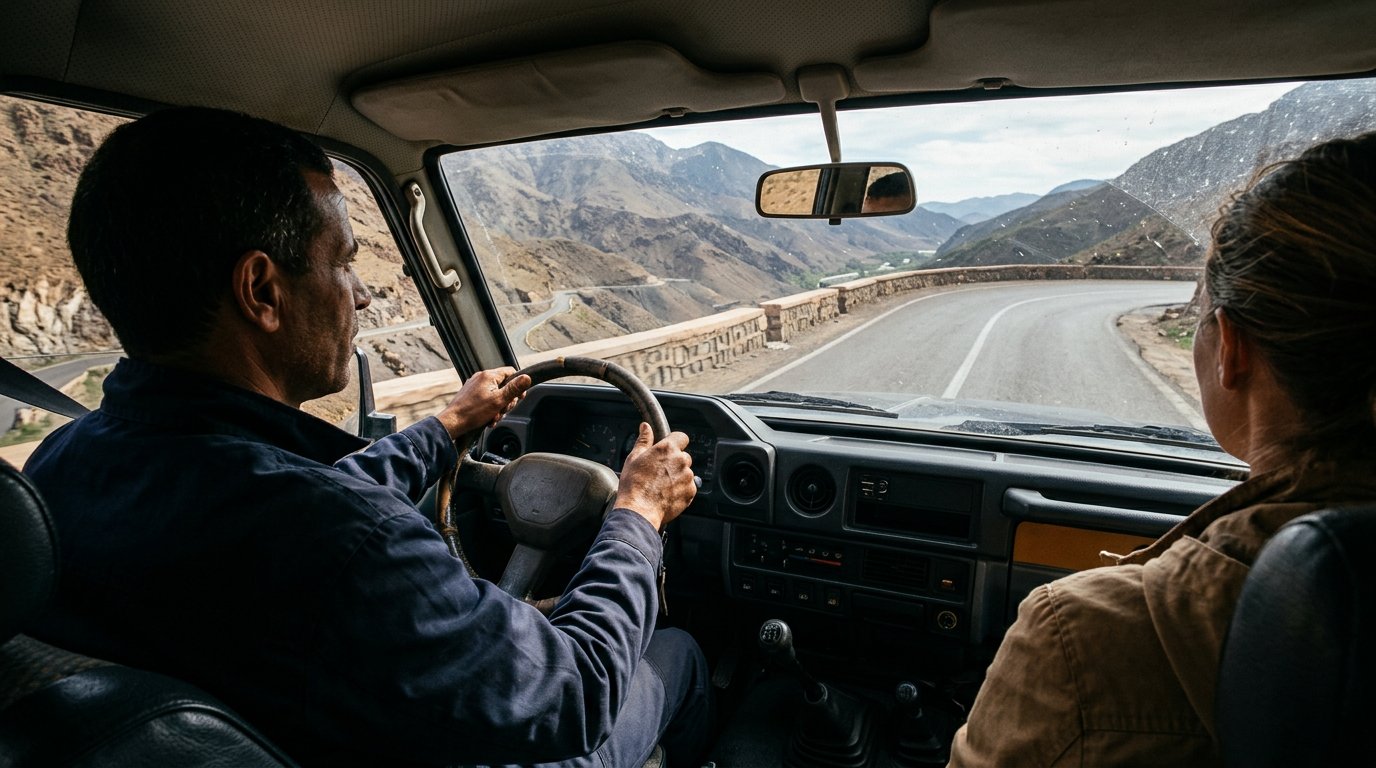
The closest desert route isn’t always the best fit for the Sahara journey you have in mind. From Marrakech, allow at least three days for a tour to Merzouga, with about nine hours on the road; Zagora is closer, at around six hours by road. Knowing what to expect on a Sahara tour starts with choosing a destination that suits your available time and the desert landscape you want to experience.
It’s natural to wonder how a long drive fits around mountain passes, village stops and a night beneath the desert sky. This guide explains how to reach Morocco’s Sahara, compares common routes and trip lengths, and outlines the key differences between Merzouga and Zagora. You’ll also find a practical estimate for the Marrakech-to-Merzouga drive to help you plan at a comfortable pace and choose the destination that suits your trip.
Key Takeaways
- Choose a camel trek or jeep transfer based on how you’d like to reach your desert camp and experience the landscape.
- Match your route and trip length to the destinations you want to visit; a shorter itinerary may not reach every dune area.
- Plan the Marrakech-to-Merzouga journey around a long drive and the time needed for scenic stops along the way.
- Weigh Merzouga’s accessible dunes against Zagora’s different desert setting to find the route that best suits your available time.
1. How do you get to the Sahara Desert in Morocco?Contents
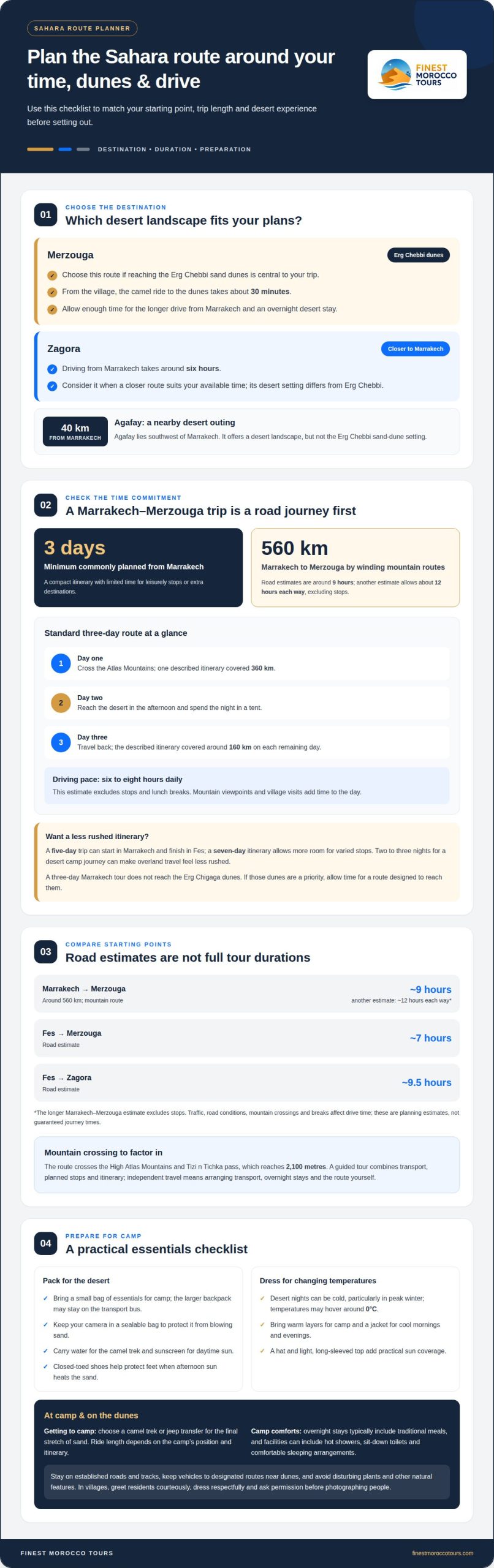
In Morocco, reaching the Sahara usually means travelling overland from Marrakech or Fes. Routes lead toward Merzouga or Zagora, crossing changing landscapes before the dunes. At Merzouga, the camel ride from town to Erg Chebbi takes about 30 minutes. A camel trek described on a Sahara tour lasted two hours. Ride length depends on the camp’s position and the planned itinerary.
At camp, choose a camel or jeep transfer to cross the final stretch of sand. A jeep offers a vehicle transfer, while riding a camel brings you close to the dunes. For a shorter outing from Marrakech, Agafay lies 40 km southwest of the city. It offers a desert landscape, but not the Erg Chebbi sand-dune setting.
Camps typically serve traditional meals, including dinner during an overnight stay. Drinks are available at the Berber tent and hotel. Camp facilities can include hot showers and sit-down toilets, while comfortable sleeping arrangements may also be provided. An overnight stay lets you experience the dunes in the changing evening and early morning light.
Pack a small bag of essentials for the desert camp, not your full backpack. On the described trip, the larger backpack stayed on the transport bus. Keep your camera in a sealable bag to protect it from blowing sand. Desert nights can be cold, particularly during peak winter. Temperatures may hover around 0°C at night in peak winter months. Bring warm layers for camp, and add a jacket for cool mornings and evenings. Closed-toed shoes help protect feet when afternoon sun heats the sand. Carry a water bottle for the camel trek, and sunscreen for daytime sun. A hat and light, long-sleeved top add practical sun coverage.
2. Morocco Sahara tour routes and durationContents
From Marrakech, plan at least three days for a Sahara desert tour. On a standard three-day itinerary, you reach the desert on the afternoon of day two and spend the night in a tent. The first day is for crossing the Atlas Mountains, while the final day is spent travelling back. It’s a compact route, leaving limited time for leisurely stops or extra destinations. When considering what to expect on a Sahara tour, account for road time as well as time among the dunes.
Driving takes a substantial part of each day. One described itinerary covered 360 kilometres on its first day, followed by around 160 kilometres on each remaining day. The drive took six to eight hours daily, excluding stops and lunch breaks. These hours help explain why scenic pauses, such as a mountain viewpoint or village visit, can shape the pace as much as the distance.
Fes offers a different starting point and route options. Merzouga is around seven hours by road from Fes, while Zagora is around nine and a half hours away. These are estimates for driving time, not complete tour durations. Some itineraries connect Marrakech and Fes through the desert; others allow more days for visits and overnight stops along the way. A five-day trip can start in Marrakech and finish in Fes, while a longer, seven-day itinerary allows more room for varied stops.
For a first visit, three days is the shortest common Marrakech route, but a longer itinerary gives the journey more breathing space. A three-day Marrakech tour doesn’t reach the Erg Chigaga dunes. If those dunes are central to your plans, allow time for a route designed to reach them. Two to three nights for a desert camp journey from Marrakech or Fes can make the overland travel feel less rushed. As you consider what to expect on a Sahara tour, weigh your priorities: reaching the dunes, enjoying a Berber cultural visit, or adding time between destinations. The right itinerary balances those interests with the hours spent on the road.
3. Travel time and driving from Marrakech to MerzougaContents
Marrakech and Merzouga are about 560 kilometres apart by winding mountain routes. A road estimate puts the drive at around nine hours, while another estimate allows about 12 hours each way, excluding stops. Treat these as planning guides, not promises of an identical journey. Traffic, road conditions, mountain crossings and breaks all shape the time behind the wheel.
The route crosses the High Atlas Mountains and Tizi n Tichka pass, which reaches 2,100 metres. This mountain stretch brings a marked change in scenery before the road continues toward the desert. Merzouga is also around seven hours by road from Fes, making it a possible starting point for travelers planning a one-way route across Morocco.
Guided desert tours bring transport, stops and a planned itinerary together. This can simplify a multi-stage journey, especially if you want to travel from Marrakech toward Merzouga and continue to Fes. Independent travel offers more freedom to pause or change pace, but you’ll need to arrange transport, overnight stays and the route between destinations yourself.
To help limit erosion, stay on established roads and tracks rather than driving across untouched ground. Keep vehicles to designated routes near dunes, and leave plants, stones and other natural features undisturbed. When exploring on foot, tread carefully around fragile vegetation, which can take time to recover from damage.
Morocco has no single set of tour customs to memorize for every stop. In villages and around homes, greet residents courteously, dress respectfully, and ask permission before photographing people. Follow your guide’s directions at cultural sites and on desert tracks. For a guided route between the two cities, a Marrakech-to-Fes desert trip via Merzouga links the desert journey with onward travel, rather than returning to Marrakech.
4. Choosing between Merzouga and ZagoraContents
Choose Merzouga if reaching the Erg Chebbi sand dunes is central to your plans. From the village, a camel ride to the dunes takes about 30 minutes, making this a direct way to experience the shifting sands. The journey from Marrakech is longer, so Merzouga suits travelers with enough time for the drive and an overnight desert stay. The payoff is a classic dune setting, with sunset, sunrise and the quiet sounds of camp.
Zagora is closer to Marrakech, around six hours by road, and can suit a shorter desert adventure. But distinguish the town from Erg Chigaga: those dunes lie about 60 km from the nearest road. A three-day tour from Marrakech doesn’t reach Erg Chigaga, so the destination and itinerary matter more than the label “Zagora.” If those remote dunes are your aim, allow for the additional journey rather than assuming a short route includes them.
Start by considering your priorities. For an accessible dune experience and camel riding, Merzouga and Erg Chebbi are a clear fit. Zagora is closer to Marrakech, so it means less time on the road, though reaching Erg Chigaga involves a more involved approach. Summer heat can also affect how long you’ll want to spend outdoors, so consider the season alongside distance and activities.
In practical terms, choose Merzouga for a straightforward visit to Erg Chebbi and Zagora for a shorter drive from Marrakech or a route planned toward Erg Chigaga. Neither choice is automatically better; the right one depends on your available days, desired dunes and appetite for overland travel. For a guided journey toward the nearer destination, explore a desert trip to Zagora and shape your plans around the route you want to experience.
Finest Morocco ToursContents
Finest Morocco Tours helps travelers connect a desert route with the wider Morocco itinerary they have in mind. If your plans include Merzouga and onward travel, the 3 day desert tour Fez to Marrakech via Merzouga offers a route linking those destinations. For travelers combining desert scenery with cultural visits, the 2-Day Chefchaouen, Volubilis and Meknes Tour from Fes adds a different kind of journey to consider.
The right choice depends on your starting point, available travel time and whether you want to continue beyond the desert. A desert crossing can form part of a longer journey rather than a separate return trip, while a cultural itinerary leaves more time to explore historic destinations. Decide how you’d like each day to unfold, then contact Finest Morocco Tours to discuss your Morocco travel plans.
Shape a journey that feels like yoursContents
The most rewarding desert itinerary isn’t necessarily the one with the fullest schedule. It’s the one that leaves room for moments you’ll remember: an unhurried conversation, changing light across the landscape and the stillness after sunset. When considering what to expect on a Sahara tour, think about a pace that lets you be present, not just the places you hope to reach.
Let your travel style guide the details. You might want the desert to be one chapter in a wider Moroccan journey, or prefer to give it more time and travel at a gentler pace. A well-planned itinerary brings those wishes together, making each transition feel considered and each stop purposeful.
When you’re ready to turn your ideas into a route, contact Finest Morocco Tours to discuss the journey you have in mind. Your Moroccan adventure can begin with a thoughtful plan and unfold at a pace that feels truly your own.
Frequently Asked QuestionsContents
How do you get to the Sahara Desert in Morocco?
Reaching the Sahara involves planning both the journey to the desert region and the arrangements for your stay. Before setting out, make sure your itinerary clearly explains where the overland journey ends, where you’ll meet your camp transfer and how your luggage will be handled. Knowing these details helps you prepare for the transition from road travel to your desert stay.
How do I get to the desert from Marrakech?
From Marrakech, plan around a full day of travel rather than treating the desert as a quick excursion. Organize the personal items you’ll need on the journey so they’re easy to reach during stops. If your Morocco plans continue elsewhere afterward, settle your final destination in advance so the desert trip fits naturally into the wider journey.
Is it safe?
Morocco is highly safe for tourists, including families and solo female travelers, according to Finest Morocco Tours. As on any trip, keep your belongings secure and stay aware of your surroundings in busy places. In remote desert areas, follow your guide’s instructions and stay with your group during activities. These simple precautions help you focus on the landscape and the experience.
Should I DIY or Book a Guided Sahara Trip?
Choose based on how much planning you want to handle yourself. Independent travel means coordinating each part of the journey, while a guided itinerary can bring transport and excursions together. Before deciding, review the tour’s inclusions and exclusions. Finest Morocco Tours lists these details on each tour page so you can see what arrangements are covered.
What does visiting the Sahara entail?
Beyond the scenery, a Sahara visit can include a shared cultural moment at camp. After dinner, traditional music may bring travelers together, with guests invited to try instruments and learn a few beats. The evening becomes more than a view of the desert; respectful curiosity and listening can make the encounter more meaningful.
What sand dunes will I see in the Merzouga Desert?
In Merzouga, the dunes you’ll visit are part of Erg Chebbi, one of the Sahara’s striking sandy landscapes. Dunes cover only part of this vast desert region, whose terrain includes more than sand. A journey through Morocco reveals varied scenery along the way, and the views around the dunes depend on your route.