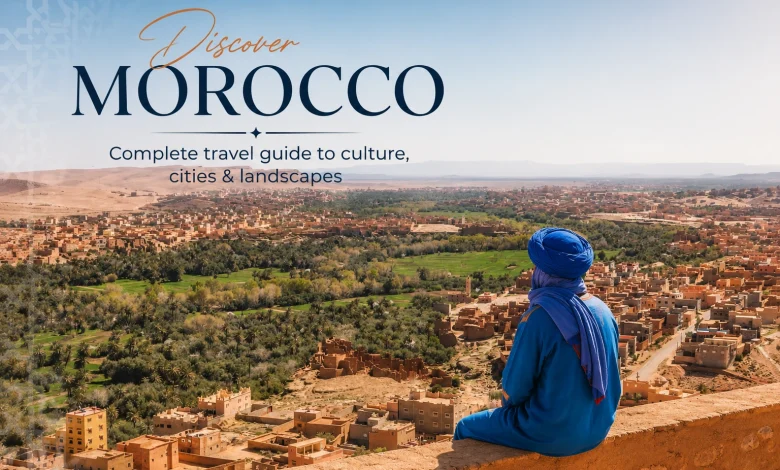
Discover Morocco and you discover a country that changes character every few hours of driving. Sea spray in the morning, snow on a mountain pass by noon, and silence over red sand by nightfall. Few places on earth pack that much variety into one journey, and even fewer make it feel so easy.
Morocco sits in the far northwest corner of Africa, separated from mainland Spain by the Strait of Gibraltar, which narrows to about 13 kilometres between Point Marroquí and Point Cires, according to Britannica. That short stretch of water explains a great deal. For centuries this has been the crossing point between two continents, two faiths and two ways of seeing the world, and the result is a culture that belongs entirely to itself. This Morocco travel guide is built around that idea: not a list of monuments, but a working introduction to the country’s destinations, culture, food and the practical details of getting around it.
People arrive with a picture in their heads. Usually it involves a crowded souk, mint tea poured from a great height, and an endless run of golden dunes. All of that exists. What surprises them is everything else: Atlantic surf towns, Roman ruins, cedar forests full of monkeys, ski slopes above Marrakech, art deco streets in Casablanca, and small mountain villages where lunch takes three hours because nobody is in a hurry.
- Why travellers choose Morocco
- A history you can walk through
- Culture, craft and hospitality
- The languages of Morocco
- Food, tagines and mint tea
- Mountains, desert and coast
- Morocco destinations, region by region
- Experiences worth planning around
- Morocco itinerary for first-time visitors
- Riads, kasbahs and desert camps
- Morocco travel tips
- Questions travellers ask
Why travellers choose Morocco ↑ contents
The honest answer is range. Morocco tourism is not built on a single attraction that everyone photographs and leaves. It is built on the distance between things, and on how quickly one experience replaces another. You can spend a morning bargaining for leather slippers in an old market and an afternoon walking a mountain footpath where the only sound is water running through an irrigation channel.
- Ancient medinasFes, Marrakech, Tetouan and Essaouira, all UNESCO listed.
- Atlas Mountain hikingDay walks to multi-day treks, guides and mules included.
- Sahara desert nightsCamel treks, dune sunrises and camps under a clean sky.
- Two coastlinesAtlantic surf and Mediterranean bays, from Taghazout to Al Hoceima.
- Moroccan cuisineTagines, couscous Fridays, street food and market cooking classes.
- Riads and hospitalityCourtyard houses, family guesthouses, tea before business.
- Short flightsRoughly three hours from most western European cities.
The practical side matters too. The road network is good, the main cities are linked by rail, English is widely spoken in the travel trade, and prices remain reasonable for most visitors. The same Morocco destination handles very different trips: a week of culture in the imperial cities, a family holiday split between beaches and camel rides, a photography run through the south, or a honeymoon in a courtyard riad.
Morocco rewards travellers who slow down. The country is not a checklist, it is a series of long conversations with strangers who become hosts.
A history you can walk through ↑ contents
Morocco history is not kept behind glass. It is the wall your riad is built into, the gate you drive under, the street pattern your guide navigates by memory. The oldest layer belongs to the indigenous peoples of North Africa, the Amazigh, still widely known abroad as Berbers, who have lived across this land for thousands of years, from the Atlantic shore to the western deserts of Egypt.
Rome came next and left Volubilis, a hillside of columns and mosaics near Meknes that still shows the floor plan of a working provincial town. Islam arrived in the seventh century and reshaped what followed. From the eleventh century onward a succession of dynasties, Almoravid, Almohad, Merinid, Saadian and Alaouite, built the mosques, madrasas and fortified cities that define the skyline today.
Fes was founded in the ninth century and grew into the country’s centre of learning; UNESCO, which lists the medina as World Heritage, notes that it is home to the oldest university in the world. That institution is al-Qarawiyyin, founded in 859 by Fatima al-Fihri and described by Britannica as one of the oldest universities still operating anywhere.
Waves of arrival kept adding to the mix. Arabs from the peninsula, communities from further south in Africa, and Muslim and Jewish families who left Andalusia during periods of upheaval in southern Spain. Each group brought music, food, craft and vocabulary. Walk through the mellah of Fes or Essaouira and that layered story is written into the doorways.
People and identityCulture, craft and hospitality ↑ contents
Morocco culture lives in daily habits rather than in performances staged for visitors. The weekly souk in a rural town, the hammam on a Friday, bread carried to the neighbourhood oven, a wedding that fills an entire street with drums until three in the morning. Islam is the national religion and gives the calendar its rhythm, while regional identity stays strong: an Amazigh (Berber) village in the Atlas, a fishing town on the Atlantic and a desert oasis each keep their own music, dress and dialect.
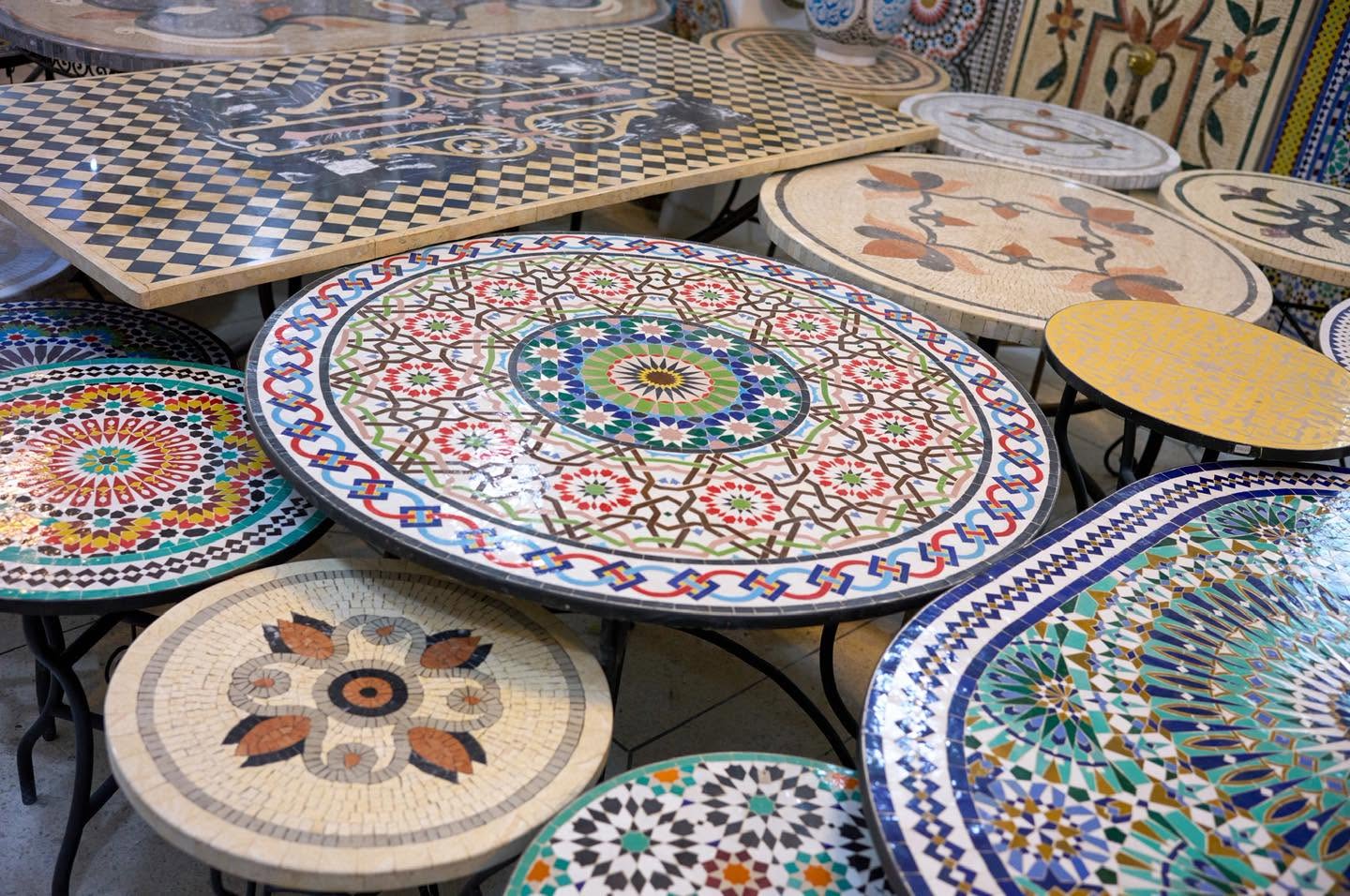
Craft is the other pillar. Zellij tile cut by hand into geometric puzzles, cedar carved into honeycomb ceilings, silver worked into Amazigh jewellery, argan oil pressed in women’s cooperatives near Essaouira, carpets woven with symbols that mean something specific to the family that made them. Buying a rug here is rarely a quick transaction, and it is not supposed to be.
Hospitality in Morocco is not an industry standard. It is a social obligation, and refusing a second glass of tea takes real diplomatic skill.
The languages of Morocco ↑ contents
Morocco has two official languages, Arabic and Amazigh. Everyday conversation, however, happens mostly in Darija, the Moroccan spoken dialect, which borrows freely from Amazigh, French and Spanish. Amazigh appears on public signage in its own Tifinagh script and is spoken in three main varieties across the mountains and the south.
French is widely used in business, administration and higher education, Spanish is common in the north, and English has spread quickly among younger Moroccans and everyone working in tourism. You will manage comfortably with English on any organised trip. Learning four words still changes the temperature of every encounter: salam for hello, shukran for thank you, bslama for goodbye, and inshallah, which covers everything from a firm promise to a polite maybe.
At the tableFood, tagines and mint tea ↑ contents
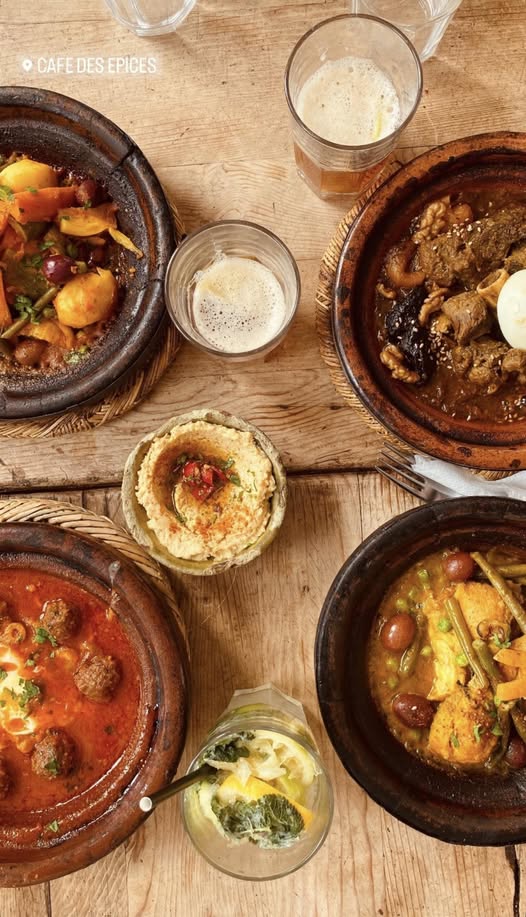
Moroccan cuisine is one of the great reasons to come. It is built on slow cooking, generous spicing and produce that travels almost no distance at all. Tagine is the headline, a conical clay pot that steams lamb with prunes, chicken with preserved lemon and olives, or vegetables with a broth you will want to drink. Couscous belongs to Friday, rolled by hand and served after prayers as a family meal.
Around those two sit harira soup, especially during Ramadan, pastilla with its sweet and savoury layers, grilled sardines straight off the Atlantic boats in Essaouira, and street food in Marrakech that runs late into the night. Breakfast means msemen and baghrir pancakes with honey and amlou, the argan and almond spread from the south.
Mint tea deserves its own line. Green tea, a fistful of fresh mint, sugar, and a pour from height that aerates it into a small ceremony. It arrives when you enter a shop, when you sit in a home, when you finish a hike. Accepting it is the polite move, and it is usually the beginning of a good conversation.
The land itselfMountains, desert and coast ↑ contents
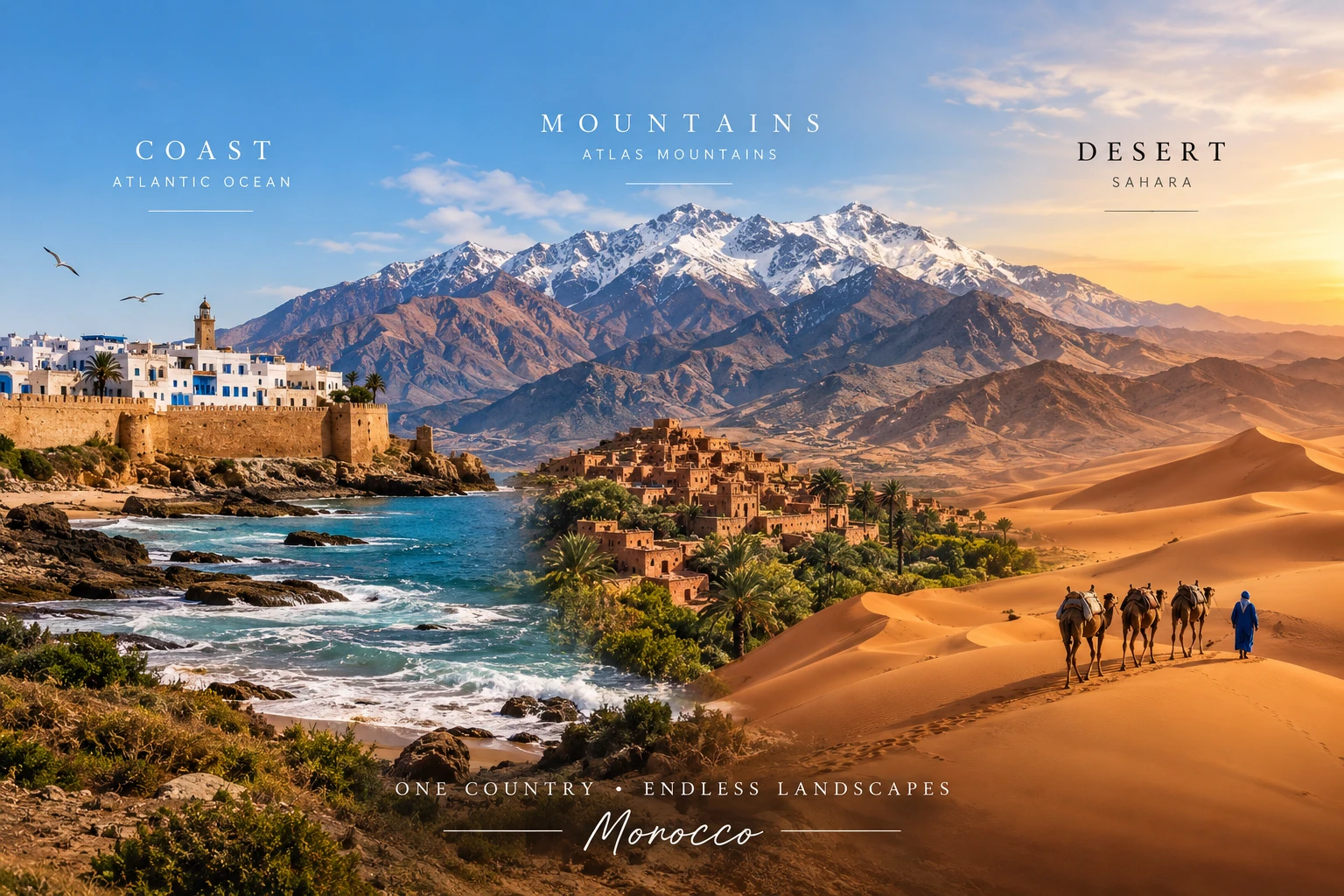
Morocco landscapes change faster than the map suggests. Three ranges cross the country: the Rif in the north, the Middle Atlas with its cedar forests and lakes, and the High Atlas, crowned by Mount Toubkal, the highest point in Morocco and in the Atlas Mountains at 4,165 metres. Snow sits on those summits well into spring while people swim on the coast below.
- The Sahara. Erg Chebbi near Merzouga and Erg Chigaga near Mhamid give you the classic Morocco desert: high dunes, camel caravans at golden hour, and camps far from any light pollution.
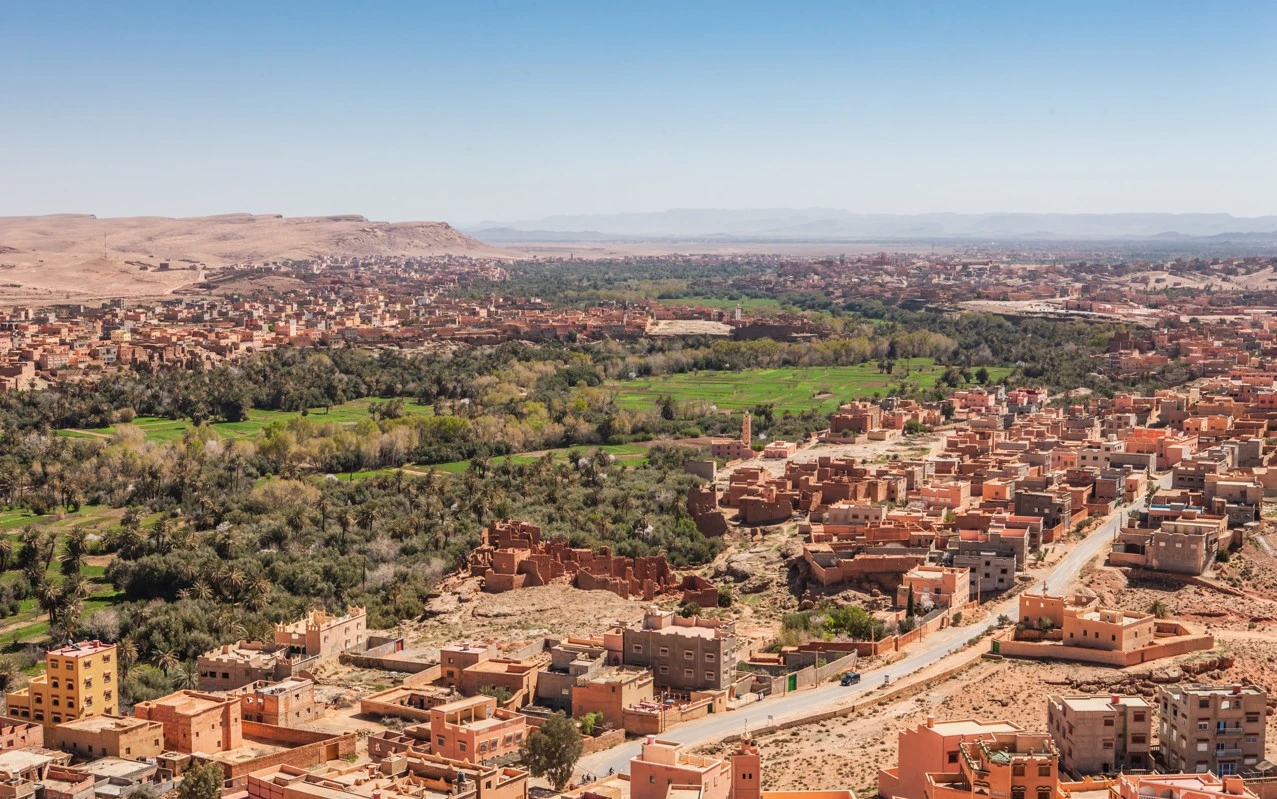
- The valleys. Dades and Todra cut deep gorges through rose coloured rock, and the Draa runs south through one of the longest palm groves in the country.
- Two coastlines. The Atlantic and the Mediterranean between them give Morocco roughly 1,835 kilometres of shoreline, according to the CIA World Factbook, from the surf breaks of Taghazout to the bays around Al Hoceima.
- Oases and plateaus. Skoura, Fint and the Tafilalet keep whole villages alive on irrigation systems that have worked for centuries.
Morocco destinations, region by region ↑ contents
Every region has a different accent, in the literal and the figurative sense. These eleven are the places most travellers build a route around, and they are a fair shortlist of the best places to visit in Morocco.
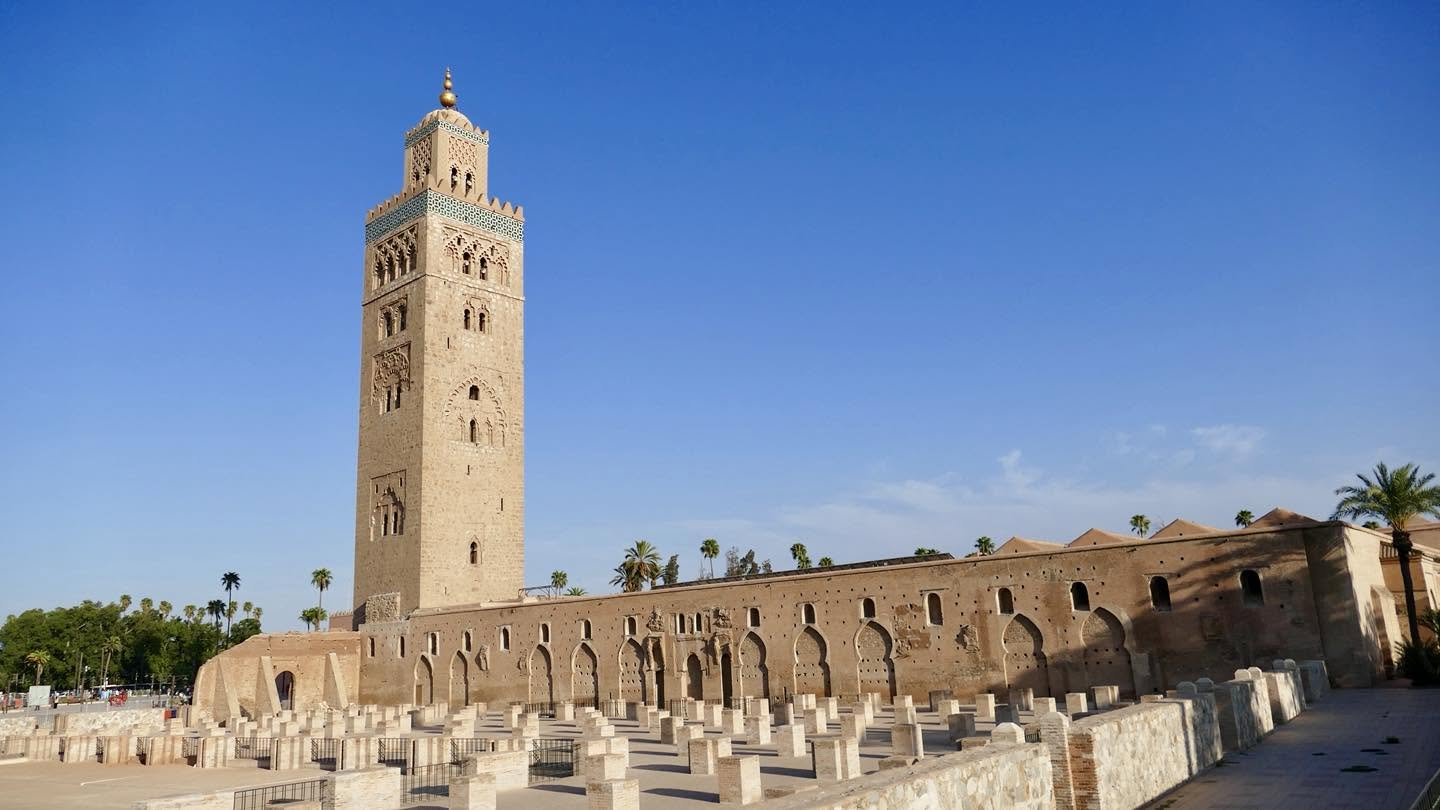
Marrakech Imperial city
The red city and the usual starting point. Jemaa el Fna at sunset, the souks behind it, Bahia Palace, Majorelle Garden, and the desert road beginning at the edge of the palm groves.
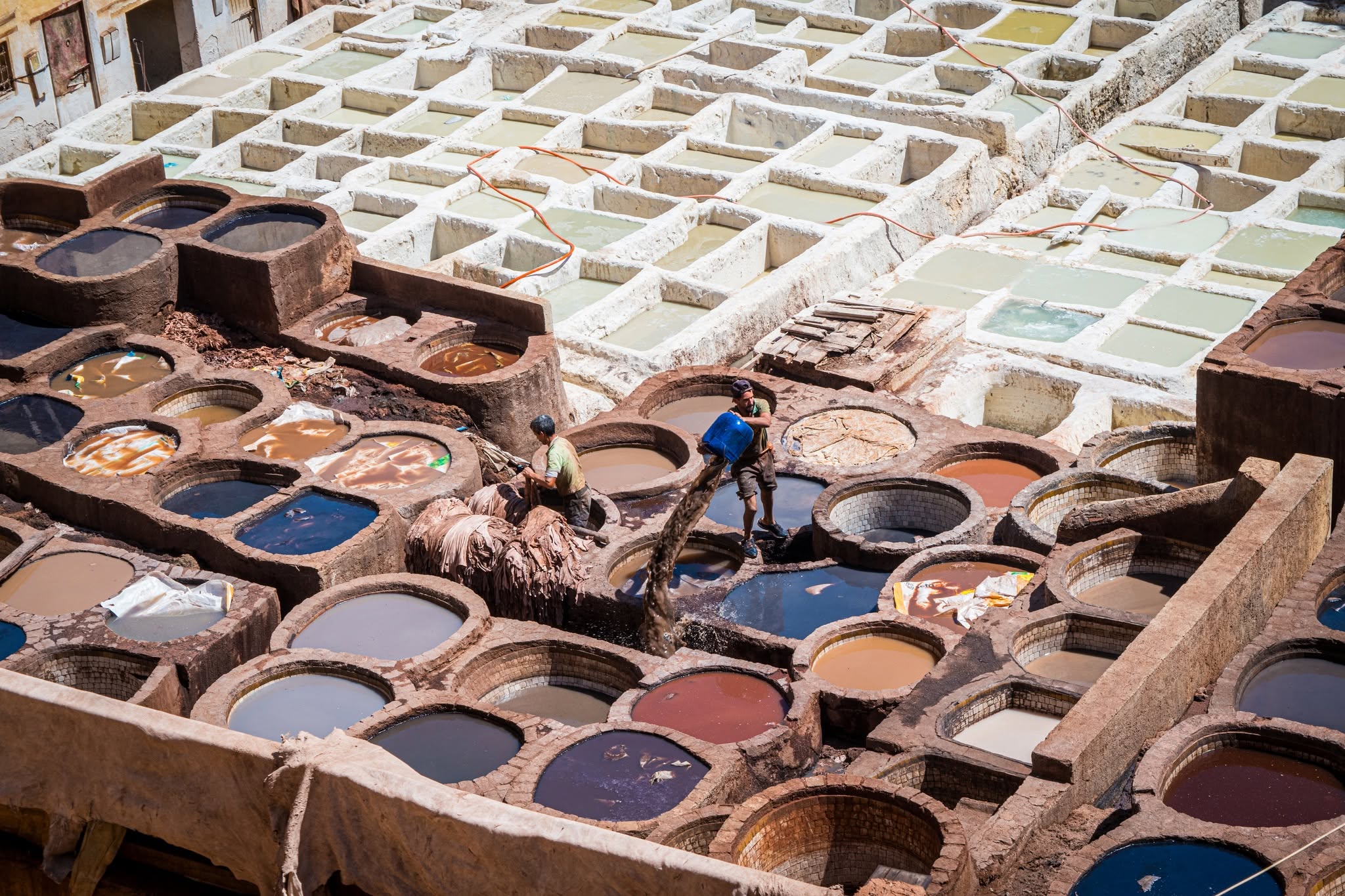
Fes Spiritual capital
One of the world’s largest car-free historic urban areas. Al Qarawiyyin, the Chouara tanneries, and craftsmen still working in the lanes their grandfathers used.
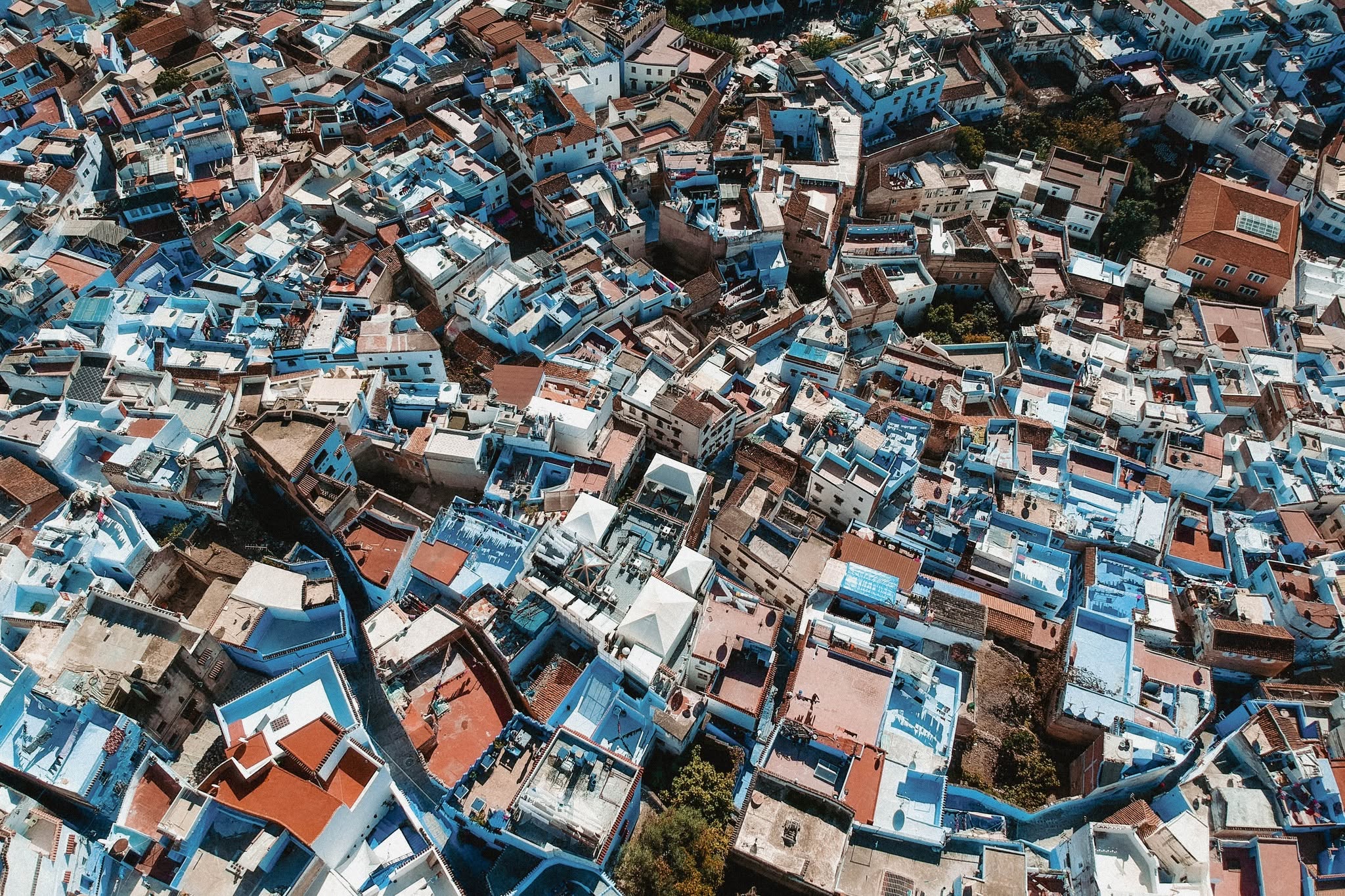
Chefchaouen Rif Mountains
The blue town, cooler and quieter than the imperial cities, with steep painted alleys, a Spanish inflected feel, and short hikes to waterfalls nearby.
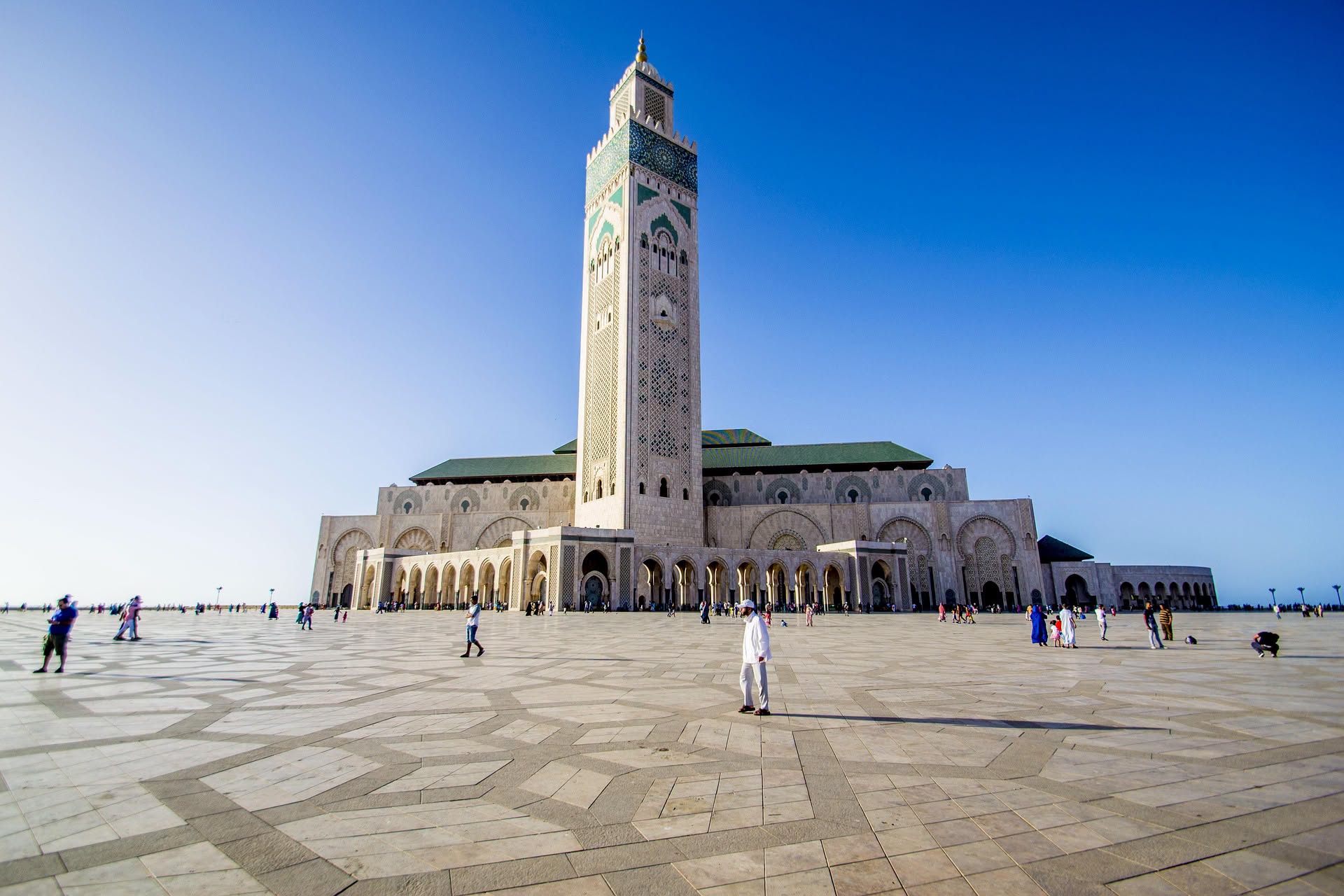
Casablanca Atlantic metropolis
Modern Morocco at full speed. The Hassan II Mosque stands partly over the ocean, and the art deco downtown is one of the finest collections of its kind anywhere.
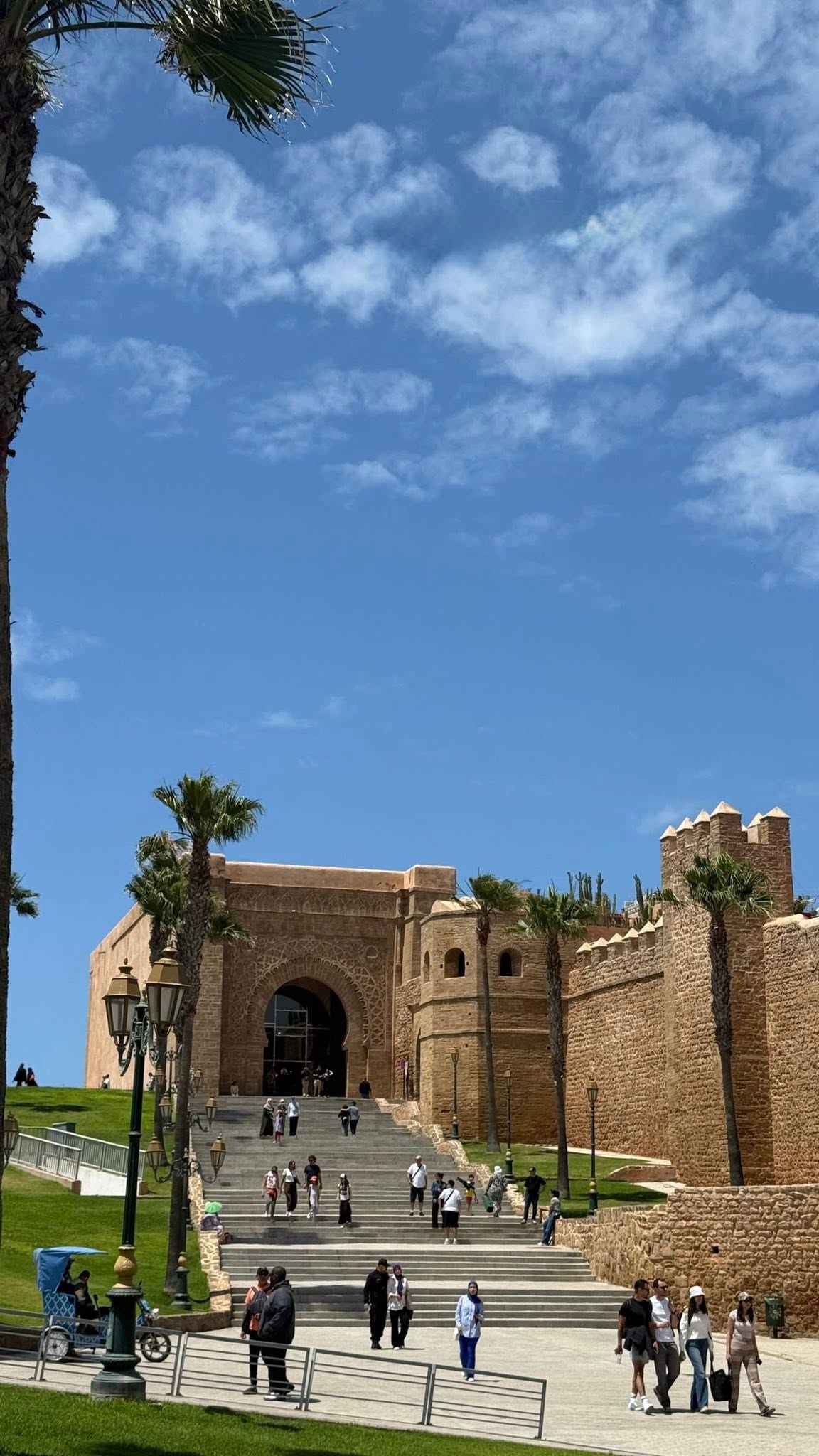
Rabat The capital
Calm, green and underrated. The Kasbah of the Udayas above the river, the Hassan Tower, the Roman and Merinid ruins at Chellah, and a genuinely walkable centre.
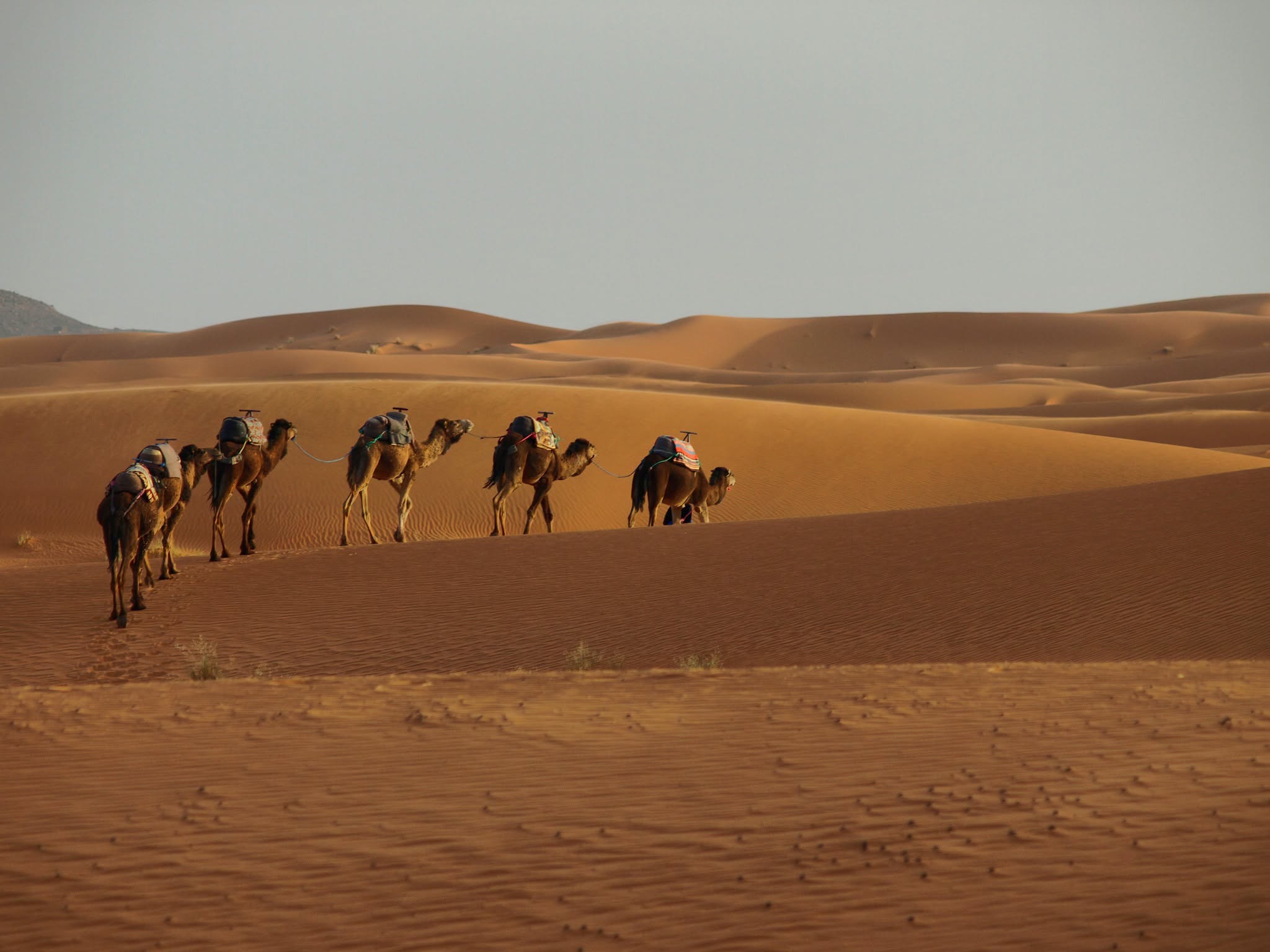
Merzouga Sahara
The gateway to Erg Chebbi and the reason most desert routes run south. Sunrise on the dunes, nomad families, and nights that go completely silent.
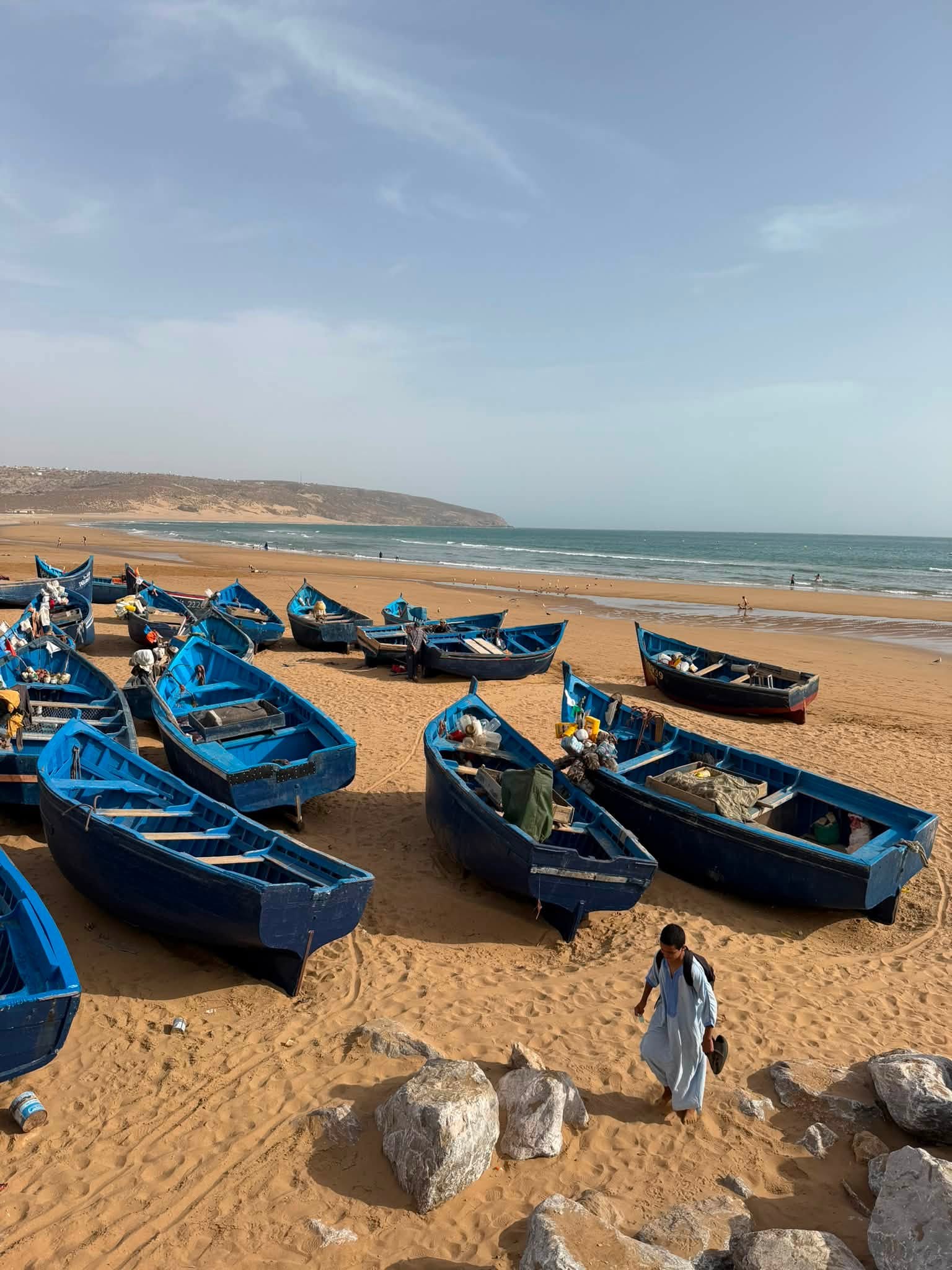
Essaouira Atlantic coast
Ramparts, blue boats, gnaoua music and constant wind that made it a kitesurfing capital. The easiest place in Morocco to do nothing well.
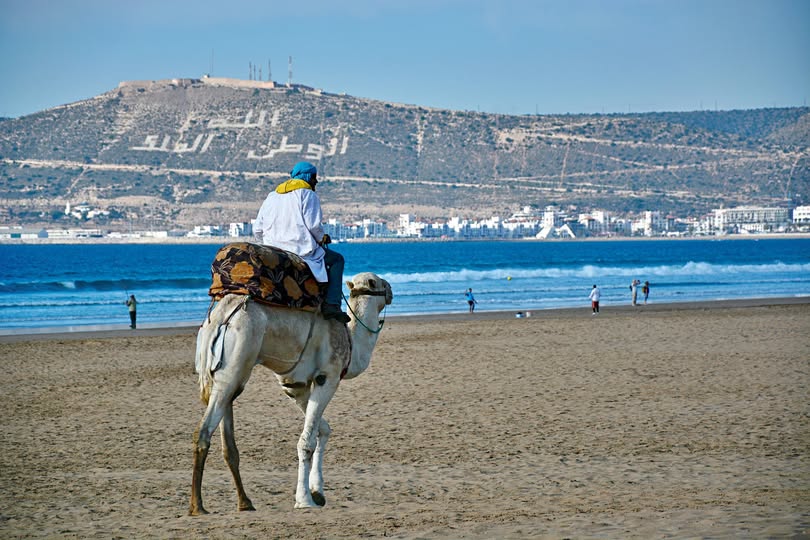
Agadir Souss and surf
A wide crescent beach, resorts and a mild winter climate, with Taghazout and Tamraght up the coast for surfing and Paradise Valley inland for a swim in fresh water.
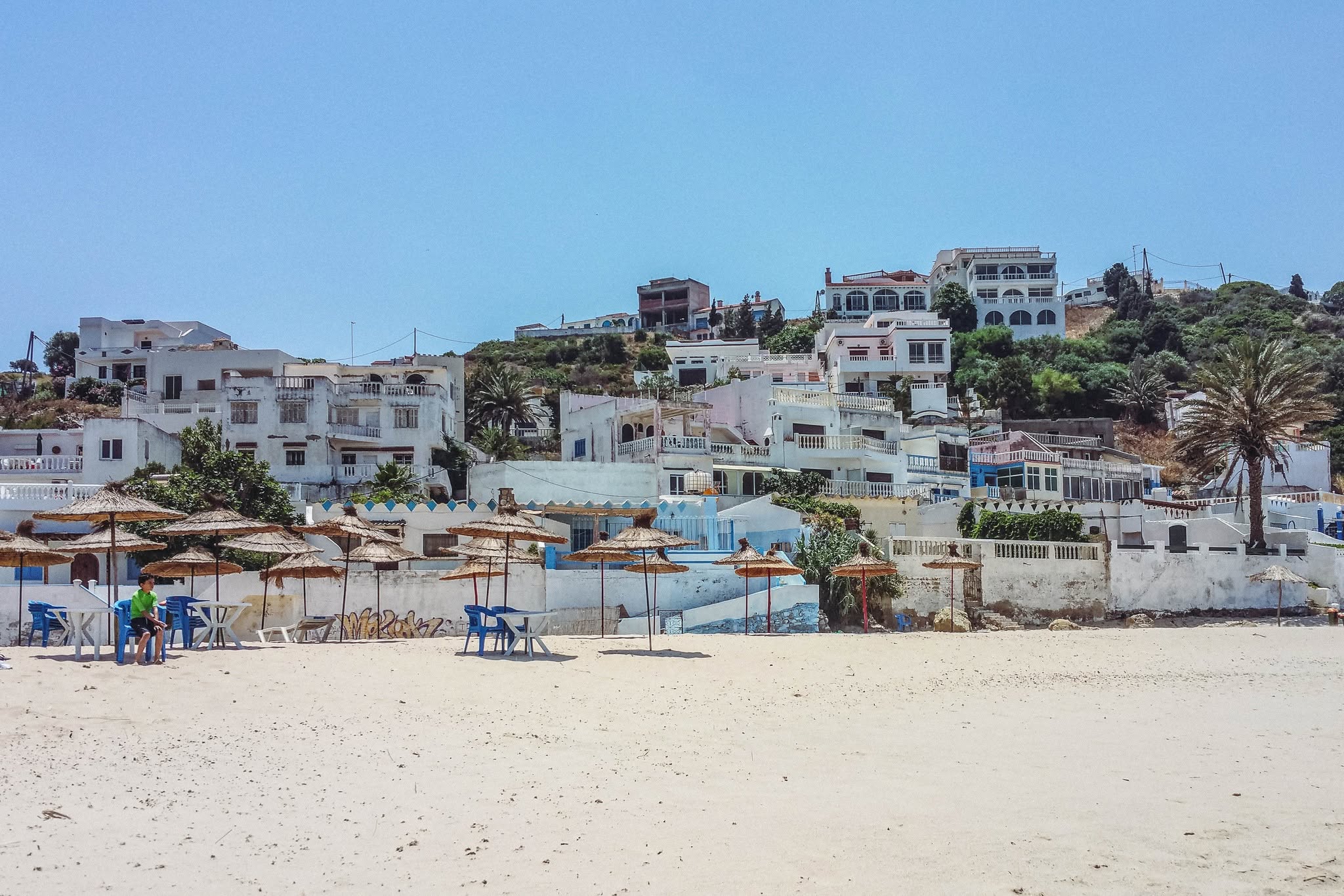
Tangier The strait
Where Africa looks across at Europe. A rebuilt waterfront, a literary past, the Caves of Hercules, and Cap Spartel where two seas meet.
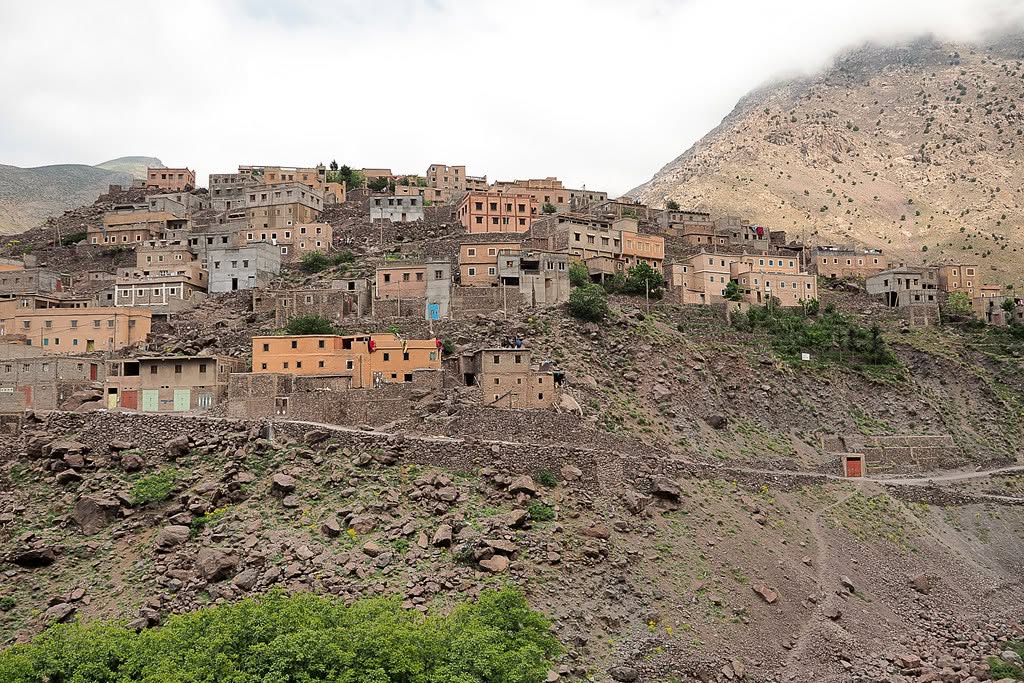
Atlas Mountains High Atlas
Imlil, the Ourika valley, Ait Bouguemez and the Toubkal trails. Mule tracks, walnut trees, and guesthouses run by families who have farmed these slopes for generations.
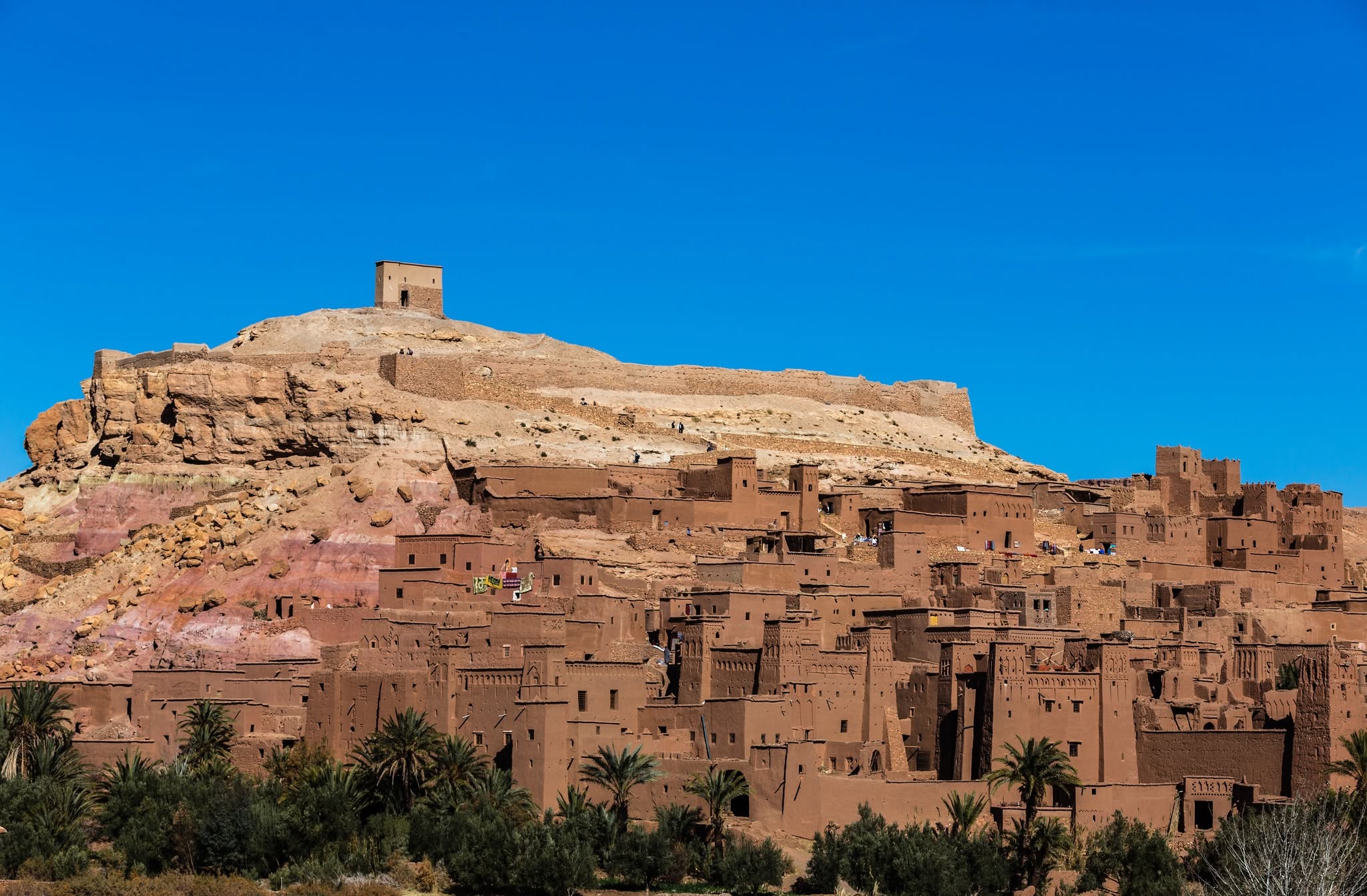
Ouarzazate Gateway to the south
Film studios, the Fint oasis, and just up the road the earthen kasbah of Ait Ben Haddou, a UNESCO site that has doubled as half the ancient world on screen.
Experiences worth planning around ↑ contents
The best things to do in Morocco tend to be the ones that put you next to people rather than in front of monuments. A rough shortlist:
- Sleep in a desert camp near Merzouga or Chigaga and watch the dunes change colour twice in twelve hours.
- Get lost on purpose in Fes el Bali, then let a licensed guide untangle you and open the workshops behind the doors.
- Take a cooking class in a riad, starting at the market with a basket and ending at a table you helped fill.
- Walk a day of the Toubkal circuit or a valley route in Ait Bouguemez, with tea in a village halfway.
- Drive the Marrakech to Ouarzazate road over the Tizi n’Tichka pass, which is an attraction in its own right.
- Surf, or simply eat grilled fish, in Taghazout, Imsouane or Essaouira.
- Sit through an evening of gnaoua music, ideally in a small venue rather than a hotel lobby.
- Visit Volubilis early, before the coaches, and walk the mosaics with the hills to yourself.
Most of these fit neatly into our day trips and longer Morocco tours, and the southern loop is covered in detail in our private desert tours.
Planning a routeMorocco Itinerary for First-Time Visitors ↑ contents
A first Morocco itinerary usually works best over eight to ten days, moving south from Marrakech and looping back north through the valleys. This version keeps the driving reasonable and leaves time to actually stop.
- Day 1Marrakech
Arrive, settle into a riad, and spend the evening on the edge of Jemaa el Fna.
- Day 2Marrakech
Palaces, gardens and souks in the morning, hammam in the late afternoon.
- Day 3High Atlas to Ait Ben Haddou
The Tizi n’Tichka pass, the kasbah at golden hour, night in Ouarzazate.
- Day 4Dades Valley
Skoura palm grove, the Valley of Roses, and the gorges in the afternoon.
- Day 5Todra to Merzouga
Canyon walls in the morning, camels and a desert camp by evening.
- Day 6Sahara
Sunrise on Erg Chebbi, nomad families, oasis villages and fossil beds.
- Day 7Middle Atlas
The long drive north with stops, cedar forests and the lakes around Ifrane.
- Day 8Fes
Two nights minimum. The medina needs a full unhurried day with a local guide.
- Day 9Chefchaouen
Blue streets and mountain air, an easy pace after the desert.
- Day 10Rabat or Casablanca
Coast, capital sights, and departure.
With only a week, cut Chefchaouen and the north. With two weeks, add Essaouira for the Atlantic and a couple of nights walking in the Atlas.
Travel with a licensed local guide, a private vehicle and a route built around your interests, at your own pace.
Plan a Private Morocco TourRiads, kasbahs and desert camps ↑ contents
Accommodation is one of the quiet pleasures of visiting Morocco. A riad is a traditional house built inward around a courtyard, often with a fountain, a handful of rooms and a roof terrace for breakfast. From the street it looks like nothing. Inside it is cool, tiled and completely private, which was exactly the point.
In the south you sleep in kasbahs and ksour built from rammed earth, in the desert in tented camps that range from simple to genuinely luxurious, and in the mountains in family guesthouses where dinner is whatever the household is eating. Add the international hotels of Marrakech, Casablanca and Agadir, and the range covers every budget without much compromise on character.
Before you goMorocco travel tips ↑ contents
- Best time to travel. Spring, from March to May, and autumn, from September to November, work almost everywhere. Summer suits the coast and the mountains, while the desert is far better in winter, when days are mild and nights are cold.
- Money. The dirham is a closed currency, so change on arrival. Cards work in cities and hotels, cash rules in souks, small towns and rural guesthouses.
- Getting around. Trains link the northern cities well, including the high speed line between Tangier and Casablanca. Everything south of Marrakech is easier with a private driver.
- What to wear. Comfortable and reasonably covered. Shoulders and knees covered is respectful in medinas and small towns, lighter rules apply at beaches and resorts. Pack a warm layer for desert nights and mountain evenings.
- Guides. Use official licensed guides in Fes and Marrakech. They save hours, and they open doors that stay shut otherwise.
- Bargaining. Expected in souks and always good humoured. Decide your price, stay friendly, and walk away without drama if it does not work.
Questions travellers ask ↑ contents
How many days do you need to discover Morocco properly?
Seven days covers Marrakech, the High Atlas and the desert at a decent pace. Ten to twelve days lets you add Fes, the north and the coast without spending the whole trip in a vehicle. Anything under five days is best kept to one city and its surroundings.
Is Morocco a good destination for a first trip to Africa?
It is one of the easiest starting points. Tourism infrastructure is well developed, English is widely spoken in the trade, flights from Europe are short and frequent, and the mix of city, mountain and desert gives you a very complete picture in a single trip.
Do I need a visa to travel to Morocco?
Citizens of many countries, including the EU, the UK, the United States, Canada and Australia, can enter without a visa for stays of up to 90 days. Rules change, so confirm with the Moroccan consulate in your country before booking.
What is the best time of year for the Sahara?
October to April. Daytime temperatures are pleasant and the nights are cold enough for a fire and a blanket. Midsummer in the deep south is intense and better avoided if you have the choice.
Can women travel comfortably in Morocco?
Yes, and many do, solo and in groups. Dressing modestly, using licensed guides and booking transport through a reputable agency all make the experience smoother, particularly in the busiest medinas.
Is it better to join a tour or travel independently?
Cities are easy to handle on your own. The south, the valleys and the desert are where a private tour pays for itself, because the driving is long, the good stops are unmarked, and a local team gets you into places that independent travellers usually pass right by.
Morocco has a habit of staying with people. The details go first, then the sequence of days, and what remains is a feeling: sitting on a terrace as the call to prayer moves across a city, or standing on a dune at first light with nobody else awake.
When you are ready to discover Morocco for yourself, we build the route around what you actually want to see, with licensed guides, private transport and places to sleep that are worth the night.
- UNESCO World Heritage Centre, Medina of Fez
- Encyclopaedia Britannica, Qarawiyyin and Mount Toubkal
- Encyclopaedia Britannica, Strait of Gibraltar
- CIA World Factbook, Morocco country profile (coastline data)