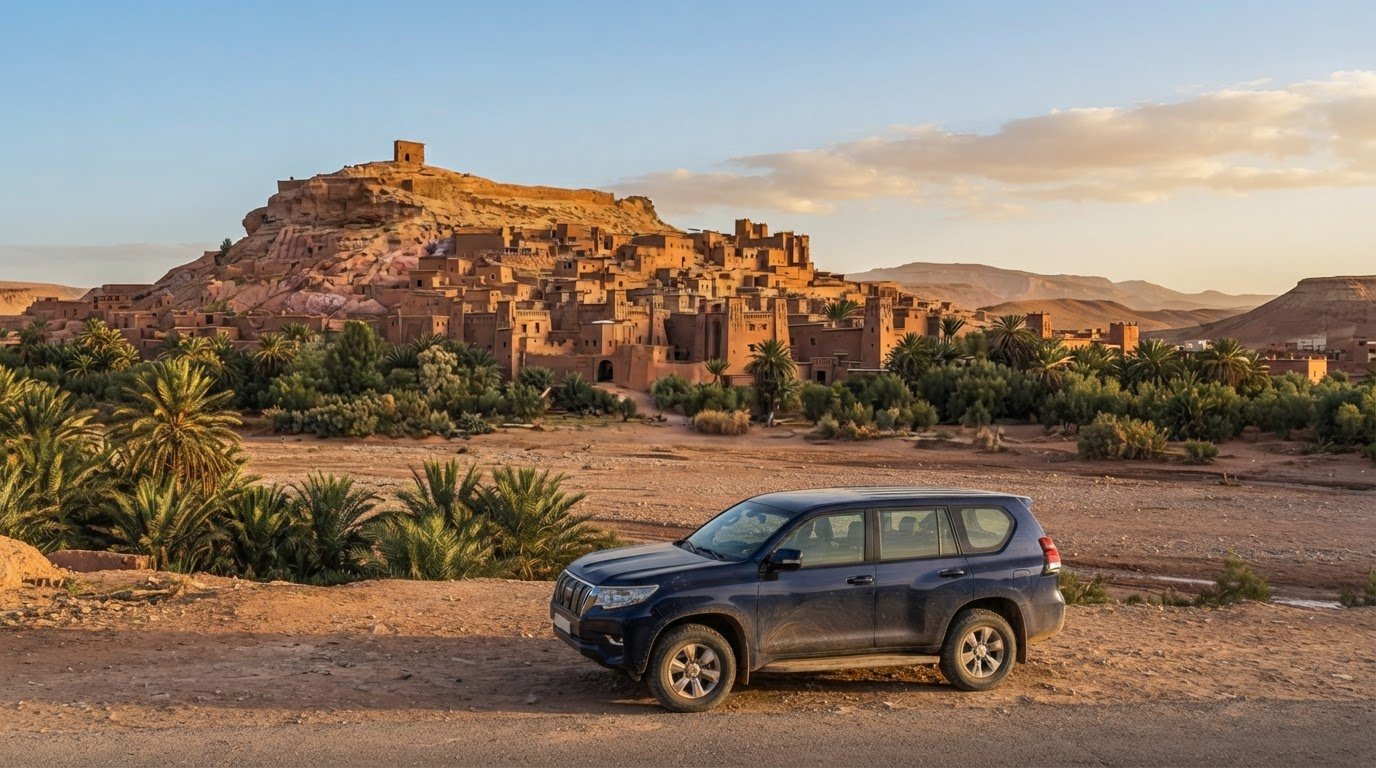
A 12-day grand Morocco tour itinerary can trace a remarkable route from Casablanca and Rabat to Chefchaouen, Fes, the Sahara, and Marrakech. Across 11 nights, the journey moves from northern medinas and mountain roads to Erg Chebbi’s desert dunes, the valleys and gorges of the south, and the High Atlas crossing.
It’s natural to want more than a list of stops: the rhythm of each day, the long drives, and what your stay actually includes all shape the experience. This guide sets out the private route day by day, highlights the landscapes and cultural visits along the way, and clarifies which accommodation, meals, and transport are included or excluded, so you can picture the journey with confidence.
From Chefchaouen’s blue-washed lanes and Fes’s historic medina to a desert camp beneath open skies, the itinerary balances celebrated landmarks with changing scenery. You’ll also see how the route unfolds before its final approach to Marrakech.
Key Takeaways
- See how the route links Morocco’s northern cities, Sahara landscapes, and southern valleys before crossing the High Atlas to Marrakech.
- Understand what to look for in the accommodation, transport, and meal arrangements, and which costs sit outside the tour inclusions.
- Plan time in Marrakech, Fes, Chefchaouen, and the Sahara around the balance you want between guided discovery, scenic travel, and slower moments.
- Explore whether a multi-day journey or a focused desert or regional excursion best suits your travel plans.
High Atlas crossing and Ait Ben HaddouContents
The journey from northern Morocco to the desert reveals how quickly the landscapes change. After Casablanca’s Hassan II Mosque, with its 210-meter minaret, the route turns inland through the Middle Atlas toward Fes and Merzouga. Ifrane’s orderly streets give way to Azrou’s cedar forest, where wooded slopes bring a cooler, greener pause before the road continues south.
The drive from Fes to Merzouga is listed at 7 hours, passing Ifrane, the Cedars forest, Midelt, and the Ziz Valley. Along this stretch, the Col du Zad reaches 7,146 feet, while Tizi N’Talghomt Pass stands at 1,907 metres. Midelt and the Ziz Valley mark a gradual shift from mountain scenery to palm groves and the drier approaches to the desert. These changing views make the drive a central part of the journey, not simply a transfer between cities.
Near Merzouga, the open valley scenery yields to the sand dunes of Erg Chebbi. Later, the route west passes through Dades Valley and Ouarzazate toward Aït Benhaddou, an ancient settlement of earthen architecture and narrow lanes. Its old ksour date from the 11th century, giving the visit a strong sense of continuity with Morocco’s caravan-era heritage.
The final mountain passage follows the road over Tizi n’Tichka, which rises to 2,260 meters, before descending toward Marrakech. Allow about four hours for the crossing with stops; bends, viewpoints, and changing elevations reward an unhurried pace. From Dades Valley via Ouarzazate and the High Atlas, the drive to Marrakech is estimated at 5.5 hours. Together, Aït Benhaddou and the Atlas crossing create a memorable transition from southern valleys to the red city.
Mount Toubkal, the highest peak in the High Atlas range, is 13,671 feet (4,167 metres) high, giving the crossing a wider mountain context. The road over Tizi n’Tichka climbs to over 2,200 metres, bringing a marked change in elevation before the descent toward Marrakech.
The drive across the Tizi n’Tichka pass to Marrakech takes about four hours with stops, allowing time for pauses along the way. Together, the peak’s height and the pass’s elevation underline the scale of the mountain landscape and make the crossing a substantial part of the journey toward the city.
Tour inclusions and exclusionsContents
For a 12-day journey through imperial cities, kasbahs, and desert landscapes, the inclusions shape both comfort and pace. Look closely at accommodation, transport, meals, guided experiences, and expenses paid separately.
Accommodation and Transport
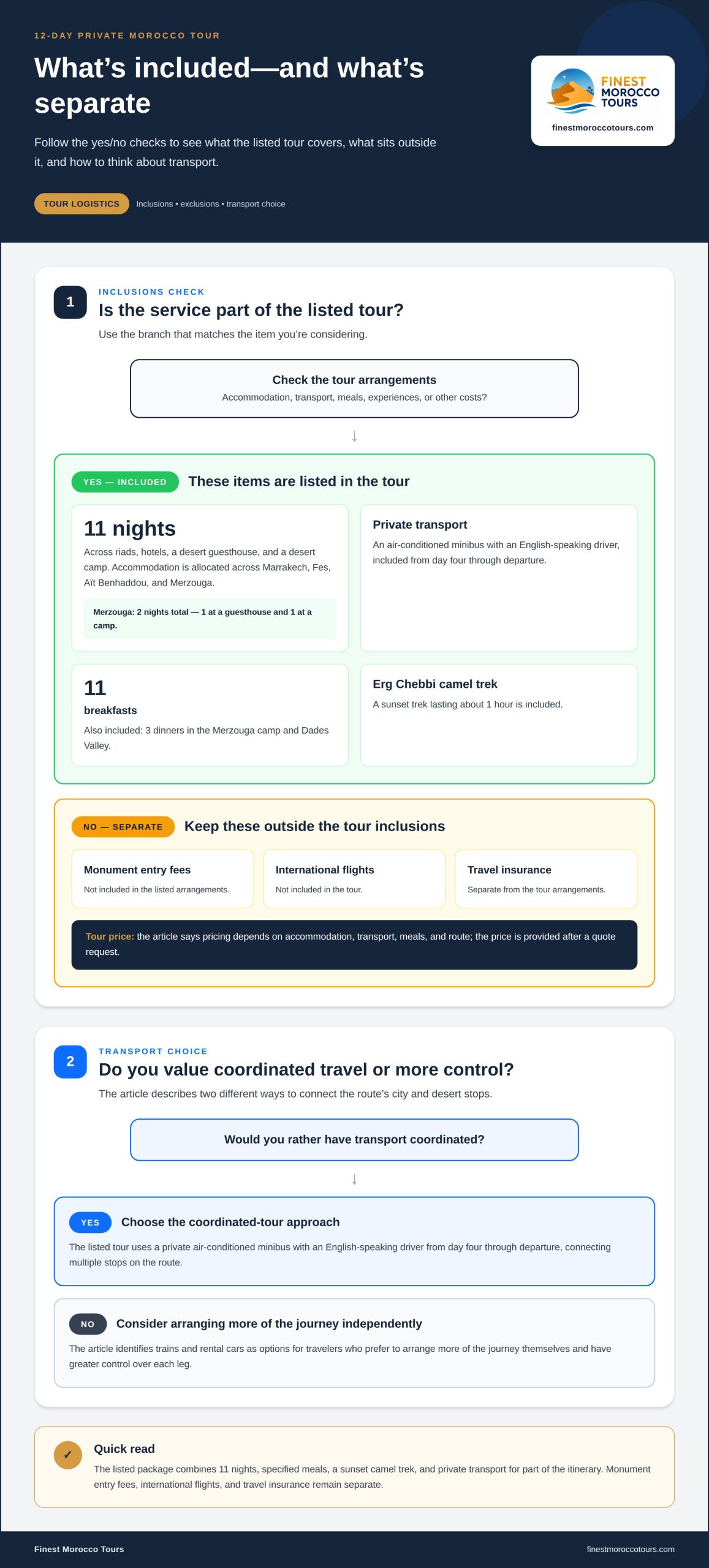
A listed itinerary includes 11 nights across riads, hotels, a desert guesthouse, and a desert camp. Accommodation is allocated across Marrakech, Fes, Aït Benhaddou, and Merzouga, so check how each overnight stop supports the route. The private air-conditioned minibus with an English-speaking driver is included from day four through departure.
For a multi-stop journey through Morocco, a private driver or guided tour can connect city visits with remote desert stops. Trains and rental cars suit travelers who prefer to arrange more of the journey independently. Choose based on whether coordinated transport or greater control over each leg matters more to you.
Included Experiences and Excluded Services
The itinerary includes 11 breakfasts, three dinners in the Merzouga camp and Dades Valley, and a sunset camel trek in Erg Chebbi lasting about one hour. Monument entrance fees are excluded, as are international flights and travel insurance. Keep these separate from included meals and transport when judging the overall arrangements.
For a Sahara visit, traveling from Fes to Marrakech via Merzouga, or in reverse, brings the desert into a wider city journey. The itinerary includes two nights in Merzouga: one at a guesthouse and one at a camp, as well as a camel trek and included dinners.
Typical 12-day tour prices depend on accommodation, transport, meals, and the route; the price is provided after a quote request. For a shorter desert-focused journey, consider a desert tour from Fes to Merzouga as a way to explore the Sahara without covering the full circuit.
12-Day private Morocco itineraryContents
This route connects coastal cities, northern medinas, the Middle Atlas, the Sahara and Marrakech. Its appeal lies in the changing landscapes, with historic visits along the way and longer drives between destinations.
- Begin in Casablanca, with time near Hassan II Mosque.
- Travel to Rabat, then continue toward Chefchaouen.
- Explore Chefchaouen’s blue lanes and mountain setting.
- Visit Volubilis and Meknes before reaching Fes.
- Discover Fes medina, a UNESCO World Heritage Site.
- Cross the Middle Atlas through Ifrane and Azrou’s cedar forest, then reach Merzouga.
- Explore the Merzouga area and Erg Chebbi.
- Travel through Rissani and Todra Gorge to Dades Valley.
- Continue via Ouarzazate and Aït Benhaddou.
- Cross the High Atlas toward Marrakech.
- Explore Marrakech’s medina and historic landmarks.
- Depart from Casablanca, allowing time for the journey from Marrakech.
For entry, visitors from the European Union, United States, Canada, the UK, and many other countries can enter visa-free for stays up to 90 days, subject to current requirements. Travel insurance is separate from the tour arrangements, so include it in your travel planning.
Spring, from March to May, and autumn, from September to November, are recommended seasons for this route. Conditions differ between the coast, the Middle Atlas and the desert, so plan for changing settings as the journey progresses.
For safety and health, keep essential medicines accessible, drink water regularly, and follow local guidance during desert and mountain excursions. In medinas and at religious sites, dress respectfully, ask before photographing people, and observe local customs with courtesy.
Pack comfortable walking shoes for Fes and Marrakech, sun protection for Erg Chebbi, and layers for changing temperatures across the Middle Atlas and High Atlas. A light day bag keeps travel essentials close during visits and scenic stops.
How many days should be spent in Marrakech, Fes, Chefchaouen, and the Sahara on a 12-day trip?Contents
A balanced 12-day route gives Marrakech and Fes two nights each, includes two nights around Merzouga, and makes room for Chefchaouen between Rabat and Fes. The remaining days connect these stays through Morocco’s northern cities, Middle Atlas, desert valleys, and High Atlas. This division makes travel time part of the experience, while protecting time for the medinas and Sahara.
In Marrakech, two nights allow a sightseeing day for landmarks and the medina, rather than only an arrival and departure. Fes also merits two nights: its sightseeing itinerary includes a 3-to-4-hour walking tour, with time to absorb the winding lanes and historic architecture. These stays give each imperial city a meaningful visit without making the southern journey feel detached.
Chefchaouen works well as a carefully paced stop on the northern route. The itinerary allows a 2-hour walking tour, enough to explore its blue lanes and mountain setting before travelling onward. From Rabat, the drive to Chefchaouen takes around four hours; from there, Volubilis and Meknes lead toward Fes. Treat the journey as a sequence of visits, not an extra day spent only in transit.
Allow two nights in Merzouga to shift from road travel to desert discovery. The itinerary includes one night at a guesthouse and one at a camp, plus a sunset camel trek lasting about one hour. This pause gives you time to experience Erg Chebbi rather than crossing the Sahara in a single hurried passage.
On this route, the best allocation is shaped by the long links between destinations, including drives that can span 1 to 7 hours per day. If you’d like help shaping the city and desert balance, plan your private Morocco journey.
Within Marrakech, the sightseeing day can focus on landmarks rather than trying to cover everything at once. Bahia Palace is described as dating to the 19th century, while Ben Youssef Madrasa is a 16th-century Koranic school. El Badi Palace is described as dating to the 17th century, and the Saadian Tombs are described as dating to the 16th century.
The Koutoubia Mosque minaret is 77 metres tall, and the red sandstone city walls and buildings are 1000 years old. These details give the city stay a clear focus: pair a landmark visit with time in the medina, then keep the onward schedule realistic instead of compressing every sight into a rushed stop.
Finest Morocco ToursContents
Finest Morocco Tours helps travelers shape a private Morocco journey around the cities, mountain crossings, and desert stays that matter most to them. If you’re weighing a full route against a shorter regional experience, its tours include a 10-Day Morocco Honeymoon Tour (9 Nights), a 2-Day Chefchaouen, Volubilis and Meknes Tour from Fes, and a 3 day desert tour Fez to Marrakech via Merzouga. These examples offer different ways to experience Morocco’s heritage and changing landscapes, from northern medinas to the Sahara.
Turn to Finest Morocco Tours when you’re ready to discuss how a private route could fit your travel priorities. Contact Finest Morocco Tours to begin planning your Morocco journey.
Shape the Journey Around What Matters MostContents
A 12-day grand Morocco tour itinerary is best treated as a thoughtful framework, not a race between destinations. Consider what you want the journey to feel like: quiet evenings in historic surroundings, time to linger over a medina, or a greater emphasis on open desert landscapes. Those preferences help shape the pace and the transitions between regions.
Finest Morocco Tours can help turn those priorities into a private travel plan, with routes shaped around the places and experiences that matter to you. A meaningful next step is to share the kind of journey you have in mind and discuss how its rhythm might suit your travel style.
Contact Finest Morocco Tours to begin planning, and let the possibilities of Morocco unfold at a pace that feels right for you.
Frequently Asked QuestionsContents
What is a recommended 12-day Morocco tour itinerary covering the major cities and regions?
A 12 day grand Morocco tour itinerary can begin in Casablanca, continue through Rabat and Chefchaouen, then reach Volubilis, Meknes, and Fes. From Fes, travel south through the Middle Atlas to Merzouga, then cross Dades Valley and visit Aït Benhaddou before arriving in Marrakech. Keep your departure city in mind as you plan the final connection, so the last day allows for the transfer.
What are the best routes and driving times between Morocco’s main destinations?
A 12 day grand Morocco tour itinerary can follow the northern route from Casablanca to Rabat, a drive of about 1 hour 15 minutes, then continue toward Chefchaouen and Volubilis. The drive from Chefchaouen to Volubilis takes about 3.5 hours. From Merzouga, allow about 5 hours through Rissani, Erfoud, and Todra Gorges to Dades Valley. Plan scenic stops around the day’s driving and visits.