Is tipping customary in Morocco? Yes: a tip of 10-15% is recommended in restaurants, while a modest gratuity is customary for taxi drivers and porters. Guided tours in Morocco also offer a thoughtful way to explore the country’s heritage, local culture and changing landscapes, whether you’re planning a brief excursion or a journey across several cities.
It’s natural to want more than a checklist of landmarks; the route and pace shape how deeply a place comes into view. This guide to guided tours in Morocco will help you compare trip options, understand what heritage routes and local cultural encounters offer, and consider how tipping fits into everyday travel.
We’ll also look closely at day trips from Marrakech, from choosing an excursion that suits your time to weighing it against a longer itinerary. With these distinctions in mind, you can shape a visit that feels unhurried, culturally rich, and right for how you want to discover Morocco.
Key Takeaways
- Match your route to the heritage you most want to explore, from imperial cities and historic sites to desert landscapes.
- Learn how respectful, locally guided encounters can add context to daily customs, crafts, and community life.
- Weigh a Marrakech day trip against a longer itinerary by considering the places you want to see and the time you have.
- Understand practical travel details, including the UK tourist visa allowance and the role of tipping during your visit.
Imperial cities, kasbahs, and heritage sitesContents
Morocco’s historic cities bring imperial architecture, lively medinas, and desert routes into one journey. A considered itinerary balances landmark visits with time to explore.
Imperial City Visits
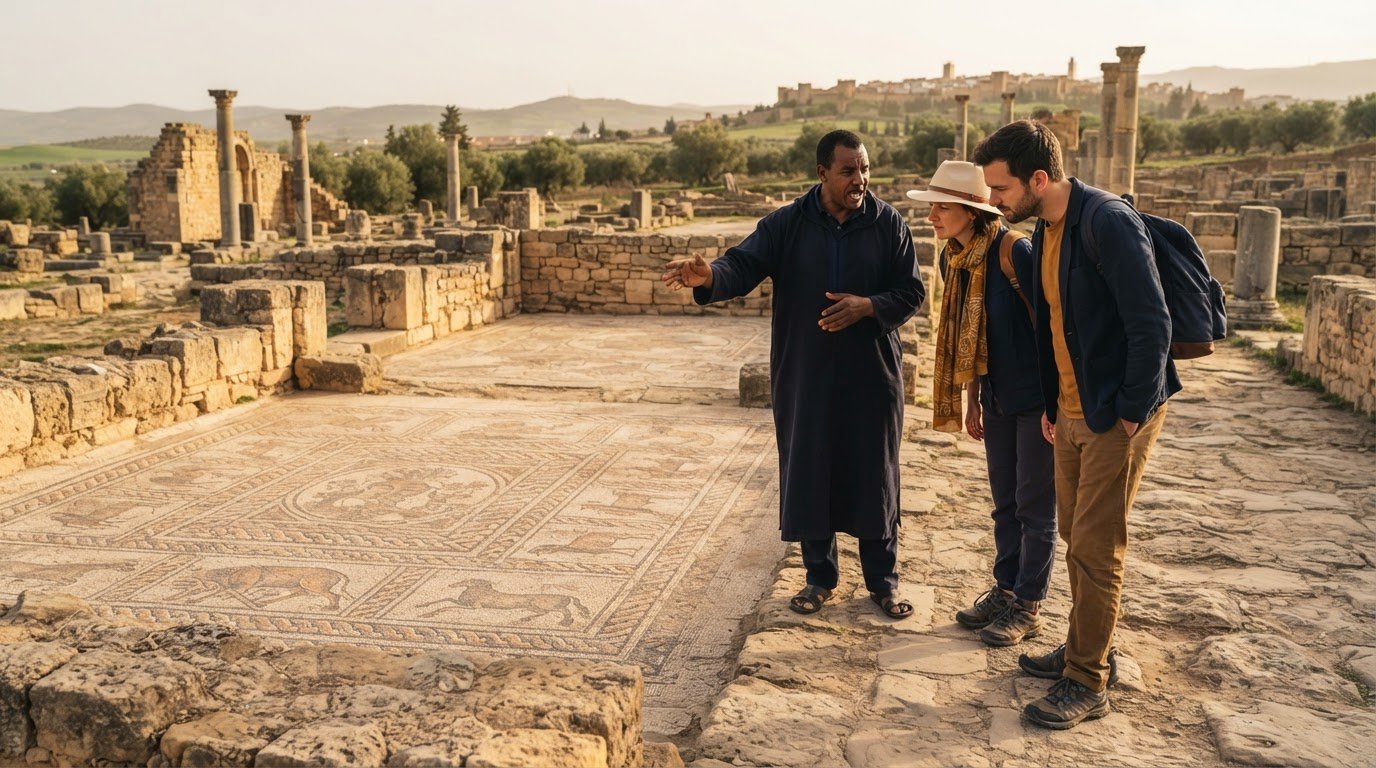
Rabat, Fez, Meknes, and Marrakech each reveal a different layer of Morocco’s imperial history. Look for itineraries that name the cities and heritage sites included, rather than promising a broad overview without detail. Fez offers a particularly rich historic setting, while Meknes pairs naturally with nearby Volubilis. Kasbahs and fortified architecture add another perspective beyond grand city monuments.
Historic Medinas and Souks
In Fez and Marrakech, a medina visit leads through narrow lanes, neighborhood courtyards, and souks shaped by local trades. A useful guided visit explains the crafts and landmarks along the way, while leaving room to pause at a workshop or market stall. Consider whether the route focuses on architecture, everyday activity, or both; each offers a different sense of place.
Transport shapes how much of each city you can enjoy. Trains connect major urban centres, while road journeys link destinations such as Meknes and Volubilis or carry travellers toward kasbahs and the desert. Compare transfer time with time at each stop, especially when a route crosses several cities. A well-paced itinerary protects time for a medina walk instead of turning every day into a long drive.
Day trips can add heritage without requiring a new overnight base. From Fes, Volubilis, Moulay Idriss, and Meknes form a clear cultural outing; from Ouarzazate, a journey toward the Zagora Desert shifts the scenery to arid landscapes and sunset views. Choose activities around your interests, whether ancient ruins, architecture, or desert horizons.
To assess a tour operator’s reputation, read recent reviews for specific details about the route, communication, and how the day unfolded. Look for consistent, firsthand descriptions rather than relying on a single glowing comment.
UK citizens can visit Morocco as tourists without a visa for up to 90 days, according to UK Government.
Cultural encounters with local communitiesContents
Requirements vary by historical site and activity. A guide can interpret inscriptions, architecture, and local context, but that alone doesn’t establish an entry rule. Ask whether the itinerary includes a licensed guide for a particular site, and distinguish that from a general guided city walk.
The best times to visit Morocco are spring, from around mid-March to May, and autumn, in September and October. These seasons can suit a journey between Casablanca, the Atlas Mountains, and the Sahara Desert. Climate and landscape shift along the route, so consider where you’ll spend each day, not only the departure city.
A knowledgeable local guide can connect landmarks with living culture. In Chefchaouen, a walk through the blue-painted lanes may open a conversation about local craft and daily life; in Casablanca, urban architecture offers a different lens. Look for experiences that allow time for questions, rather than treating every stop as a photograph and departure.
Morocco’s history and food also meet around the table. Arabic and Amazigh are the country’s two official languages, and regional customs shape how people speak, cook, and welcome guests. A meal featuring couscous or tagine can prompt a guide to discuss ingredients, family traditions, and how dishes vary between cities and mountain communities.
Make encounters respectful and specific. Ask before photographing people, listen when a host explains a craft, and allow a market visit to unfold without rushing. In the Atlas Mountains, a village visit differs from a souk stroll in Marrakech; each can bring a distinctive highlight to a morocco tour. Thoughtfully planned local cultural journeys can bring these encounters into a wider adventure, from mountain landscapes to desert horizons.
Whether a licensed guide is required depends on the historical site and activity, so confirm the requirement for each stop on your itinerary.
Guided Morocco trip options and itinerariesContents
A Morocco itinerary can follow one region or connect cities, mountains, and Sahara landscapes. Choose a pace that leaves room to experience each destination, not just pass through it.
Itinerary Duration Options
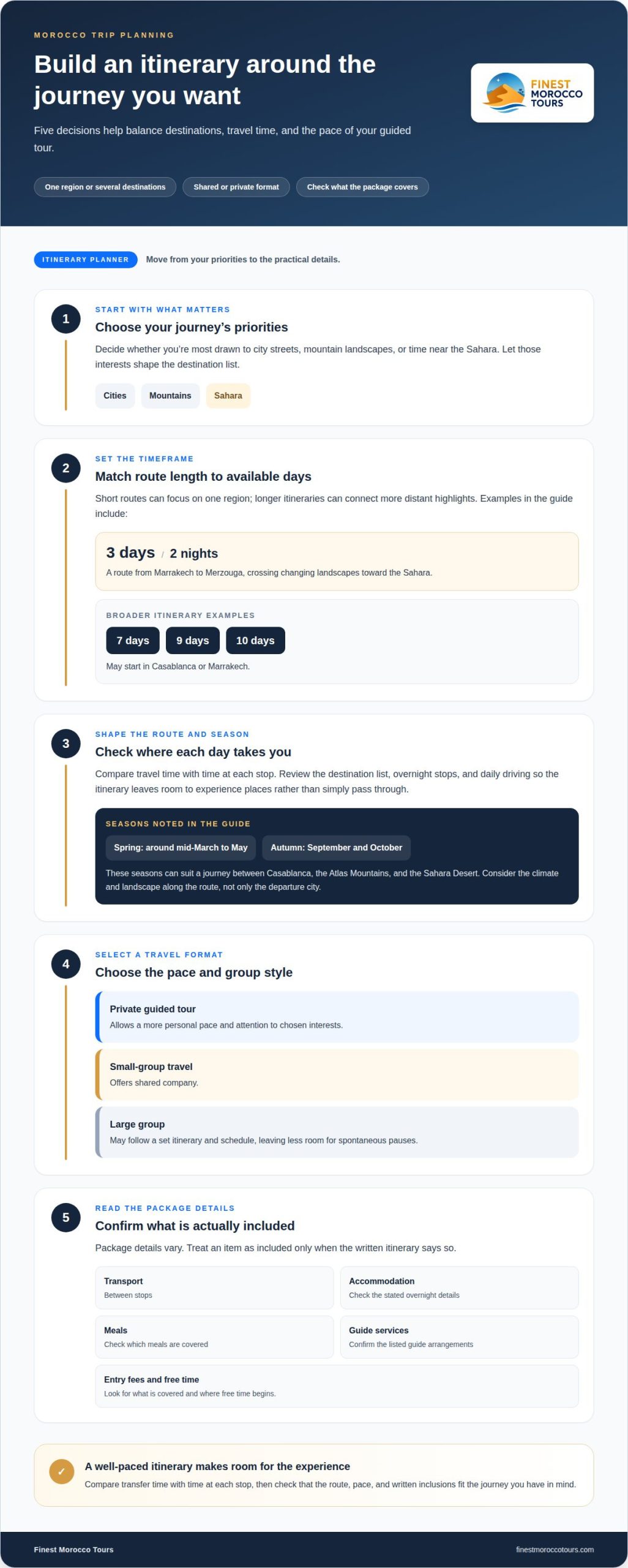
Short routes suit travellers focused on one region, while longer journeys can connect distant highlights. A three-day, two-night route from Marrakech to Merzouga, for example, crosses changing landscapes on the way toward the Sahara. Broader Morocco itineraries may run for seven, nine, or ten days, with Casablanca or Marrakech as a starting point. Compare travel time with time at each stop.
Group Formats and Package Inclusions
Small-group travel offers shared company, while a private guided tour allows a more personal pace and attention to chosen interests. Large groups can follow a set itinerary and schedule, which may leave less room for spontaneous pauses. Package details vary, so read the written itinerary for transport, accommodation, meals, guide services, and entry fees. Treat each item as included only when stated.
What’s included in a Morocco guided tour package? The itinerary should spell out which services are covered and where free time begins. For example, a route through Casablanca and the Atlas Mountains might identify transport between stops while listing meals or site entry separately. Clear details help you understand the journey’s rhythm and practical scope.
For a customized itinerary, begin with the places that matter most: bustling city streets, a mountain landscape, or time near the Sahara. Then shape the route around those priorities and the days available. A private format can make it easier to adjust the pace; a shared departure follows its planned schedule. Compare the destination list, overnight stops, and daily driving before choosing. These details reveal whether the guided tour suits your travel style.
Marrakech day tripsContents
Marrakech makes a vivid base for exploring historic sites, mountain scenery, and desert landscapes. The right excursion depends on whether you want a full day of cultural discovery or a longer journey beyond the city.
Within Marrakech, an eight-hour sightseeing day tour gives time for several stops without changing hotels. The route can bring together the vibrant medina, historic architecture, and the city’s celebrated mosque. Check what the itinerary visits and how much time it allows at each stop. A comfortable pace matters: too many brief visits can leave little room to absorb the city’s craft, food, and everyday rhythms.
What are the best guided tours from Marrakech to the Sahara Desert? For a longer desert experience, a three-day, two-night journey to Merzouga allows time to travel beyond the city and reach the Sahara region. Zagora is another desert direction to consider, particularly when a shorter itinerary is the priority.
These routes offer different experiences, rather than interchangeable versions of one trip. Merzouga itineraries connect Marrakech with the Sahara across changing terrain; Zagora routes focus on the desert south of the city. Consider the destination, overnight arrangements, and driving time together. A desert journey is not a quick city excursion, so allow enough days for the route rather than trying to fit it into one outing.
For a cultural day, Marrakech itself may be the better choice. The medina’s narrow streets, markets, and historic buildings create a varied itinerary without a long transfer. Casablanca offers a different excursion, including the Hassan II Mosque, which non-Muslims may enter on a guided tour. Choose based on whether architecture, city life, or open landscapes are your main interest.
Before choosing, compare the departure point, stops, and time spent travelling against the experience you want. A day trip from Marrakech suits nearby highlights; the Sahara calls for a multi-day plan. Plan your Marrakech day trip around the places and pace you most value.
Finest Morocco ToursContents
Finest Morocco Tours helps travellers match a route and pace to the heritage, culture, or landscapes they most want to experience. Turn to the team when you’re weighing a focused excursion against a longer journey or want several destinations connected in one itinerary.
Options include the 2-Day Chefchaouen, Volubilis and Meknes Tour from Fes, a 3 day desert tour Fez to Marrakech via Merzouga, and the Day Trip from Fes to Volubilis, Moulay Idriss and Meknes. For a more extended journey, the 10-Day Morocco Honeymoon Tour (9 Nights) brings a multi-day itinerary into view. These examples span city heritage, regional discovery, and desert travel, helping you consider which format best fits your plans.
Share the places and experiences you hope to include, then explore an itinerary that brings them together. Contact Finest Morocco Tours to discuss your Morocco tour plans.
Let Your Morocco Journey Take ShapeContents
Before choosing a route, decide what you want your days to feel like. Perhaps you prefer an unhurried morning among historic streets, a deeper conversation with a local guide, or the changing scenery of a long drive. These priorities can turn a collection of places into a journey with a clear rhythm and purpose.
The most rewarding guided tours in Morocco are shaped around the experience you value, not simply the number of stops. Consider how much time you want for discovery, what cultural encounters feel meaningful, and whether your plans call for a focused outing or a broader itinerary. A little clarity now makes it easier to choose a journey that feels personal.
When you’re ready to explore your options, contact Finest Morocco Tours to discuss the kind of Morocco experience you have in mind. Your next discovery can begin with a simple conversation and a sense of possibility.
Frequently Asked QuestionsContents
Is tipping customary in Morocco?
Yes, tipping is customary in Morocco, though the amount depends on the service. Restaurant guidance commonly suggests 10-15% of the bill, while 10 dirhams is usually sufficient for taxi drivers and porters. For a guided experience, consider the quality and attentiveness of the service when deciding whether to leave a gratuity. Keep small cash available for everyday situations.
What are the must-visit cities in Morocco?
For history and urban atmosphere, consider Marrakech, Fes, Meknes, and Rabat; Casablanca offers a distinct modern character. Marrakech and Fes are especially rewarding for travellers drawn to historic medinas and traditional markets, while Meknes pairs naturally with nearby heritage sites. Choose fewer stops if you prefer time to explore neighborhoods at a measured pace rather than rushing between cities.
What types of guided tours are available in Morocco?
Options include city and heritage visits, cultural excursions, day trips, multi-day journeys, and desert tours. Travellers can choose a private itinerary for a more personal schedule or a group format with a shared route. Some journeys focus on one region, while others connect cities and landscapes. Car hire with a driver is another way to travel between destinations with professional transport.
What are the best guided tours in Morocco for first-time visitors?
First-time visitors often benefit from a route that combines a historic city with a contrasting landscape, rather than trying to cover the whole country. A city-focused excursion suits a shorter stay; a multi-day itinerary can add desert scenery and more time on the road. Choose according to your available days, preferred pace, and interest in cultural sites or outdoor experiences.
How much do guided tours in Morocco cost?
There isn’t one standard cost for a tour. The total depends on factors such as duration, private or group format, route, transport, accommodation, meals, and which activities or entry fees are included. For a specific itinerary, the price depends on the details and is provided after a quote request. Compare the stated inclusions so you understand what the quoted amount covers.
What are the best Morocco tour itineraries and how many days do they take?
The right itinerary depends on how many places you want to visit and how much time you wish to spend travelling. A day trip focuses on a nearby destination; a two-day excursion allows an overnight stop, while a three-day desert route can connect major cities with Merzouga. Longer journeys, such as a ten-day itinerary, leave more room for varied experiences.