Chefchaouen, Morocco’s blue city, is worth visiting for more than its blue-painted walls. Its medina rewards an unhurried walk through vivid lanes, while the Kasbah offers a glimpse of the city’s history. Nearby, the Akchour waterfalls provide a refreshing change of scenery.
The blue façades make an enchanting first impression, but you may wonder whether there’s enough to see beyond the most photographed corners. It depends on what you enjoy: wandering an old quarter, taking in mountain views, or heading outdoors for an adventure beyond the city.
This guide covers what makes Chefchaouen rewarding, what to see in its medina and Kasbah, and how Akchour might fit into your plans. You’ll also find the story behind the blue-painted buildings, helping you decide whether to linger or make the city a shorter stop on your Moroccan journey.
Key Takeaways
- Decide whether Chefchaouen suits your pace by weighing its mountain setting and medina atmosphere against the time you have in northern Morocco.
- Plan a visit around the Kasbah and winding blue lanes, then consider whether Akchour’s waterfalls merit a separate outing.
- Discover why the blue-painted walls are central to the city’s identity, while keeping in mind that their history has more than one explanation.
- Shape your route around your starting point: travel times differ from Tangier and Fes, so transport can influence whether you stay or visit briefly.
1. Morocco’s Blue City: Is Chefchaouen Actually Worth Visiting?Contents
Chefchaouen lies in northern Morocco, between Tétouan and Ouazzane, on the western Rif Mountains’ slopes. The city stands about 600 metres above sea level, in the foothills of the Kaʻala mountain. Founded in 1471, it grew along a mountainside, so lanes climb and turn instead of opening into broad, level streets. That setting gives the medina an intimate scale and frames mountain views along its passages.
Is the blue city of Morocco worth visiting? For travellers drawn to historic places, mountain scenery, and a slower medina stroll, Chefchaouen offers more than painted façades. Blue-and-white houses, narrow lanes, and the Kasbah at the old quarter’s centre make wandering itself part of the experience. The Kasbah was built in 1471, connecting the city’s celebrated architecture with its early history. Allow time to follow the lanes at an easy pace and notice how the blue shades change with the light.
There isn’t one universally accepted explanation for the colour. One theory holds that blue paint spread after World War II, as the Jewish community in the area grew when people fled Nazi persecution. Other parts of the medina remained white until around 40 years ago, suggesting the familiar look developed over time rather than appearing across the whole city at once. Today, blue walls and white details define Chefchaouen’s distinctive identity.
For bus travel, buses from Tangier to Chefchaouen run twice a day. A suggested Fez day-trip itinerary takes an 8am bus and returns on the 6pm departure. Ticket prices depend on the route and operator, so plan around the particular departure rather than a general fare estimate.
Spring, from March to May, and fall, from September to November, are recommended visiting seasons. Dress modestly as a considerate visitor, although Chefchaouen has no strict dress code. Keep belongings close in busy lanes, as you would in any crowded medina. Can you visit in a day? Day trips from Tangier are possible, while the bus itinerary from Fes leaves limited time in the city. Staying overnight allows a more relaxed visit to the Kasbah and surrounding mountains.
3. Nearby attractions, including Akchour waterfallsContents
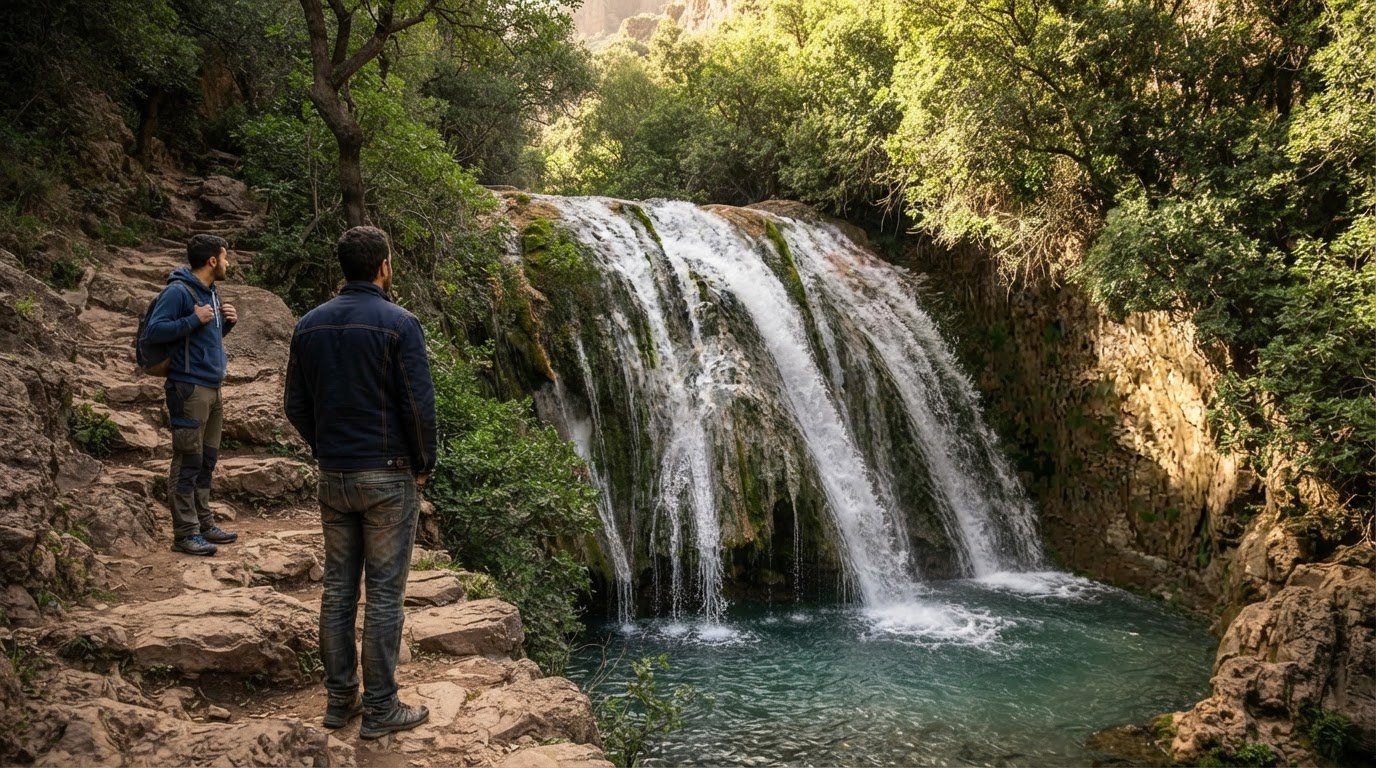
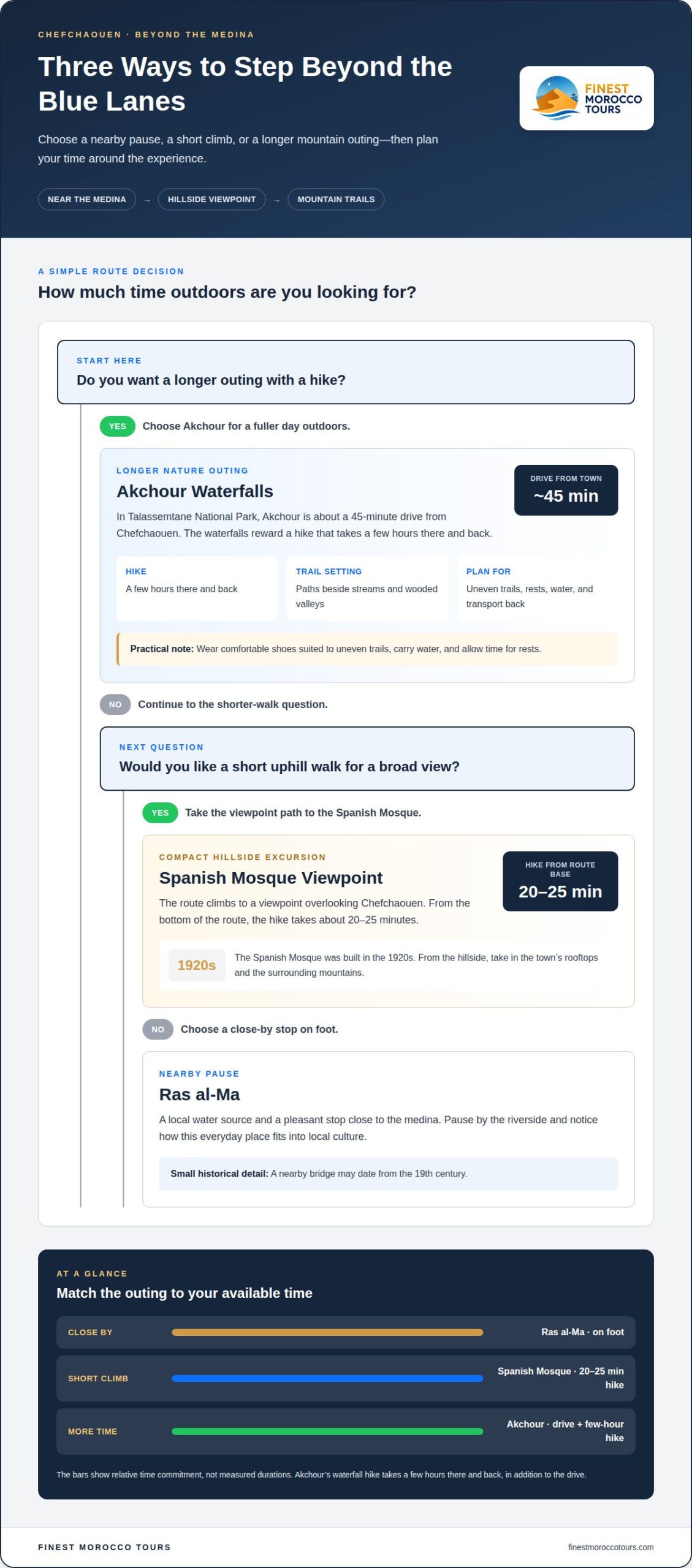
Chefchaouen’s mountain setting makes it easy to pair the medina with fresh air beyond town. Akchour, in Talassemtane National Park, is about a 45-minute drive away. Its waterfalls reward a longer outing, with a hike that takes a few hours there and back. Set aside enough of the day for the walk, and wear comfortable shoes suited to uneven trails.
The journey takes you into northern Morocco’s landscapes, where mountain paths wind beside streams and wooded valleys. The waterfalls offer a natural change of pace after the blue lanes, but the return hike takes time. Carry water, allow time for rests, and plan your transport back to Chefchaouen before setting out. The surrounding mountains also have hiking trails for travellers looking for more than a short visit.
Closer to the medina, Ras al-Ma is a local water source and a pleasant stop on foot. A bridge near Ras al-Ma may date from the 19th century, adding a small architectural detail to the riverside setting. Pause to observe how this everyday place fits into local culture, rather than treating it only as a photo stop.
For a short climb and a broad view, follow the path to the Spanish Mosque overlooking Chefchaouen. The mosque was built in the 1920s, and the hike from the bottom of the viewpoint route takes about 20-25 minutes. Its hillside position gives you a different perspective on the town’s rooftops and surrounding mountains. Choose this walk when you want a compact excursion; choose Akchour for a fuller day outdoors.
These places complement the medina without requiring the same kind of visit: Ras al-Ma is close by, the Spanish Mosque offers a short uphill walk, and Akchour calls for more time. If you’d like a thoughtfully arranged route through northern Morocco, explore Morocco tour options that can help bring these landscapes into a wider journey.
4. The city’s blue-painted buildings and nicknameContents
Chefchaouen’s nickname refers to the whole medina, not a single blue landmark. White-and-blue façades make ordinary doorways, stairways, and narrow passages part of the city’s visual character. The effect is best experienced on foot, as each turn reveals another arrangement of painted walls and old architecture. This lived-in streetscape is what makes the name memorable.
Notice how blue appears alongside white rather than replacing it. The contrast gives the lanes definition, while doors, steps, and changing wall angles create distinct views from one passage to the next. Slow down and observe how the same shade looks against different façades. The appeal lies in the streets as a whole, not in finding one perfect photo spot.
The colour is maintained as part of the city’s appearance. Chefchaouen’s walls are painted once or twice a year, making the blue streetscape an ongoing act of care rather than simply a preserved relic. This regular renewal helps explain why the nickname is so closely tied to everyday buildings. The city’s visual identity belongs to residents as well as visitors.
Treat the painted walls as part of a lived-in neighbourhood. Photograph architectural details respectfully, keep doorways clear, and leave room for locals moving through the lanes. These small considerations let you appreciate the façades without turning private entrances into displays. The Kasbah and medina add historical context, while the blue-and-white streets provide a memorable visual thread.
Among Morocco’s cities, Chefchaouen stands apart through this distinctive palette. Tangier is 112.4 km away by road, and Tetouan is 64.9 km away, making the blue medina a striking nearby contrast for travellers exploring northern Morocco. Marrakesh is much farther, so the city’s painted streets often become a defining stop on a northern route. The clearest takeaway: come for the blue, then give the medina time to reveal its details.
How to reach Chefchaouen from Tangier, Fes, or CasablancaContents
From Tangier, the road distance to Chefchaouen is 112.4 km. The journey takes about 2 hours by road, while a private taxi takes about 2.5 hours. Buses run twice a day, so their limited departures make timing important. If travelling by bus, arrive at the station at least 30 minutes early. Petit taxis cannot travel beyond city limits, so they won’t take you all the way to Chefchaouen.
From Fes, the drive is a substantial overland journey, so allow time for the trip. Bus journeys take longer, so allow extra time when planning a connection or a same-day return. The route from Fes suits travellers building Chefchaouen into a wider northern Morocco itinerary. A two-day visit also leaves more room to explore without relying on a tight return schedule.
For Casablanca, plan the overland journey around a northern connection through Fes or Tangier. The best route depends on your wider itinerary and whether you prefer to travel by road or bus. Casablanca is well beyond the northern routes described here, so allow time for the journey and onward travel rather than treating it as a quick excursion. Once in Chefchaouen, remember that cars aren’t allowed inside the old town; continue on foot through its lanes.
Which route fits your trip? Choose Tangier for a relatively direct approach, or Fes if Chefchaouen is part of a broader cultural itinerary. For a planned visit from Fes that includes other historic destinations, explore the 2-Day Chefchaouen, Volubilis and Meknes Tour from Fes. It connects the blue medina with nearby heritage sites, making the journey part of the experience rather than simply transit.
Finest Morocco ToursContents
Finest Morocco Tours helps travellers place Chefchaouen within a wider Moroccan itinerary, whether the priority is northern heritage, mountain scenery, or a longer journey across the country. Its options include the 2-Day Chefchaouen, Volubilis and Meknes Tour from Fes, alongside desert routes connecting Fez and Marrakech via Merzouga.
Consider an organised itinerary if you’d like to combine the blue medina with other destinations without planning every connection separately. For a broader cultural visit from Fes, there is also a day trip to Volubilis, Moulay Idriss and Meknes; longer journeys include the 10-Day Morocco Honeymoon Tour (9 Nights). The right fit depends on your starting point and how much time you want to give each place.
Contact Finest Morocco Tours to discuss an itinerary that suits your plans.
Let Chefchaouen Shape Your Next JourneyContents
Your next decision is about pace. Would you rather give Morocco’s blue city time for an unhurried stay, or include it in a broader journey through the country? Your answer can shape the trip, from quiet time in the medina to a route continuing through other regions.
As you plan, consider what you most want to take away: a sense of northern Morocco’s heritage, time among its mountain landscapes, or the pleasure of discovering a place gradually. Finest Morocco Tours can help shape an itinerary around your interests, with private tours, cultural excursions, and driver services across Morocco. The journey between destinations can be part of the experience, too.
You don’t need to have every detail settled before taking the next step. Share the kind of journey you have in mind, and let the planning begin at a comfortable pace. Contact Finest Morocco Tours to discuss your Morocco plans, then look forward to discovering the places that speak to you along the way.
Frequently Asked QuestionsContents
Final Thoughts on Chefchaouen: Is it Worth it?
Yes, Chefchaouen is rewarding if you enjoy walking historic streets and noticing architectural details at a leisurely pace. Its appeal goes beyond photographs: the medina, Kasbah, and mountain surroundings each offer a different way to experience the city. Travellers looking for a packed schedule of major attractions may find it quieter than expected, while those who value atmosphere and unhurried exploration may appreciate its distinct character.
Morocco’s Blue City: Is Chefchaoeun Actually Worth Visiting?
Chefchaouen is worth including if Morocco’s blue city suits the kind of journey you want. Decide whether to focus on the old quarter or combine it with an outdoor outing; that choice will help you plan how much time to set aside. The city is best explored gradually, rather than treated as a checklist of landmarks.
Why is the town of Chefchaouen famous?
Chefchaouen is famous for its blue-and-white medina and its historic character in northern Morocco. Its cultural landmarks add depth beyond the painted streets: the Kasbah has gardens, and the city museum displays old weapons, photographs, and textiles. The Grand Mosque is another notable feature of the old quarter. Together, these places offer visitors architectural and cultural context alongside the city’s instantly recognisable appearance.
What is the Blue City in Morocco called, and where is it located?
Chefchaouen, also commonly called Chaouen, is Morocco’s blue city. It lies in northwest Morocco, in the Rif Mountains, between Tétouan and Ouazzane. The mountain setting shapes its steep lanes and gives the medina a different feel from Morocco’s larger urban centres. When planning your itinerary, treat Chefchaouen as a northern destination rather than a nearby stop on a southern route.
Why are the buildings in Chefchaouen painted blue?
There is no single settled explanation for Chefchaouen’s blue façades. One theory links the wider use of blue paint to the growth of the area’s Jewish community after World War II, as people fled Nazi persecution. The city’s appearance developed over time, and blue became a defining feature of its streets. Treat this origin story as a theory, not a definitive account.
What are the best things to see and do in Chefchaouen?
Start with a walk through the medina, then visit the Kasbah gardens and city museum to explore local history and collections. For a change of scenery, choose between the viewpoint at the Spanish Mosque and a longer excursion to Akchour’s waterfalls. The right combination depends on your energy and available time: a museum visit suits a quieter day, while Akchour calls for a dedicated outdoor outing.