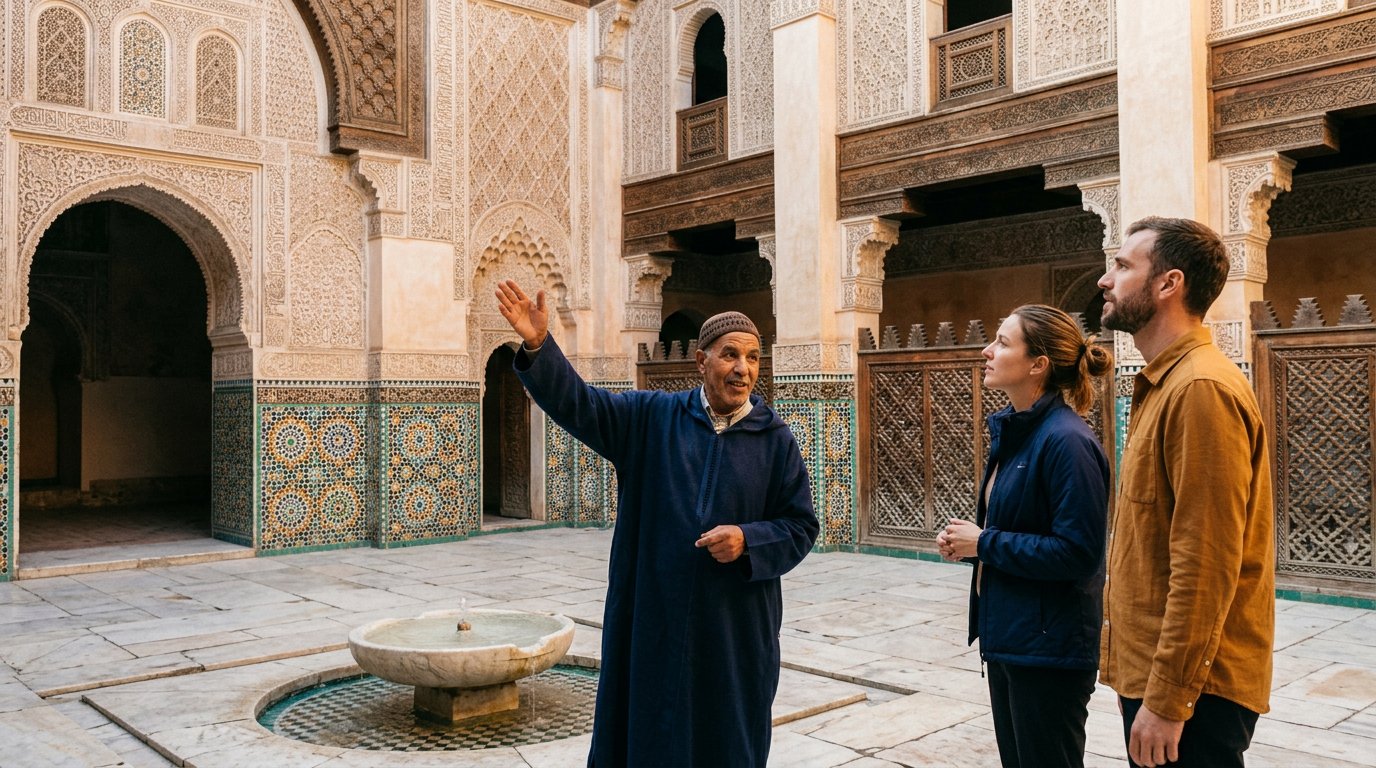
Morocco’s cultural story unfolds across its cities, historic sites and living traditions. Morocco cultural tours can bring together the medinas of Fez and Marrakech, the imperial heritage of Meknes and Rabat, and visits to places such as Volubilis and Chefchaouen. Depending on the itinerary, stays, transport, meals and local guides can help shape how you experience each destination.
It’s natural to want more than a list of landmarks: the pleasure lies in understanding the craft, history and everyday rhythms behind them, while knowing how the journey fits together. This guide introduces Morocco’s cultural destinations and heritage, then explains the experiences a tour may include and how accommodation, transport, meals and guiding can be arranged. You’ll have a clearer sense of what to look for as you plan a journey at a comfortable pace.
Key Takeaways
- Choose destinations that suit the pace and heritage you want to explore, from historic medinas to Roman sites and imperial cities.
- Understand how Berber, Arab and European influences come together in Morocco’s architecture, traditions and everyday culture.
- Consider experiences beyond sightseeing, including historic landmarks, traditional crafts and cultural performances.
- Shape a smoother itinerary by considering how accommodation, transport, meals and local guiding fit together, then choose a tour route that matches your plans.
Cultural destinations including Meknes, Rabat, Fez and MarrakechContents
The best cultural tours connect cities with contrasting histories, such as Fez, Meknes, Rabat and Marrakech. A route through Tangier, Chefchaouen, Fes and Marrakech adds northern medinas before the southern imperial city. For a longer journey, a desert crossing toward Merzouga brings a different landscape into the itinerary.
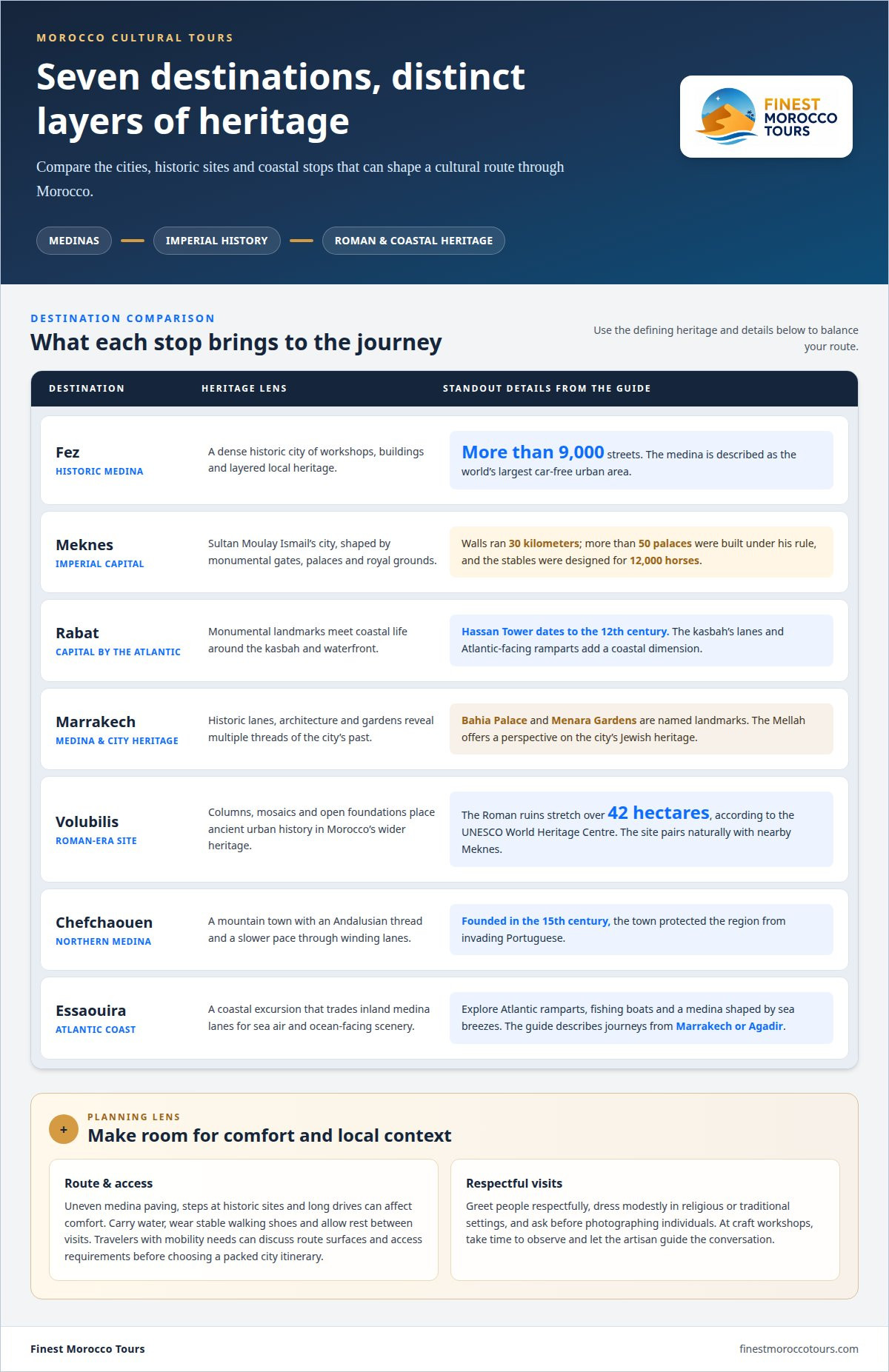
In Fez, the medina has more than 9,000 streets and is described as the world’s largest car-free urban area. Its lanes reward unhurried exploration, with workshops and historic buildings revealing layers of local heritage. Meknes offers another imperial perspective: Sultan Moulay Ismail’s capital had walls running thirty kilometers. In Rabat, Hassan Tower dates to the 12th century, while Marrakech pairs its historic medina with landmarks and gardens such as the Bahia Palace and Menara Gardens.
Coastal excursions broaden the choice beyond the imperial cities. From Marrakech, an Essaouira day trip trades inland lanes for Atlantic ramparts, fishing boats and a medina shaped by sea breezes. Travelers based in Agadir can also consider Essaouira as a coastal journey, allowing the route and time available to guide the day’s pace. These contrasts make Morocco cultural tours varied rather than confined to monuments.
Approach local customs with courtesy: greet people respectfully, dress modestly when visiting religious or traditional settings, and ask before photographing individuals. In markets, a calm, friendly exchange is more fitting than treating every interaction as a hurried transaction. At a craft workshop, take time to observe and let the artisan guide the conversation.
For safety, health and accessibility, plan around the actual route: uneven medina paving, steps at historic sites and long drives can affect comfort. Carry water, wear stable walking shoes, and allow rest between visits in Marrakech or Fez. Travelers with mobility needs benefit from discussing route surfaces and access requirements before choosing a packed city itinerary.
Berber, Arab and European heritageContents
Morocco’s heritage is woven from Berber, Arab and European influences, visible in architecture, language, food and craft. In Marrakech, carved cedar, geometric tilework and courtyard design show how artistic traditions meet across generations. A museum visit can add context to these details, while a guided walk through the medina connects formal monuments with the living city. This layered perspective makes an itinerary more meaningful than a sequence of photo stops.
Meknes offers a vivid encounter with imperial heritage. Sultan Moulay Ismail’s city was built around monumental gates, palaces and expansive royal grounds. More than 50 palaces were built under his rule, and his stables were designed for 12,000 horses. These figures help visitors imagine the scale of the capital, while the architecture reveals how power and ceremony shaped its streets. A visit gains depth when time is allowed for both grand facades and quieter details.
Marrakech’s Jewish heritage is closely associated with the Mellah, the historic Jewish quarter. Its streets and communal landmarks offer another perspective on the city’s layered past. Visitors can approach the area respectfully, noticing how its distinct urban fabric sits within the broader medina. Pairing a walk with a museum visit or time to explore nearby lanes helps place this heritage in context.
European and ancient history come into focus at Volubilis, where Roman remains stand within Morocco’s wider cultural landscape. The Roman ruins stretch over 42 hectares, according to the UNESCO World Heritage Centre. The site offers a tangible way to consider how Roman-era urban life intersected with later histories. UNESCO-recognized heritage sites can anchor a journey, connecting preserved places with the traditions that continue around them.
For a measured route, combine Meknes and Volubilis with time in Marrakech, rather than rushing between distant places. A sunrise visit can bring a quieter mood to historic surroundings, while local interpretation helps explain details that might otherwise pass unnoticed. If you’re shaping a route around Meknes and Volubilis, explore this heritage-focused itinerary as one possible starting point.
Moroccan cultural and historical experiencesContents
Morocco’s historic sights reveal how trade, faith and geography shaped its cities. In Rabat, Hassan Tower and the 12th-century waterfront kasbah connect monumental architecture with coastal life. Walk between the kasbah’s lanes and the Atlantic-facing ramparts, then notice how the modern capital surrounds these enduring landmarks. This contrast makes Rabat a rewarding stop on a journey through the country.
Caravan routes linked inland trading centres with ports and distant markets, carrying goods, ideas and artistic influences. Fez and Marrakech grew into imperial cities where gates, mosques and markets reflect centuries of exchange. At Aït Benhaddou, a fortified ksar of earthen architecture offers another view of settlement along routes across southern Morocco. Explore its clustered buildings on foot, taking time to observe how walls and passageways follow the hillside.
Chefchaouen’s history adds an Andalusian thread to the experience. Founded in the 15th century, the town protected the region from invading Portuguese. Its mountain setting and distinctive medina invite a slower visit, with doorways, courtyards and winding lanes offering glimpses of that layered past. A local guide can help place these details within the broader story of Morocco’s northern cities.
Volubilis brings Roman history into the itinerary. The Roman ruins at Volubilis in Morocco stretch over 42 hectares, according to UNESCO World Heritage Centre. Columns, mosaics and open foundations give visitors a sense of the ancient city’s scale. The site pairs naturally with nearby Meknes, whose imperial architecture reflects a later chapter of Moroccan history.
Do visitors need permits or reservations for Morocco’s cultural attractions? Access arrangements depend on the site: public streets and medina lanes are different from staffed monuments or museums, where entry is organized at the attraction. Build time for both into the day, especially when travelling between cities.
For religious and cultural sites, choose modest clothing that covers shoulders and knees, and follow posted guidance. In Rabat’s kasbah, a mosque courtyard or a museum, quiet conduct and asking before taking someone’s photograph show respect. These simple choices make space for attentive encounters with Morocco’s living heritage.
Accommodation, transport, meals and guidesContents
For a cultural journey from Marrakech to the Atlas Mountains or Sahara, consider how each service shapes the pace. Your preferred balance of independence, interpretation and planned logistics can guide the choice.
Tour Formats and Guide Options
Guided tours bring historical context to gardens, heritage sites and medinas. A local guide can explain architectural details, customs and the significance of landmarks along the route. Private tours allow a more flexible focus, while self-guided travel leaves decisions about timing and navigation to you. Finest Morocco Tours offers guided and private tours, including customizable itineraries.
Guided cultural tours offer interpretation and a structured route; private arrangements can adapt the pace and focus. Self-guided travel offers independence, but you handle navigation and arrange each stop yourself. For a multi-city or desert journey, consider how much planning and transport support you want. Finest Morocco Tours provides private tours and car hire with a driver.
Compare what the itinerary gives you time to do: a walking visit through a medina differs from a long drive between destinations. Look for opportunities for conversation, craft visits and unhurried exploration. A local guide can add context to daily life, while independent time leaves room to follow your own interests.
Lodging, Transport and Meals
Accommodation shapes the feeling of each evening. A riad in Marrakech offers a city setting, while a stay near the Atlas Mountains or Sahara changes the surrounding landscape. Consider where overnight stops fall in relation to the next day’s route, and whether you prefer time in a medina or a quieter base beyond it.
Transport links cultural stops, from gardens in Marrakech to mountain villages and desert landscapes. A car with a driver can connect destinations without requiring you to navigate each road; public transport gives a more independent rhythm. Meals may introduce regional dishes, and dietary preferences can shape the plan. Clarify which meals and transfers the itinerary includes.
Before choosing, match the format to your priorities: guided interpretation, private flexibility, or independent discovery. For a coordinated journey with stays and transport, plan your Morocco tour around the places you most want to experience.
Finest Morocco ToursContents
Finest Morocco Tours helps travelers connect cultural landmarks with practical routes through Morocco. Turn to the team when you want an itinerary that brings historic cities, heritage sites and the journey between them into one considered plan. Options include the 2-Day Chefchaouen, Volubilis and Meknes Tour from Fes, the Day Trip from Fes to Volubilis, Moulay Idriss and Meknes, and a 3 day desert tour Fez to Marrakech via Merzouga. For a longer journey, the 10-Day Morocco Honeymoon Tour (9 Nights) combines a multi-day itinerary with time to experience the country at a gentler pace. Consider which places matter most to you, then contact Finest Morocco Tours to discuss your Morocco journey.
Let Your Journey Take ShapeContents
The most memorable Morocco cultural tours leave room for both intention and discovery. Begin by choosing what you want most from the journey: time among historic streets, a closer connection with local traditions, or a contrast between city life and open landscapes. Then consider how long to spend at each stop and whether a guided route or a flexible pace suits you. Finest Morocco Tours can help shape a private itinerary around your interests.
With those preferences in mind, Finest Morocco Tours can help you consider a route that brings your interests together. A thoughtful plan gives each place space to be experienced, rather than simply crossed off an itinerary. If you’re ready to explore the possibilities for your own journey, contact Finest Morocco Tours and share what you hope to discover. Your next chapter in Morocco can begin with a clear idea and unfold at a pace that feels right.
Frequently Asked QuestionsContents
Which cities and cultural sites do Morocco tours visit?
Routes can connect historic sites, medinas and contrasting landscapes. Your itinerary might focus on cultural visits, include Volubilis, or pair heritage stops with a desert journey. To choose, decide whether you prefer deeper exploration in fewer places or a route linking several destinations. Travel time between stops affects how much time remains for museums, markets and historic quarters, so compare the schedule as well as the places listed.
What is included in Morocco cultural tour packages?
Inclusions vary by itinerary, so review the specific tour details for accommodation, meals, transportation and entrance fees. Finest Morocco Tours lists inclusions and exclusions on each tour page, so you can see what is covered before booking. A multi-day route may have different arrangements from a day excursion. Use the details to plan any personal arrangements around the trip.
What are the best Morocco cultural tours for different trip lengths?
For a short stay, a focused excursion can link nearby historic sites without committing to a longer route. A two-day itinerary suits travelers wanting a brief cultural journey, while a three-day desert route connects Fez and Marrakech via Merzouga. With more time, the 10-Day Morocco Honeymoon Tour (9 Nights) allows a longer, multi-day itinerary. Choose based on the destinations you value and the pace you prefer.
When is the best time of year for cultural tours in Morocco?
The best timing depends on your route, preferred pace and comfort in different conditions. City walking, mountain travel and desert excursions can feel quite different, so consider the landscapes and activities in your itinerary before choosing dates. If you prefer extended outdoor visits, plan around conditions you find comfortable; if you’re more interested in museums and indoor heritage stops, timing may be more flexible. Explore Finest Morocco Tours’ cultural and desert itineraries to find a route that suits your interests.
How can travelers book reputable local cultural tour guides in Morocco?
Book a guided itinerary through a clearly identified operator, and look for specific information about the guiding and route. Finest Morocco Tours states that its tours are conducted by licensed local guides and that the company holds a Ministry of Tourism licence, CRN 11263. Before booking, read the tour’s itinerary and included arrangements so you understand the experience and how each visit fits into your journey.