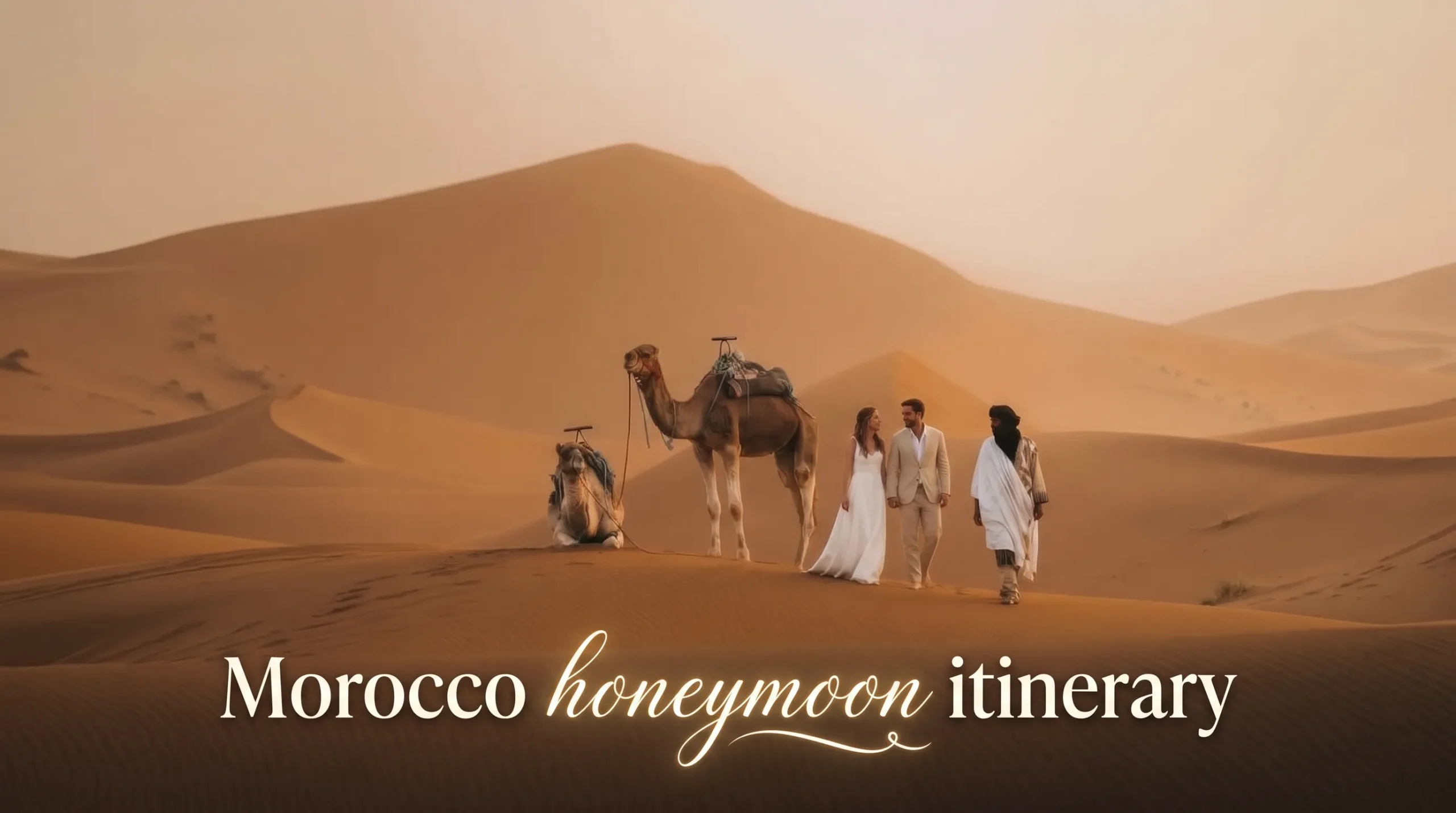
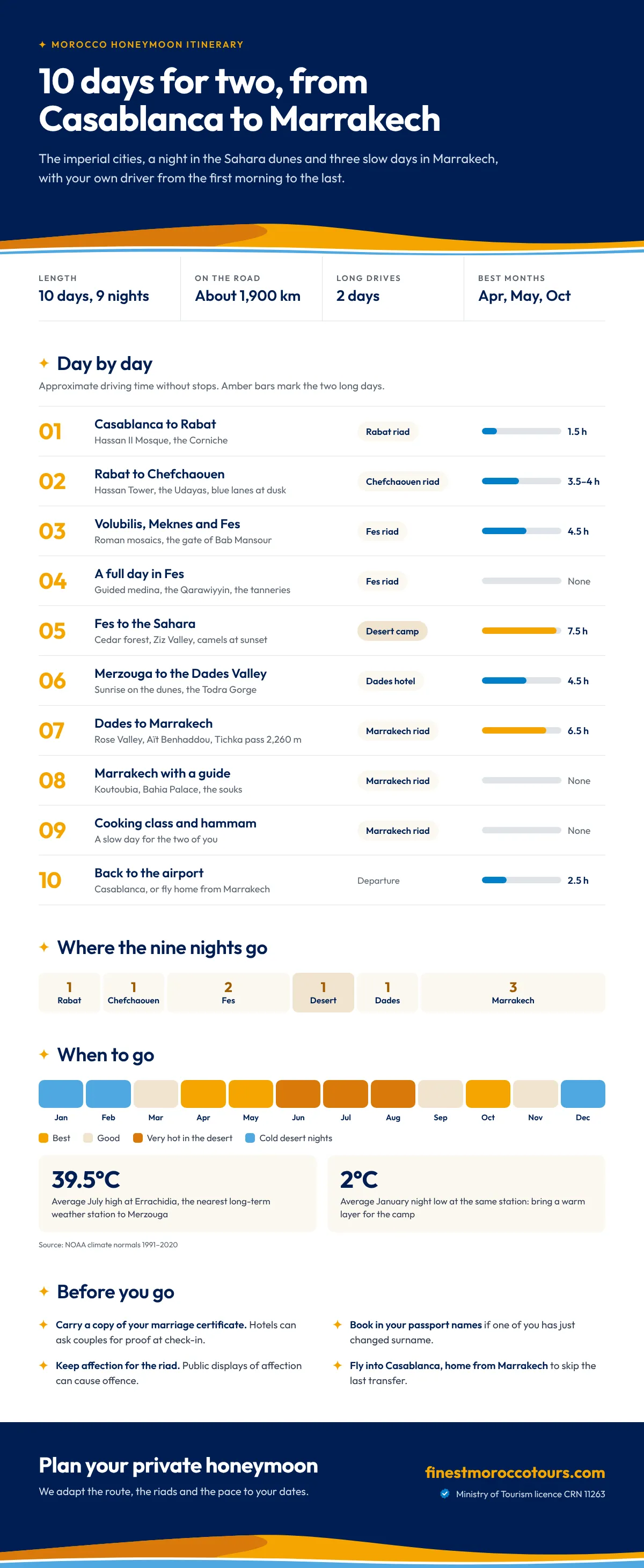
This Morocco honeymoon itinerary gives the two of you ten days and nine nights between the Atlantic, the Rif mountains, the imperial cities and the Sahara, with your own driver and car from the first morning to the last. It follows the route of our 10-day Morocco honeymoon tour, so every distance, night and stop below is one we actually drive.
The short answer: arrive in Casablanca, sleep in Rabat, Chefchaouen and two nights in Fes, cross the Middle Atlas to a camp in the Erg Chebbi dunes, come back over the High Atlas through the Dades Valley and Aït Benhaddou, and finish with three slow nights in Marrakech. April, May and October suit this route best.
- Length
- 10 days, 9 nights
- Route
- Casablanca to Marrakech
- On the road
- About 1,900 km
- Best months
- Apr, May, Oct
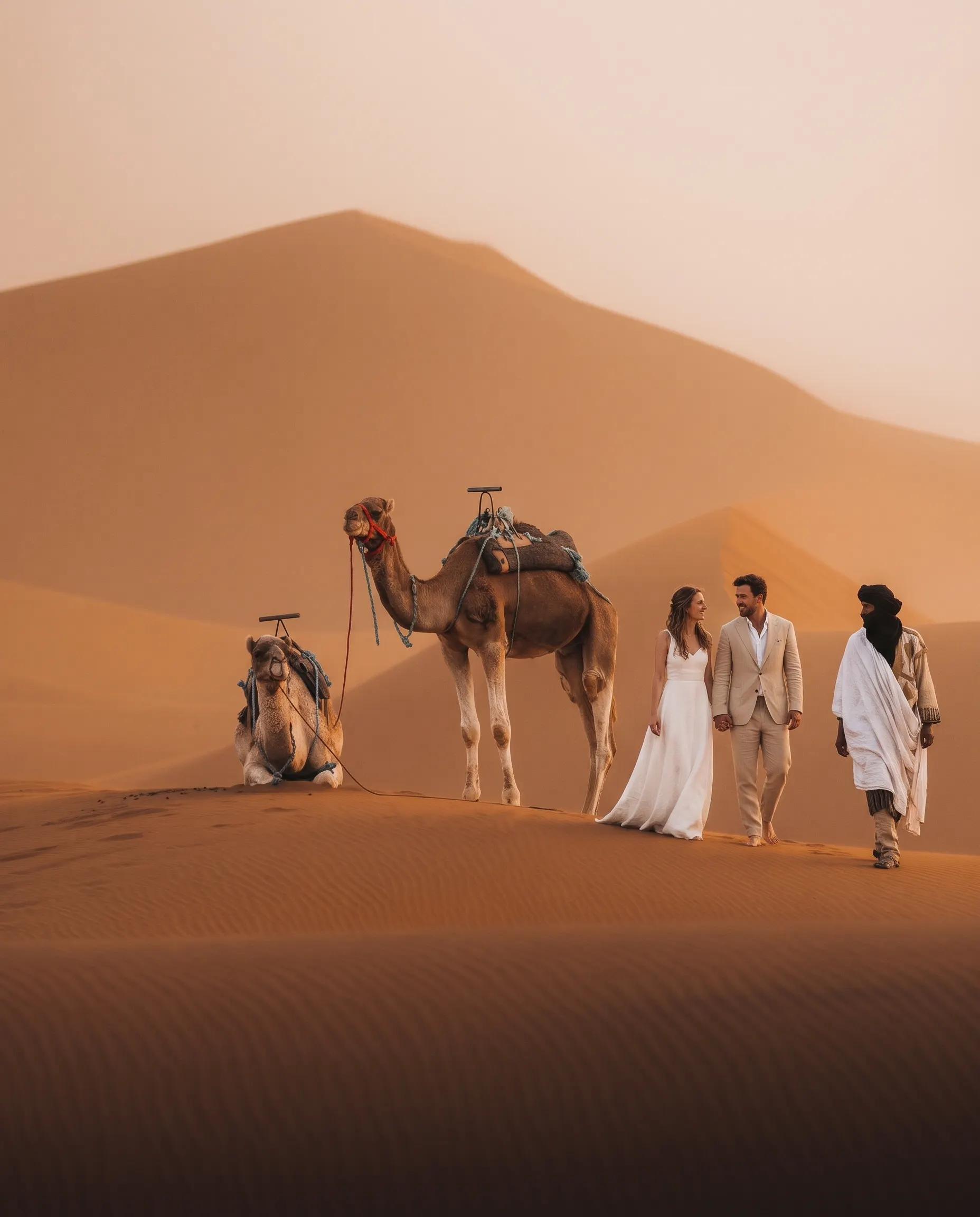
- One route, three Moroccos: the blue lanes of Chefchaouen, the medina of Fes, and a night among the dunes of Merzouga.
- Two long road days, not five: Fes to Merzouga and Dades to Marrakech are the big drives; every other day leaves the afternoon free.
- The slow finish: three nights in Marrakech close the trip with a cooking class, a hammam and time on your own.
- Easy to bend: swap a Marrakech night for a second night in the desert, or fly home from Marrakech instead of Casablanca.
The route at a glance
The loop runs north first, then south and west. Starting in Casablanca puts the cities while you are fresh and keeps the quiet days for the end, when most couples want them.
- CasablancaDay 1
- Rabat1 night
- Chefchaouen1 night
- Fes2 nights
- Merzouga1 night
- Dades Valley1 night
- Marrakech3 nights
Chefchaouen
Fes
Desert
Dades
Marrakech
Where the nine nights go, each block sized by the number of nights.
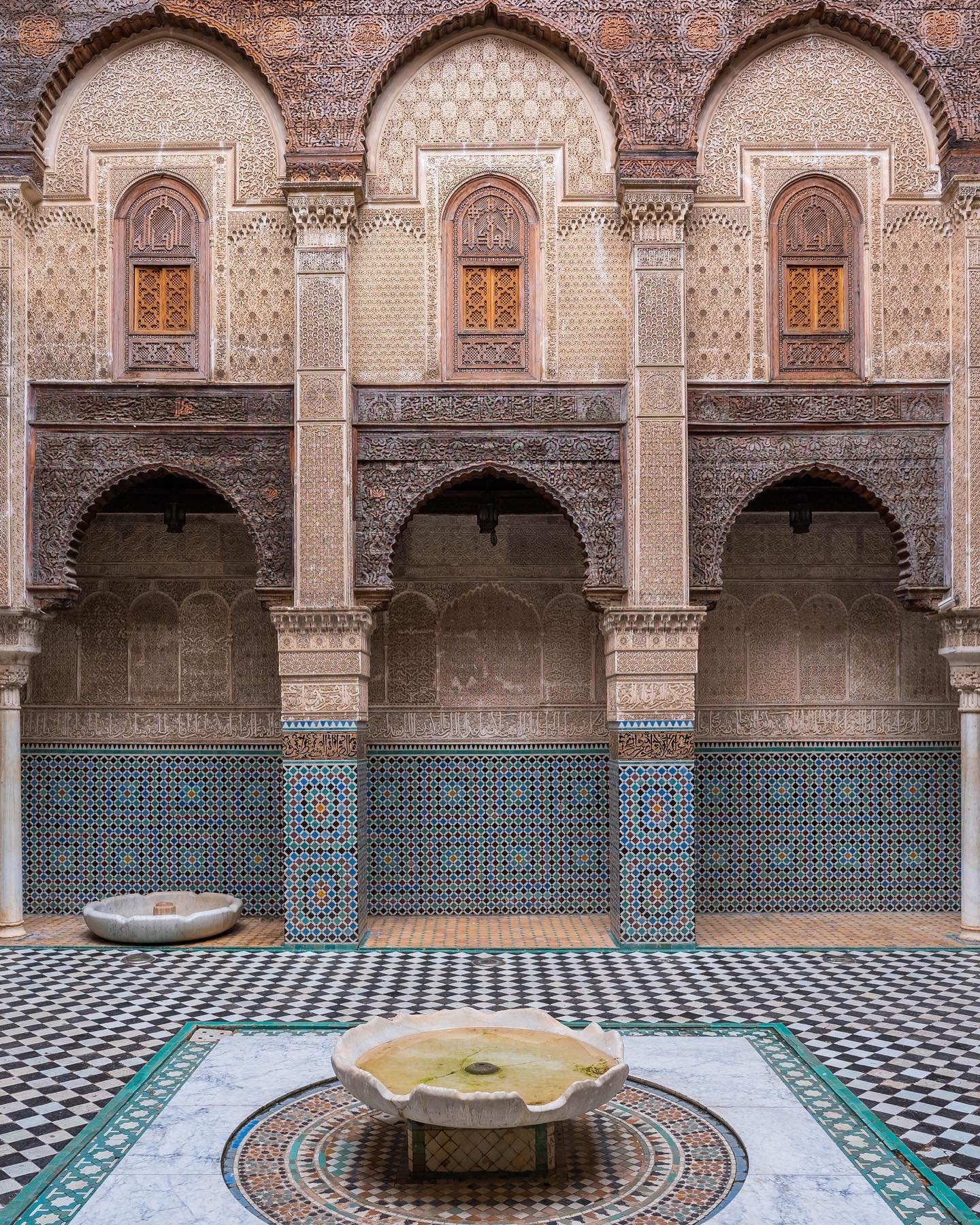
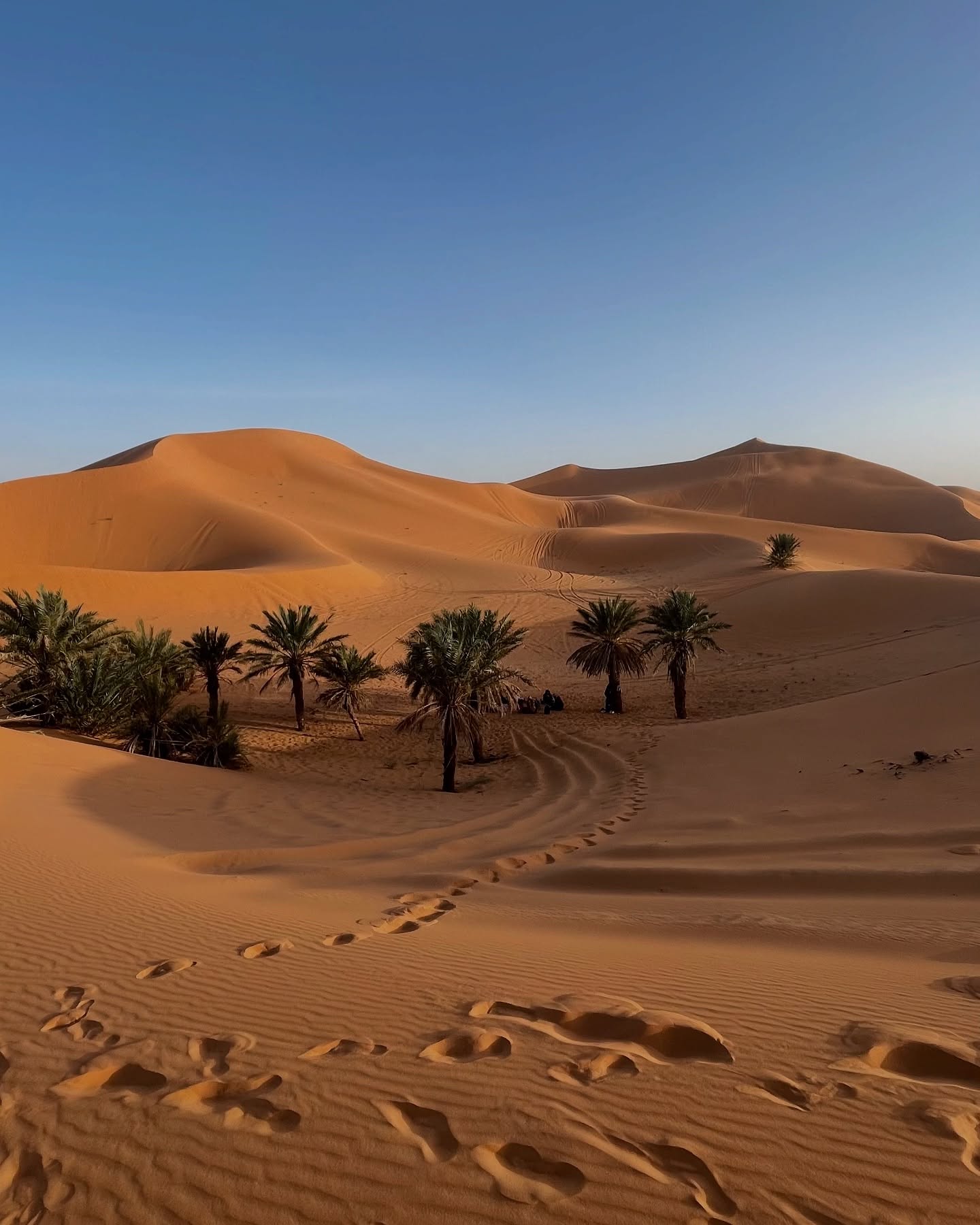
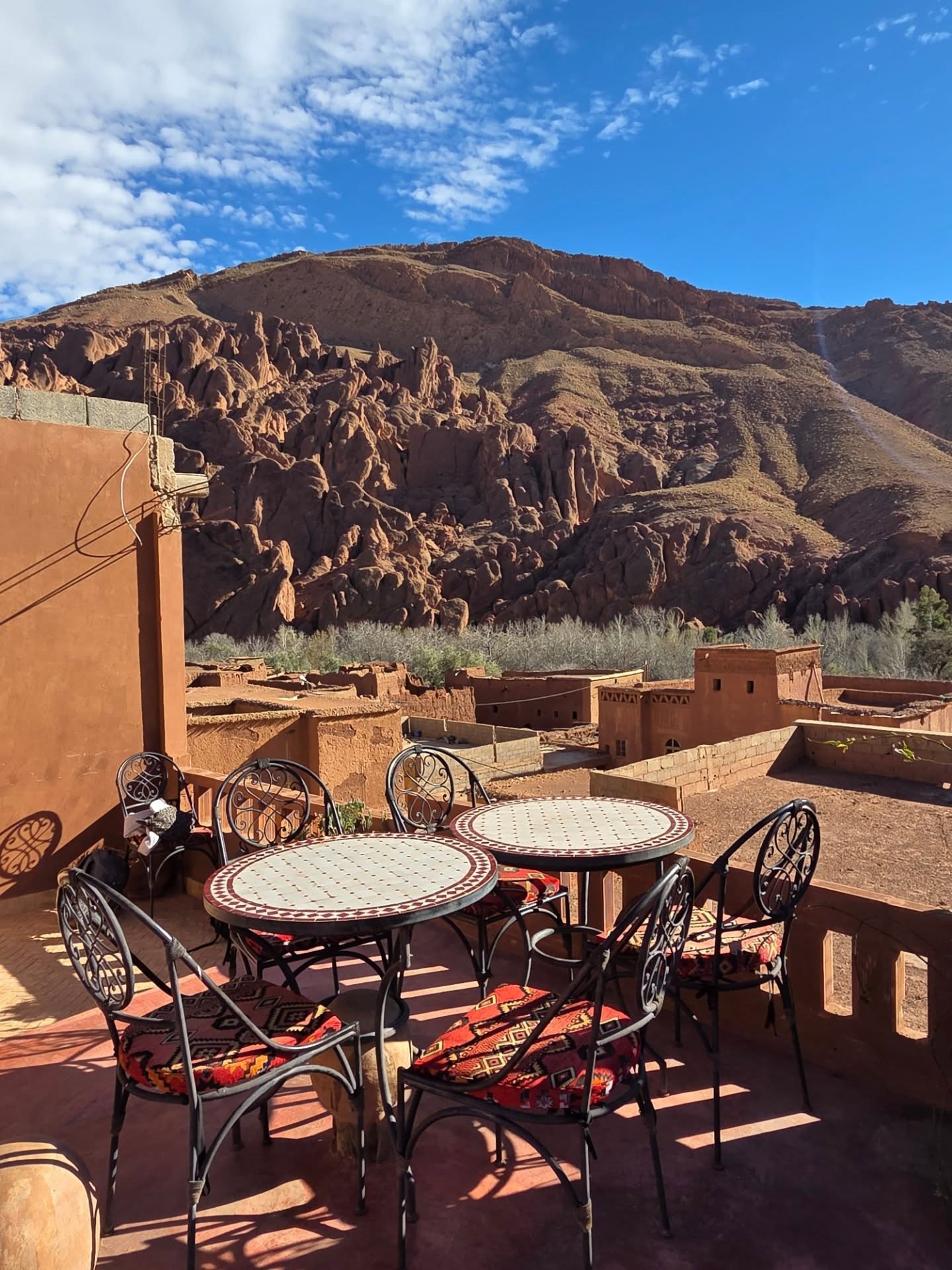
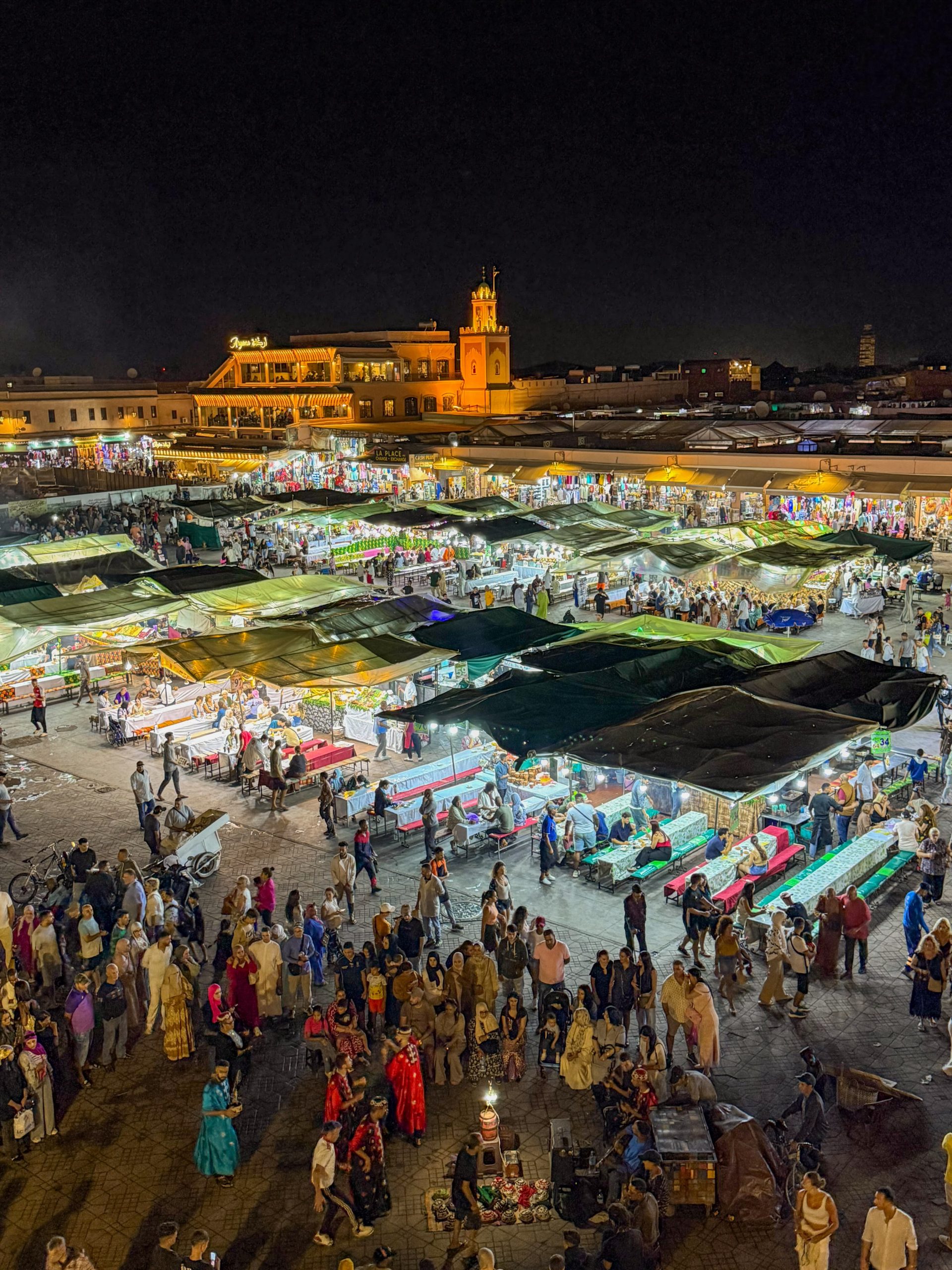
Your 10-day Morocco honeymoon itinerary, day by day
Casablanca to Rabat
Your driver meets you at Mohammed V airport. If your flight lands before mid-afternoon, stop in Casablanca at the Hassan II Mosque, one of the few mosques in Morocco open to non-Muslim visitors, then follow the Corniche before the hour-long drive up the coast to Rabat. First night in a riad inside the old medina.
Rabat to Chefchaouen
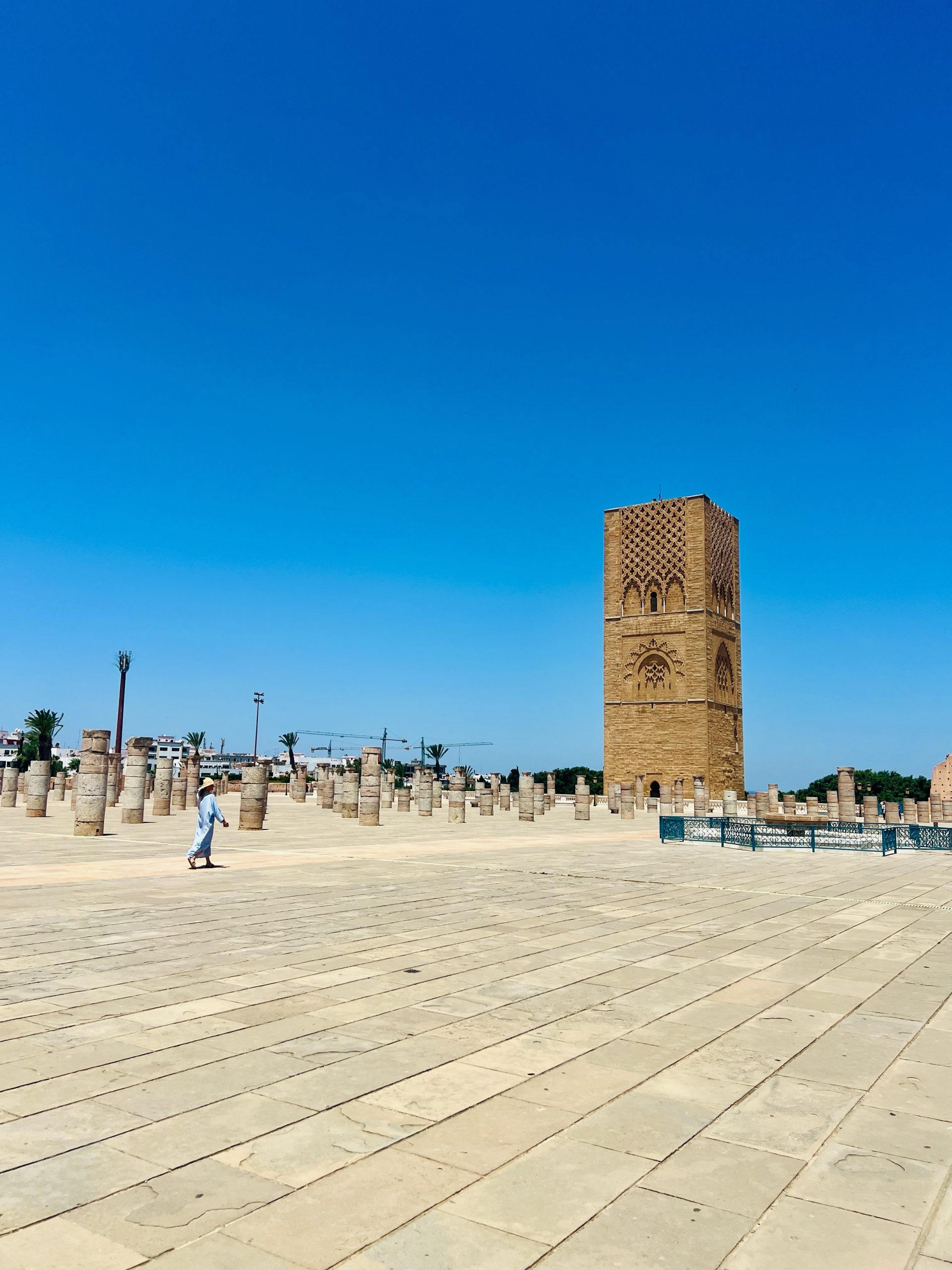
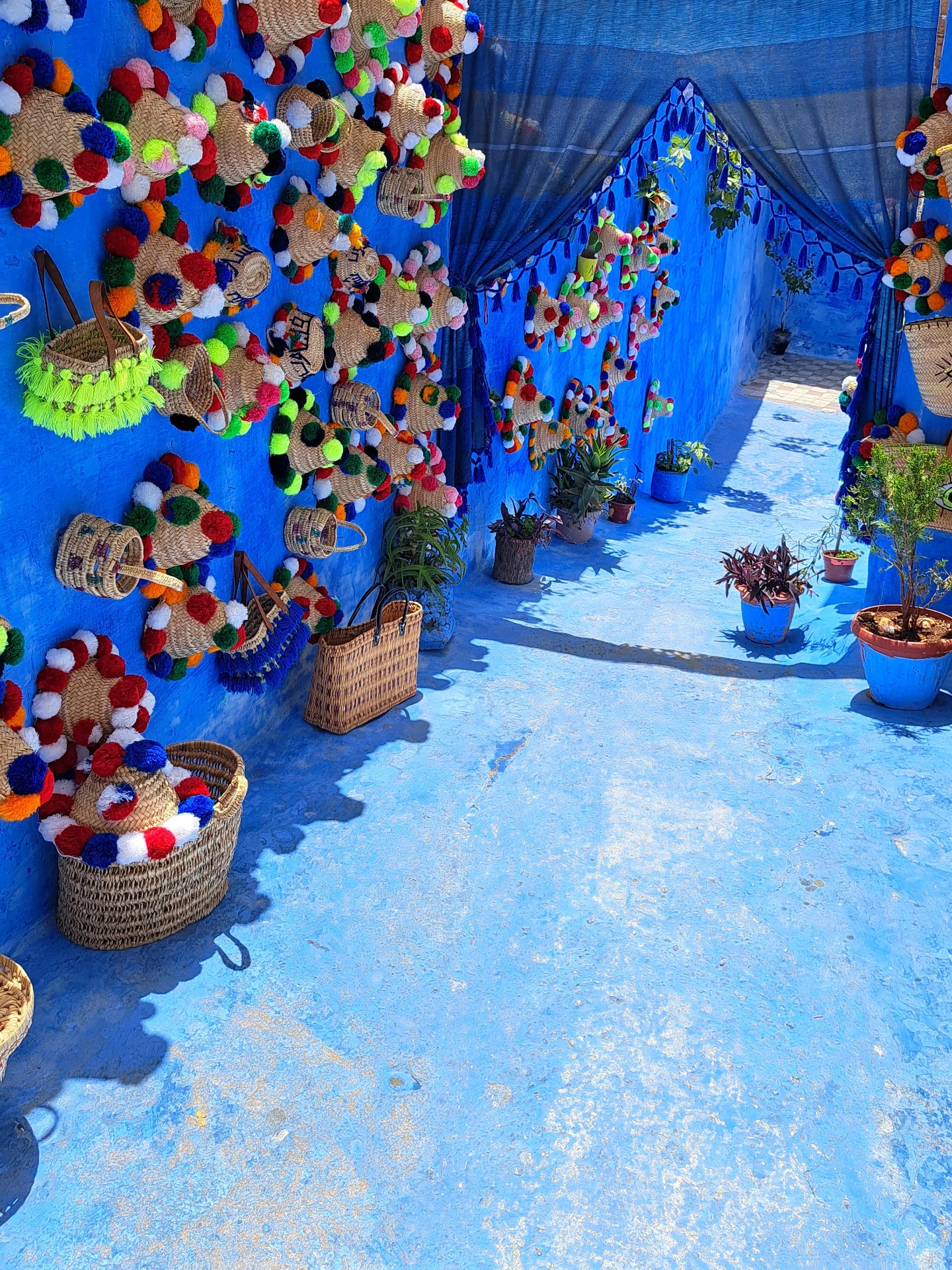
A morning in the capital: the unfinished Hassan Tower from the 1190s, the Mausoleum of Mohammed V, the Chellah ruins and the white lanes of the Kasbah of the Udayas above the river mouth. In the afternoon the road climbs into the Rif to Chefchaouen, about four hours away. Walk the blue streets of Chefchaouen at dusk, when the day visitors have left.
Chefchaouen, Volubilis, Meknes and Fes
South through green hills to Volubilis, the Roman town whose mosaics still lie where they were laid, then Meknes and the great gate of Bab Mansour for lunch. You reach Fes by late afternoon and check into a riad in Fes el-Bali. Short on time? Our 2-day Chefchaouen, Volubilis and Meknes tour covers the same ground from Fes.
A full day in Fes
A licensed city guide takes you through the medina, one of the largest car-free urban areas anywhere: the Qarawiyyin, founded in 857, the Bou Inania madrasa and the dye pits of the Chouara tannery seen from a leather shop terrace. Second night in the same riad, so nothing to pack. Our guide to Fez has more for a free evening.
Fes to the Sahara
The longest day, about 470 km. Ifrane and the cedar forest near Azrou, lunch in Midelt, then the palm groves of the Ziz Valley. You reach Merzouga in the late afternoon and ride camels into Erg Chebbi as the dunes turn orange. Private tent with its own bathroom, dinner and music around the fire. Ask for the Gnawa musicians of Khamlia if you arrive early; travellers coming only from Fes can do the same desert night on our 2-day Fes to Erg Chebbi tour.
Merzouga, Todra Gorge and the Dades Valley
Climb a dune for sunrise, ride back for breakfast, then head west to the Todra Gorge, where the cliffs close to a few metres apart. Night in the Dades Valley; our guide to where to stay in the Dades Valley lists the hotels with gorge views.
Dades to Marrakech via Aït Benhaddou
The Rose Valley around Kelaat M’Gouna, Ouarzazate, then Aït Benhaddou, the earthen ksar on the UNESCO list since 1987. The last stretch crosses the High Atlas by the Tizi n’Tichka pass at 2,260 metres. Riad in the Marrakech medina for three nights.
Marrakech with a guide
The Koutoubia and its 77-metre minaret, the Bahia Palace, the Saadian Tombs and the souks, then Jemaa el-Fnaa as the food stalls light up. Keep the Majorelle Garden for late afternoon, when the light is softer (its ticket is paid on the day).
Cooking class and hammam
A morning cooking class (our list of Moroccan dishes to try helps you choose what to cook), then a hammam and massage for two in the afternoon. If you want one early start, book the sunrise hot air balloon over the palm groves for this day.
Marrakech to Casablanca airport
Transfer to Mohammed V airport, about two and a half hours by motorway, timed to your flight. Flying home from Marrakech instead saves you this drive; see the tip below.
How long are the drives?
Honeymooners often ask this first, and fairly so. On this route only two days are long: Day 5 into the desert and Day 7 back over the High Atlas. Three days have no driving at all. Behind the wheel the whole way is your own private driver, so you stop when you want, for a photo or a mint tea.
Where you sleep, and why it matters on a honeymoon
The nights change character as you go, and that is part of the pleasure. In Rabat, Chefchaouen, Fes and Marrakech you stay in riads: old courtyard houses turned into small hotels, often with fewer than ten rooms and a roof terrace for breakfast. Ask for a room off the courtyard rather than above the entrance, and for a terrace table at sunset on your Fes and Marrakech nights.
In Merzouga the camp sits in the dunes, reached by camel. The tents on this tour have their own bathroom and a proper bed, which matters more than you think after a long day. In the Dades Valley you sleep in a kasbah-style hotel above the river. For a higher level of comfort at each stop, see our luxury stays city by city. Tell us it is your honeymoon when you book; riads and camps are used to it and usually prepare the room.
The journey was so much more than just a drive.
Kritika B., on the road from Marrakech to Merzouga, Tripadvisor review
When is the best time for a Morocco honeymoon?
For this route, April, May and October are the sweet spot, with March, late September and early November close behind. The reason is the desert, as our guide to the best places to visit in spring also shows. The chart compares long-term averages for Fes, Marrakech and Errachidia, the nearest weather station to Merzouga with 30 years of records.
- Marrakech
- Fes
- Desert (Errachidia)
In July the desert averages close to 40°C by day and Marrakech is not far behind, so a summer honeymoon works only with early starts and a long break at midday. In January the same desert drops to around 2°C at night: the camp provides blankets, but you will want a warm layer by the fire. Spring and autumn give you days in the mid-20s across the whole loop, with nights cool enough to sleep well.
One date to know: Ramadan 2027 is expected to start around 8 February and end around 9 March, depending on the moon sighting. Travel goes on as normal, riads and camps serve meals as usual, but some medina restaurants close until sunset and afternoons are quieter. Many couples enjoy breaking the fast at sunset with their hosts.
What couples should know before they go
- Bring a copy of your marriage certificate. Hotels in Morocco can ask couples for proof of marriage at check-in. It is rare for foreign couples, but a photo on your phone settles it, especially if one of you holds Moroccan nationality or your passports still show different surnames.
- Book in your passport names. If one of you has just changed name, keep flights and hotels in the name on the passport you travel with.
- Keep affection for the riad. Holding hands is fine in tourist areas; kissing in the street is not. The UK government’s travel advice notes that complaints about public displays of affection can lead to prosecution.
- Check your passport dates. British visitors need at least three months of validity left on arrival and can stay 90 days without a visa; most EU, US, Canadian and Australian travellers also visit visa-free. Check your own government’s advice before you book.
- Alcohol is for licensed places. Many riads, hotels and restaurants serve it; drinking in the street is illegal. The desert camps vary, so ask us beforehand.
- Carry dirhams in cash for the small things. The dirham cannot be bought before you arrive; airport ATMs work, and cards are accepted in most riads and larger restaurants but rarely in the souks.
Two more things. Dress to cover shoulders and knees in the medinas and on mosque visits, and a light scarf helps on Day 1 at the Hassan II Mosque. For the medina days, a licensed guide makes Fes far easier to read; our article on licensed guides in Morocco explains what to expect.
Make this honeymoon yours
Send us your dates and how you like to travel. We adapt the route, the riads and the pace, and reply with a first plan within 24 hours.
4.7/5 Google
5.0/5 Tripadvisor
Frequently asked questions
Is Morocco good for a honeymoon?
Yes, if you like variety. In ten days you get riads with courtyard pools, a night in the Sahara, mountain passes and a hammam, and from most of Europe it is a flight of under four hours. It suits couples who want to see things together more than couples who want ten days on a sunbed.
How many days do you need for a Morocco honeymoon?
Ten days is the comfortable length for a loop that includes the desert, as in this Morocco honeymoon itinerary. With seven days, start and end in Marrakech and add our 3-day Marrakech to Merzouga desert tour. With twelve or more, add a second desert night and two nights on the coast in Essaouira or the lagoon of Oualidia.
What is the best month for a honeymoon in Morocco?
April, May and October. Days sit in the mid-20s°C in Marrakech and the desert, and nights are mild enough for the camp. July and August are very hot in the south; December and January bring cold desert nights and possible snow on the High Atlas passes.
Do we need a marriage certificate in Morocco?
It is not an entry requirement, but hotels may ask couples for proof of marriage at check-in. Carry a copy or a photo of it, particularly if one of you is a Moroccan citizen or your passports show different surnames.
Can we start the honeymoon in Marrakech instead?
Yes. The same route runs in reverse from Marrakech, starting with our 3-day Marrakech to Fez desert tour, or as a Marrakech loop through the desert and back, with the coast added at the end. Our trip planner builds a first version around your dates in about a minute.
How much does a Morocco honeymoon cost?
It depends mostly on the riads and the camp you choose, which is why we price the honeymoon tour on request once we know your dates and comfort level. For a sense of everyday prices, from meals to entrance tickets, read Is Morocco cheap to visit?
Is Morocco safe for honeymoon couples?
Morocco is one of the most visited countries in Africa, and the usual city precautions apply: watch bags and phones in the busy souks of Marrakech and Fes, use licensed guides, and agree prices before you accept a service. With your own driver between cities, the road days are the easy part.
A good Morocco honeymoon itinerary is mostly a question of rhythm: two long road days, a night in the dunes, and enough slow mornings that the trip feels like yours. Start from our 10-day honeymoon tour and we will shape the rest around the two of you.