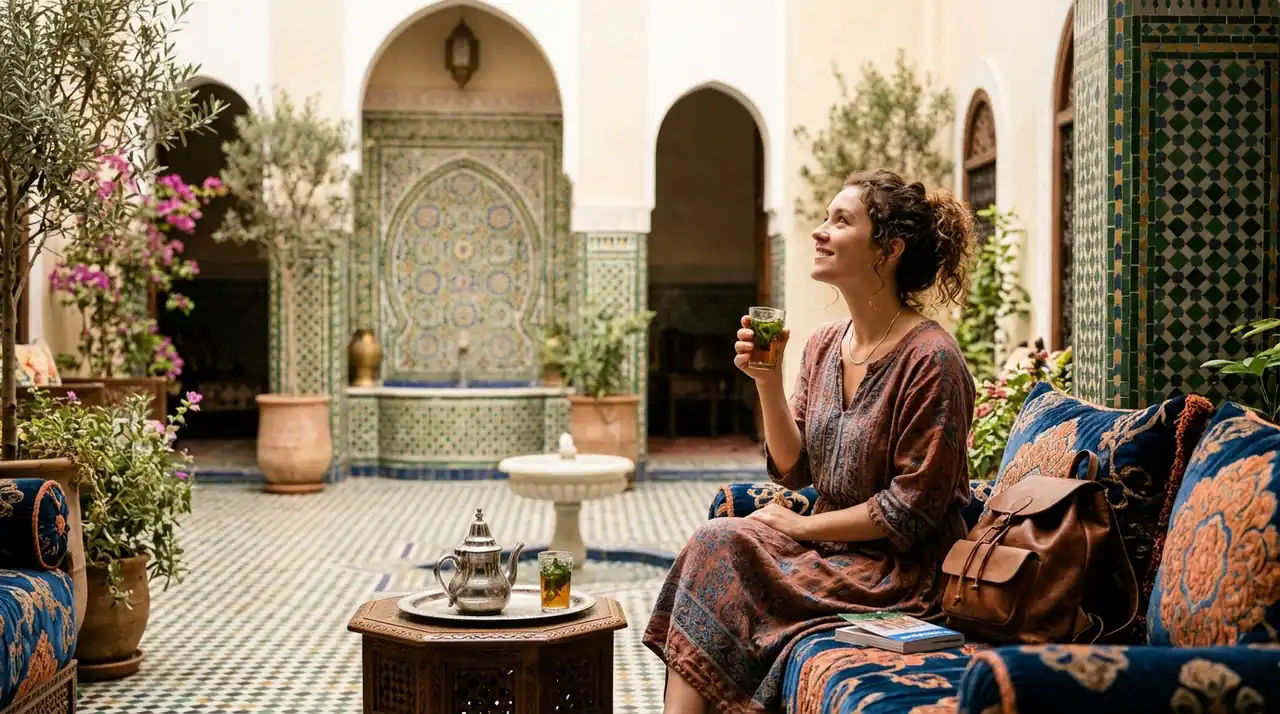
Traveling solo as a woman through Morocco is one of the most transformative, culturally captivating, and visually intoxicating journeys on earth. Yet, few travel topics generate as much polarized debate, sensationalized internet hearsay, or unwarranted apprehension. Separating internet myth from day-to-day reality on the ground requires clear, candid guidance on local cultural nuances, boundary-setting body language, smart accommodation choices, and the immense peace of mind offered by professional private transport.
Quick Answer: Is Morocco Safe for Solo Female Travelers?
Yes, Morocco is statistically very safe. Violent crime targeting international tourists is exceptionally rare across the Kingdom, backed by dedicated Tourist Police (*Brigade Touristique*) and a culture of deep hospitality. Both the US State Department and UK Foreign Office rank Morocco at standard Level 1/2 travel advisory status alongside major European destinations.
- The Core Nuance: Verbal Hassle vs. Physical Danger: The primary challenge solo women face is not physical harm, but persistent catcalling, flirtatious street banter (*”Gazelle”*, *”Spice Girl”*), and aggressive market touting in busy commercial medinas.
- The “Shoulders-to-Knees” Wardrobe Rule: Head coverings (hijab) are not required for foreign women anywhere in Morocco. However, dressing modestly by covering shoulders, cleavage, and knees dramatically cuts down unwanted male stares and signals cultural respect.
- The Golden Strategy for Desert Travel: Booking a private tour with a vetted, licensed chauffeur acts as an impermeable cultural shield. Your driver handles all parking, luggage, and translations, creating a completely safe, respectful environment throughout your cross-country journey.
Busting Myths: Statistical Safety vs. Street Annoyances
To prepare effectively, you must understand the clear distinction between annoyance and danger:
Morocco is a safe, heavily policed constitutional monarchy. The Kingdom takes tourist protection with utmost seriousness because international tourism generates billions of Dirhams and sustains hundreds of thousands of domestic jobs. In popular medinas like Marrakech and Fes, plainclothes officers from the *Brigade Touristique* constantly patrol pedestrian arteries to prevent theft and sanction unauthorized touts.
However, Morocco remains a conservative, patriarchal society where public street culture is traditionally male-dominated. In busy urban markets, young men congregating on street corners frequently direct unsolicited flirtatious remarks, compliments, or sales pitches toward foreign women walking unaccompanied. While this behavior can feel intrusive and tiring to Western travelers, it is almost exclusively verbal and opportunistic rather than predatory or physically threatening.
What to Wear: Stylish, Modest & Comfortable
One of the most persistent misconceptions among first-time female travelers is that they must cover their hair. Foreign female tourists are never expected to wear a headscarf in Morocco, except when entering the historic interior of the Hassan II Mosque in Casablanca (where respectful coverings are provided or requested).
Adhering to the “Shoulders-to-Knees” Rule provides optimal comfort and respectful blending:
- Flowing Linen Shirts & Button-Downs: Loose, breathable, long-sleeved linen or chambray shirts keep you cool in the desert sun while covering your upper arms and decolletage.
- Maxi Dresses & Midi Skirts: Long, ankle-length or calf-length skirts made of cotton or rayon allow wonderful airflow, look effortlessly stylish in photographs, and keep your legs discreetly covered.
- Palazzo Pants & Linen Trousers: Wide-leg trousers are the ultimate travel uniform for Morocco. They prevent thigh chafing during camel rides, breathe in hot weather, and respect local norms.
- A Lightweight Pashmina or Scarf in Your Daypack: Keep a soft cotton scarf rolled in your handbag. It serves as a sun shield, a dust protector in the desert, and a quick wrap over your shoulders if you enter a more conservative rural village or religious site.
- What to Avoid in Public Streets: Crop tops, skin-tight bicycle shorts, sheer see-through fabrics, and low-cut tank tops. While you will not be arrested for wearing them, doing so immediately invites intense, uncomfortable staring from local men.
Mastering Body Language: The Art of Boundary Setting
How you carry yourself on Moroccan streets dramatically alters your experience. Confidence and calm assertiveness are your greatest travel superpowers:
- The “Sunglasses Shield”: Wearing dark polarized sunglasses serves a brilliant dual purpose: it shields your eyes from intense North African glare and prevents accidental direct eye contact with idling men on street corners, which can be misinterpreted as an invitation to chat.
- Walk with Purpose: Stride with your shoulders back, head held high, and an intentional pace. Even if you are slightly disoriented in a winding alley, avoid standing in the middle of a passage looking anxious or helpless. Step calmly inside an open shop or café to check Google Maps.
- The Power of Neutral Disengagement: If someone calls out *”Bonjour gazelle!”* or *”Where are you from, beautiful?”*, you are under zero obligation to respond. The most effective reaction is complete silence, zero eye contact, and continuing to walk steadily past as if you did not hear. Engaging, even to say “Leave me alone,” often encourages them to follow you.
- Powerful Darija Phrases to End Unwanted Persistence: If someone persists or follows you, speaking these key Moroccan Arabic words firmly will stop them in their tracks:
- “La, Shukran!” (No, thank you!) — Spoken crisply with a flat palm raised.
- “Safy!” (That’s enough! / Finished!) — A definitive command that locals understand immediately.
- “Shooma!” (Shame on you!) — Culturally potent; publicizing someone’s inappropriate behavior causes intense loss of face among surrounding shopkeepers.
Transport: Why a Dedicated Private Driver Transforms Solo Travel
Navigating cross-country transport alone is where solo female travelers encounter the most fatigue. Public transit options like crowded *grands taxis* or unmetered local cabs require constant vigilance, fare negotiations, and crowded back seats next to strangers.
When you reserve a private circuit through Finest Morocco Tours, your private chauffeur transforms your journey from an exhausting exercise in vigilance into pure, unadulterated relaxation:
- A Trusted Cultural Guardian & Shield: Your private driver is licensed by the Moroccan Ministry of Tourism, vetted for impeccable professional character, and dedicated exclusively to your safety and comfort. They walk you directly to your riad doorway, carry your heavy luggage, translate Darija, and steer you away from dishonest vendors.
- Stress-Free Roadside Pauses: Traveling alone through mountain valleys means you never have to worry about where to find clean, safe restrooms, reputable roadside diners, or panoramic photo spots. Your driver curates every stop with personal care.
- Total Autonomy: You choose the music, the departure times, the pacing, and the itinerary without conforming to large tour bus groups.
Selecting Safe Accommodations for Solo Women
Where you sleep profoundly impacts your peace of mind:
- Choose Boutique Riads Inside Well-Lit Medina Quarters: Opt for authenticated riads with 24/7 manned front desks. Inform the riad manager whenever you head out for dinner; they will happily walk you to nearby restaurants or dispatch a staff member to escort you back at night.
- Request a Medina Escort on Arrival: Never attempt to find a hidden riad deep inside the winding labyrinth of Fes or Marrakech alone at midnight with heavy suitcases. Arrange an arrival transfer through Finest Morocco Tours so our driver and the riad porter meet you at the vehicle drop-off gate.
- Inspect Your Room Locks: Ensure your riad suite or desert camp tent features a solid internal deadbolt or locking latch. Reputable luxury desert camps provide keyed locks or interior deadbolts for complete overnight privacy.
Desert Tour Safety for Solo Women: Sleeping in the Sahara
One of the most common anxieties solo women voice is: “Is it safe for a woman alone to sleep in a desert camp?”
The answer is an emphatic YES, provided you choose the right desert camp category. Avoid cheap, unregulated 20€ budget camps where communal dorm tents lack doors, bathrooms are shared outhouses, and seasonal staff may lack professional oversight.
In our partner luxury desert camps in Erg Chebbi:
- You enjoy your own fully private luxury canvas pavilion with a solid wooden door, interior latch, king-sized bed, and private en-suite porcelain flush toilet and hot rainfall shower.
- The camp staff comprises respectful, hospitable Berber families whose code of honor (*Amazigh* hospitality) treats solo female travelers with brotherly protection, absolute decorum, and profound respect.
- You can participate in evening campfire drumming, stargaze alone beneath the desert sky, and climb the morning dunes for sunrise in complete tranquility.
Practical Health, Hygiene & Wellness on the Road
- Feminine Hygiene Supplies: Sanitary pads (*serviettes hygiéniques*) are sold everywhere in small corner groceries (*hanouts*) and pharmacies (*Pharmacie*). However, tampons are significantly less common in rural Morocco; pack an ample personal supply from home.
- Restroom Preparedness: Carry a small pack of pocket tissues and hand sanitizer in your handbag at all times. Highway rest stops frequently lack toilet paper.
- Hydration & Heat Management: Drink 2 to 3 liters of sealed bottled water daily. The dry desert air rapidly depletes bodily electrolytes; keep rehydration drink powder in your bag.
Solo Female Travel Safety Matrix
| Scenario | Potential Frustration | Recommended Action / Safety Strategy |
|---|---|---|
| Walking the Medina Souks | Verbal catcalling / touts | Wear sunglasses, walk with purpose, maintain silence, use “La, Shukran” |
| Arriving at Riad after Dark | Disorientation in dark alleys | Have riad staff meet you at the taxi gate; use your phone’s offline maps |
| Cross-Country Desert Transit | Fatigue, shared transport | Hire a vetted private driver through a reputable tour agency |
| Shopping for Artisan Rugs | High-pressure sales tactics | Politely sip the offered mint tea; remember you have zero obligation to buy |
| Overnight in the Sahara | Isolation anxiety | Book private luxury camp suites with private en-suite locks and 24/7 staff |
| Dining Out Solo | Self-consciousness | Dine in charming riad courtyards or rooftop restaurants with books/journals |
Frequently Asked Questions About Solo Female Travel in Morocco
Can a solo woman drink alcohol in Morocco?
Yes. While Morocco is a Muslim country, alcohol is legal and widely served in licensed tourist restaurants, rooftop bars, international hotels, and supermarkets like Carrefour. Avoid drinking alcohol in public streets or casual local cafés; enjoy your glass of Moroccan Gris wine or Casablanca beer in authorized, comfortable dining establishments.
Should I wear a fake wedding ring?
Many solo female travelers choose to wear a simple silver band on their ring finger. While not strictly necessary, stating that your “husband is resting at the hotel” or “meeting you later” can be a convenient white lie that swiftly dampens flirtatious inquiries without conflict.
Is it safe for solo women to take taxis alone in cities?
During daylight hours, metered small city taxis (*petits taxis*) are very safe. Ensure the driver turns on the taximeter (*le compteur*). After 21:00, or when returning from dinner, have your restaurant or riad call a trusted radio taxi rather than hailing one off the street.
Can I visit a traditional Moroccan Hammam alone?
Yes, and you absolutely should! For your first hammam experience, book a private luxury riad spa where an attentive female attendant (*kessala*) will guide you through the warm eucalyptus black soap scrubbing and clay mask treatment in complete comfort.
What emergency numbers should I save on my phone?
Save these national emergency numbers: 19 for Urban Police (*Police Nationale*), 177 for the Highway Royal Gendarmerie (*Gendarmerie Royale*), and 15 for Ambulance & Medical Fire Services (*Protection Civile*).
Medina Orientation Mastery: How to Navigate Like an Insider
The historic medinas of Marrakech, Fes, and Meknes are UNESCO-protected medieval labyrinths composed of thousands of twisting pedestrian passageways, dead-end alleys (*derbs*), and arched tunnels (*sabats*). For a solo female traveler, navigating this spatial complexity with confidence is the key to an empowering, stress-free stay:
- Download Offline Navigation Maps Before Landing: Cellular data signals can occasionally dip inside thick, 800-year-old stone arches. Download the offline regional city maps on Google Maps or Maps.me. Drop GPS pins on your riad doorway, key landmark gates (such as Bab Bou Jeloud in Fes or Bab Doukkala in Marrakech), and verified restaurants.
- The Golden Rule for Asking Directions: If you ever lose your bearings, never stop in the middle of a dark intersection looking confused, and never accept navigational advice from roaming teenagers on street corners who will demand a tip (*”Pourboire, Madame!”*) after walking you three blocks. Instead, step inside an open, brightly lit shop and ask the seated shopkeeper or cashier: “Ayna Bab Bou Jeloud, ‘afak?” (Where is the Blue Gate, please?). Older Moroccan merchants take immense professional pride in giving courteous, accurate directions with zero expectation of payment.
- Understanding Medina Geometry: Moroccan medinas are organized in concentric social zones. The main commercial thoroughfares (*tallaa*) are wide, bustling, heavily policed, and lined with artisans, spices, and groceries. The quiet, winding residential alleys (*derbs*) leading to private homes and boutique riads are residential sanctums. These side streets are safe, but staying aware of your route ensures you return to your riad quickly after dinner.
Female Solidarity & Cultural Sisterhood in Morocco
While internet travel forums frequently focus on interactions with Moroccan men, one of the most rewarding and underreported aspects of solo travel in the Kingdom is the profound warmth, maternal protectiveness, and genuine sisterhood extended by Moroccan women.
In traditional riads, the female housekeeping and breakfast teams (*tous les matins*) will greet you with glowing smiles, teach you how to pour mint tea from high above the glass with a thick foam crown (*regga*), and share stories about their families and culinary secrets. In artisan weaving cooperatives across the Atlas mountains, Berber matriarchs will warmly take your hands, welcome you with dates and fresh milk, and demonstrate ancestral loom techniques passed down through generations.
If you ever feel uncomfortable or followed on a city street, simply approach any local Moroccan woman, mother, or family group and ask for help. Moroccan women possess fierce cultural authority; a stern word from a local matriarch will immediately disperse any lingering street tout with scorching finality.
Claim Your Unforgettable Moroccan Adventure with Confidence
Morocco is a sensory feast that rewards the curious, self-possessed female traveler with breathtaking vistas, heartfelt human connections, and timeless memories. By traveling with a dedicated private chauffeur, dressing with cultural awareness, and trusting your intuition, you will discover the extraordinary magic of North Africa in absolute comfort and safety. Contact our team today to begin curating your bespoke solo private tour in Morocco.
Travel Morocco Safely and Beautifully
Discover personalized, chauffeured travel designed for total safety, luxury, and cultural authenticity with Finest Morocco Tours.