Lost in the Rif Mountains of northern Morocco, a whole town has been covered in every shade of blue imaginable – from pale powder to deep indigo. This is Chefchaouen, which is known around the world as the Blue City of Morocco and it has no other city on Earth like it.
If you’ve ever seen a photo of cobalt walls and tumbling bougainvillea in Morocco, it was probably taken here. This guide explores everything you need to plan your visit; why the city is painted blue, where to photograph in each of Chefchaouen’s neighborhoods, what and where to eat, how to get there from Fes, Chefchaouen, and Marrakech, plus all the practical details most travel articles forget about.
Where Is Chefchaouen and Why Is It Blue?
Chefchaouen (or Chaouen, as the locals call it) is built into the Hebra Mountains in the Rif Mountains at around 600 metres above sea level. It is about two hours south of Tangier and four to five hours north of Fes by road. Established as a modest outpost in 1471 to help repel Portuguese advances, the town became home to Muslim and Jewish families fleeing the Spanish Reconquista.
There are several theories about the origin of the blue paint:
- Jewish refugee tradition the most widely cited explanation ties the color to Jewish communities who settled here in the 1930s, painting doors and walls blue as a symbol tied to the sky and to spiritual reflection, a practice with roots in Judaic tradition.
- Practical reasons locals have also noted that the lime-based blue wash historically helped repel mosquitoes and kept homes cooler in summer.
- Tourism preservation whatever its origins, the town has maintained and expanded the blue tradition deliberately over recent decades, partly because it has become central to the local economy.
None of the explanations is universally proven, and Chefchaouen’s own municipal records don’t settle the debate definitively which is part of the town’s charm. Ask five different shopkeepers, and you may get five different stories.
Best Time to Visit the Blue CityContents
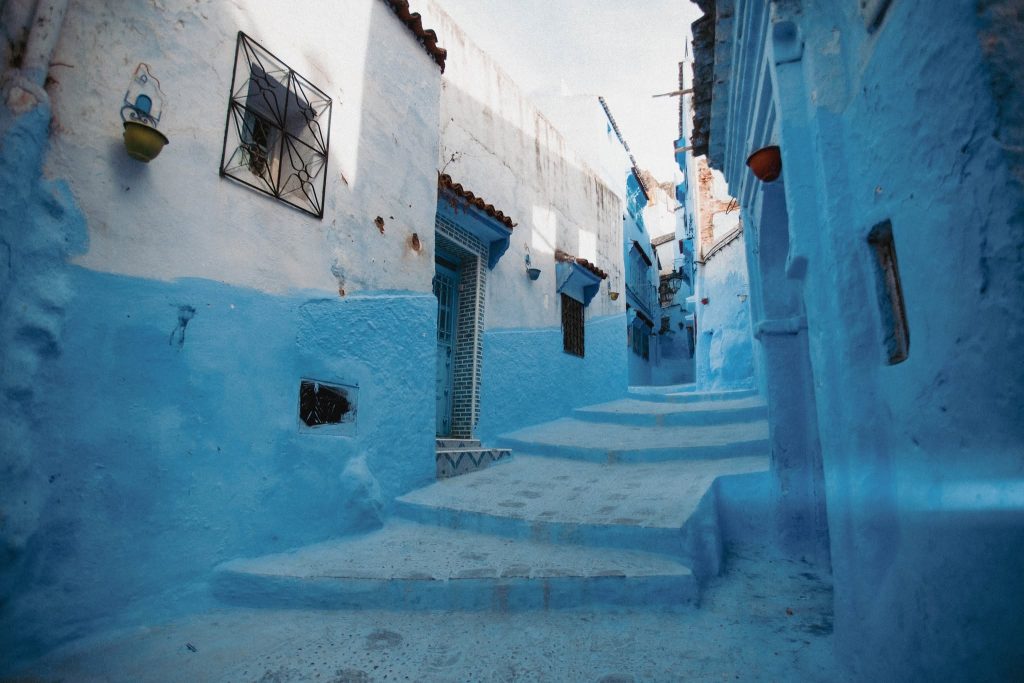
Peak viewings occur during spring (March–May) and autumn (September–November). Days are pleasant, the hills are either verdant or golden depending on your timing, and the medina isn’t sweltering because July and August can be brow-searingly hot, with the thermometer more often than not pushing above 35c (95F).
The new winter version of the city is quiet and moody: some tourists, more air and light snowfall on the mountains, but several guesthouses and rooftop cafés cut short their hours.
Quick planning notes:
- Early morning (7–9 AM) light gives the cleanest, most saturated blue tones for photography, before the streets fill with day-trippers from Fes and Tangier.
- Weekends draw more domestic tourism; weekdays are calmer.
- Ramadan dates shift each year some restaurants and shops adjust hours during this period, so it’s worth checking the calendar before booking.
Top Things to Do in ChefchaouenContents
There are many things you can do in Chefchaouen. The following list is just a selection of suggestions, and there are plenty of other experiences you can enjoy when you book a trip to Chefchaouen with us.
Wander the Medina Without a Map
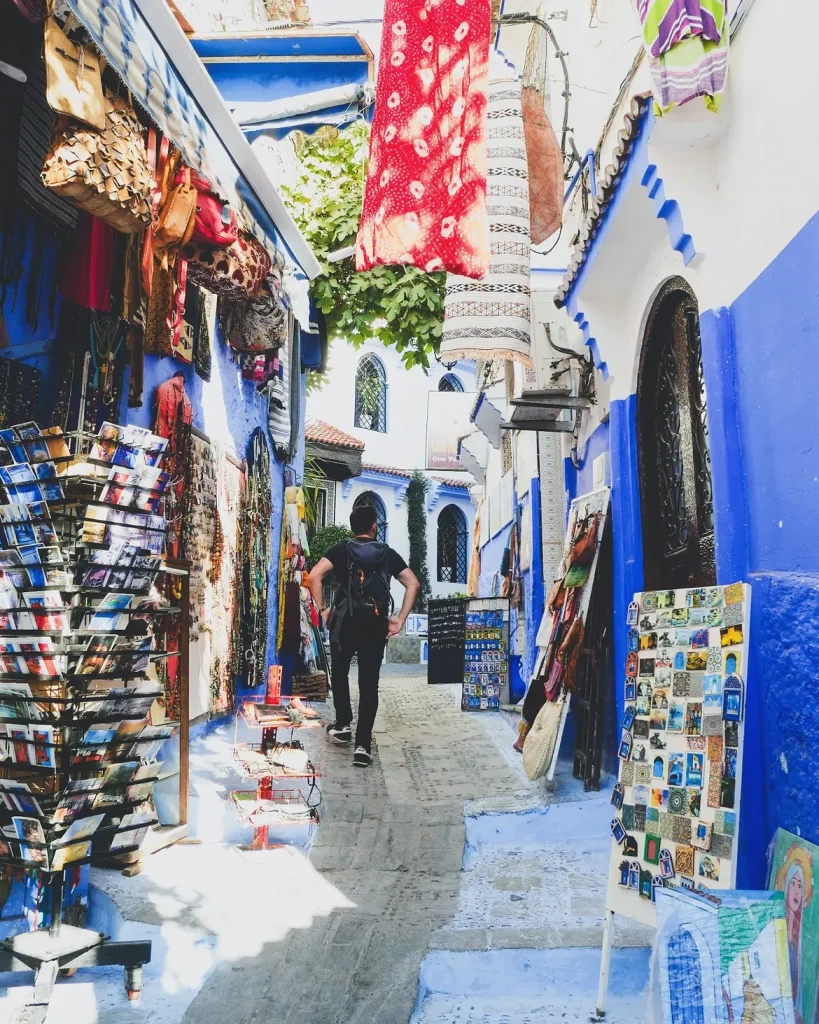
The true experience of the Blue City isn’t ticking off sights it’s getting deliciously lost. You can never get too lost in the medina, as it is small enough that you will find your way back; however, the painted archways to tetanized swarm hills of narrow stairs and dead-end alleys reward aimless wandering far better than any structured route.
Plaza Uta el-Hammam
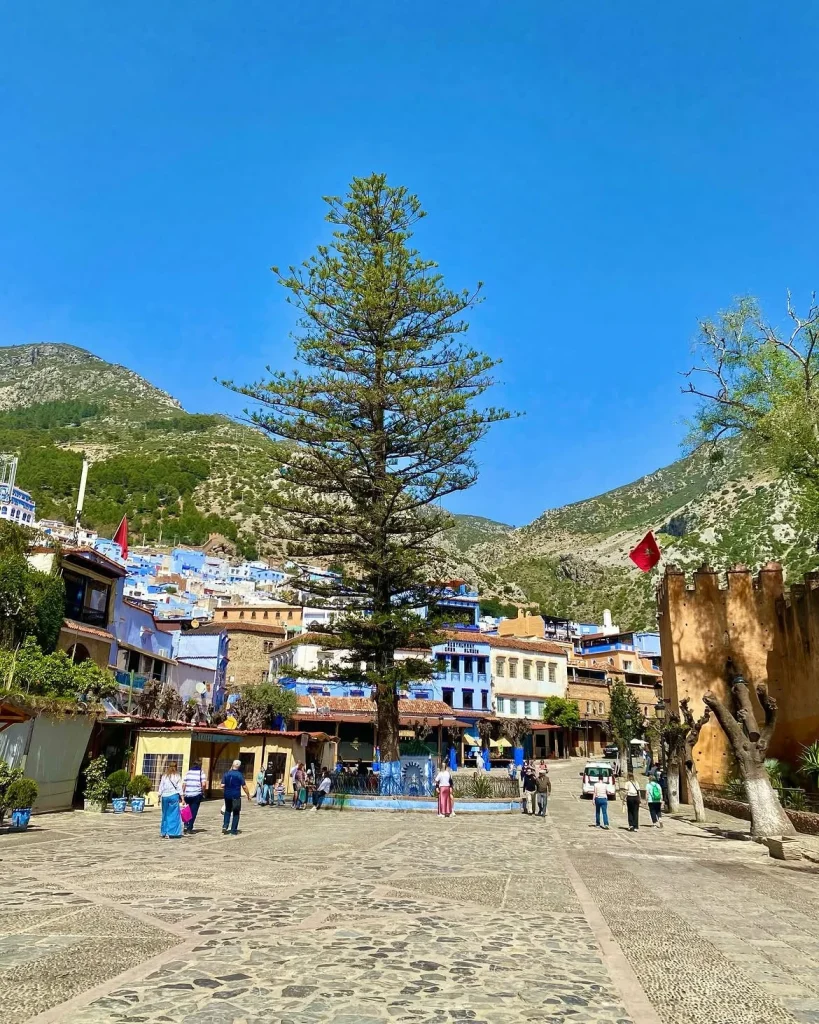
Main square anchored by the Kasbah (15th-century fortress and small museum) and the Grand Mosque with its unmistakable octagonal minaret. It’s the logical first stop for most visits and comes alive in the evening with cafés and street vendors.
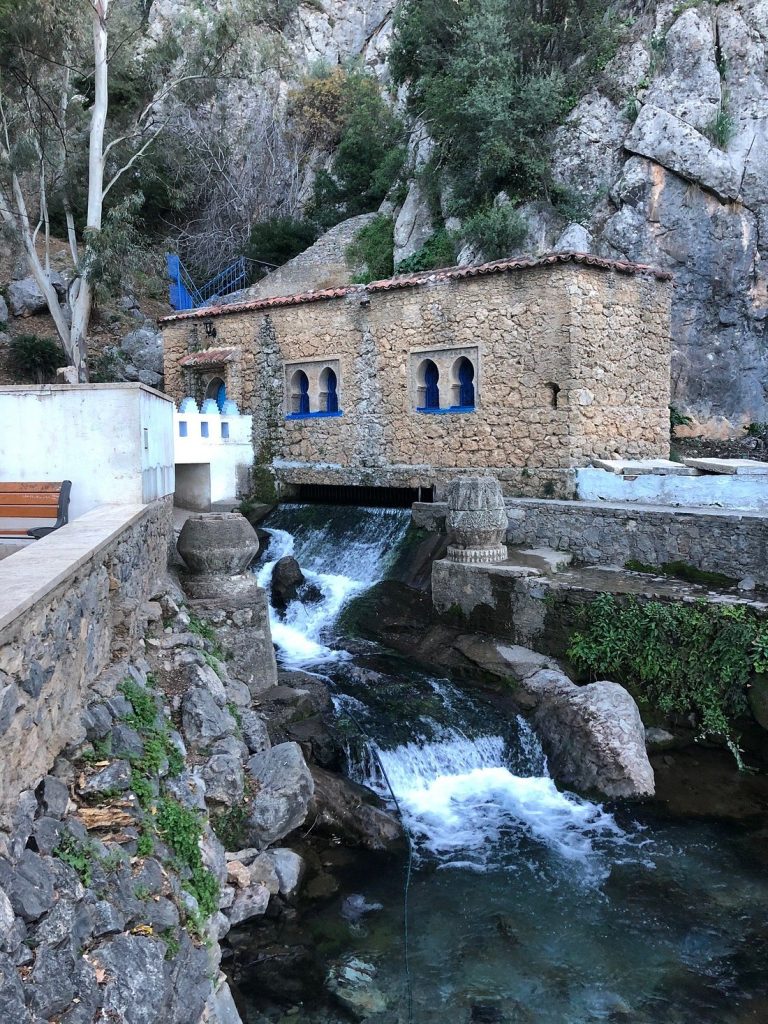
Ras El Maa Waterfall
Just a short walk from the medina’s edge, this spring-fed waterfall is where locals still wash wool, and you’ll enjoy some of the freshest air in town. Very well known come sunset.
Spanish Mosque (Jamaa Bouzafar)
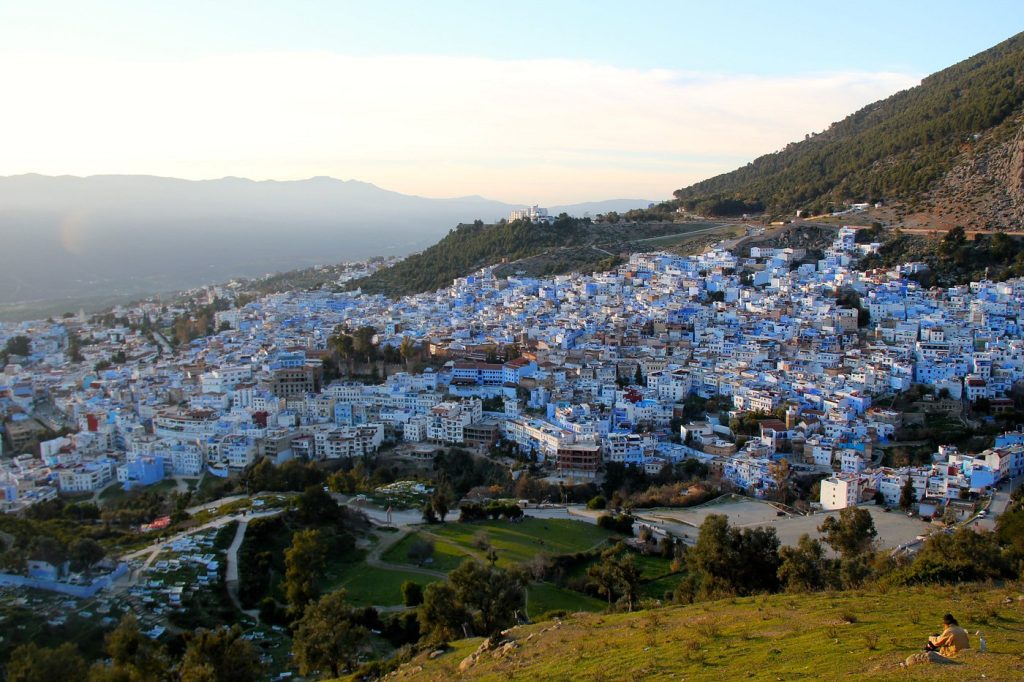
After a moderate uphill hike (30–40 minutes round), you’re faced with one postcard shot of the city, where you can explore with blue roofs against the Rif Mountains.
Shop the Local CraftsContents
Chefchaouen is known for:
- Handwoven wool blankets and rugs from the Rif region
- Goat cheese sold by local farmers in the medina
- Leather goods at more relaxed prices than Fes or Marrakech
- Local artisan soap and argan products
Bargaining is expected but tends to be gentler here than in the larger imperial cities.
How to Get to ChefchaouenContents
Because of the distances involved, Chefchaouen is best combined with a broader northern Morocco route rather than visited alone. A popular option is pairing it with Fes, Volubilis, and Meknes this day trip from Fes covering Chefchaouen, Volubilis, and Meknes is a practical way to see the Blue City alongside Morocco’s Roman ruins and the historic city of Meknes in a single loop.
For travelers who’d rather not manage taxis, timetables, or medina navigation on their own, a private driver morocco removes most of the logistical friction particularly useful for the winding mountain roads north of Fes. If you’re comparing options, our guide to hiring a private driver in Morocco breaks down when a car with a chauffeur makes sense versus public transport.
Where to StayContents
Guesthouses (riads) in Chefchaouen tend to be much smaller and cheaper than you can find in Marrakech or Fes, and I can’t stress enough that you should stay within the medina walls it literally puts everything within walking distance of you, plus you’ll get to experience the town at its quietest before day-trip groups flood into town.
Money-saving: Think rooftop terraces this is one of Chefchaouen’s defining features when it comes to where to stay in the city. Most small guesthouses are blessed with a rooftop breakfast site affording uninterrupted mountain views, and if you’re looking to book, it’s best to focus on that when booking .
Beyond Chefchaouen: Other Underrated Corners of Northern MoroccoContents
If the Blue City has whetted your appetite for lesser-visited Morocco, a few nearby destinations are worth folding into your itinerary:
- Oualidia, a lagoon town on the Atlantic coast known for oyster farming and calm waters very different scenery from the Rif Mountains, but equally rewarding for travelers looking past the standard Marrakech–Fes circuit. Here’s what to know about Oualidia before you go.
- Tetouan, a UNESCO-listed medina about an hour from Chefchaouen with a distinctly Andalusian architectural character.
- Akchour, a hiking area near Chefchaouen with waterfalls and the well-known “God’s Bridge” natural rock arch a good half-day trip for travelers who want to combine the town with some outdoor time.
Frequently Asked QuestionsContents
Why is Chefchaouen called the Blue City?
Its structures and staircases are painted in blue hues, a custom typically associated with Jewish communities which moved here in the 1930s (though many theories abound and none is confirmed).
Is Chefchaouen worth visiting?
Yes it is routinely touted as one of Morocco’s must-see sights for its striking topography, mountainous landscape, and slower vibe (compared with nearby Marrakech or Fes)
How Many Days Do You Need in Chefchaouen?
One to two full days allow time to see the highlights and soak in the atmosphere at a leisurely pace; three days provide space for a hike out to Akchour.
Is Chefchaouen safe for tourists?
Generally yes. It’s known to be one of Morocco’s more relaxed towns, with a manageable and pedestrian-friendly medina and a more laid-back atmosphere than the major tourist cities.
Is Chefchaouen a day trip from Fes?
But it’s long (by road alone, a rough 8- 9 hours there and back), so most visitors sandwich in an overnight stay or include it as part of a multi-stop tour.
When is the most suitable hour for photographing the blue streets?
At Sunrise, 7–9 AM, before the tourists flood into town and while light is at its softest.
Do you still need a guide in Chefchaouen?
Not strictly the medina is small enough to walk around most of, and your feet will navigate it easily enough on their own but if you want context on the town’s history and craft traditions, a local guide is helpful.
Souvenirs You Can Find in Chefchaouen: Handwoven wool textiles, local goat cheese, and leather goods with argan-based cosmetics.
How to travel from Tangier to Chefchaouen : en grand taxi, en bus CTM ou en navette privée – un peu moins de deux heures par la route qui serpente dans le Rif.
Is Chefchaouen expensive?
It’s less expensive overall than Marrakech or Fes, especially when it comes to hotels and food.
Plan Your Visit to Morocco’s Blue CityContents
Chefchaouen rewards travelers who give it more than a rushed afternoon. Whether you’re routing it into a broader northern Morocco journey or building a custom itinerary around the Rif Mountains, working with a private Morocco tour operator can simplify the mountain drives and multi-city logistics involved in reaching it.
Ready to add the Blue City to your itinerary? Explore our Morocco tours or get in touch to build a private, custom-tailored route around Chefchaouen and northern Morocco.